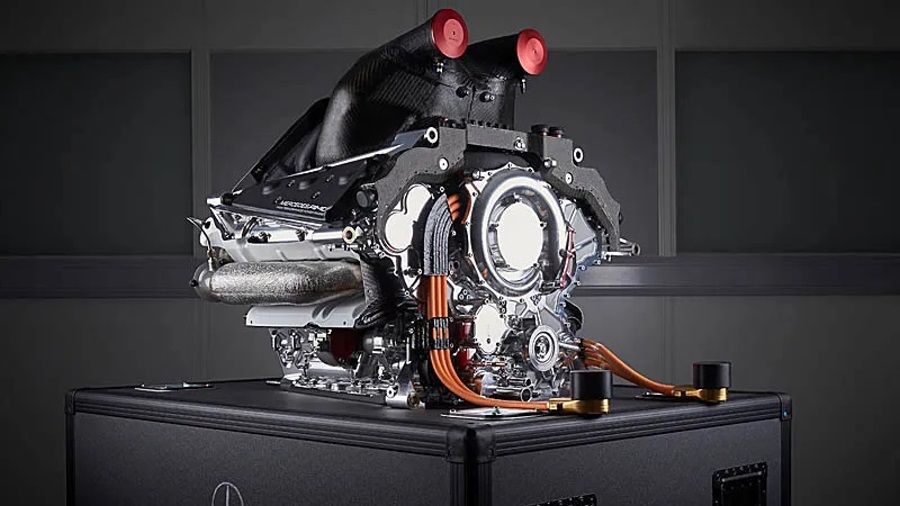
Formula 1 News: FIA greenlights pure genius Mercedes 2026 F1 engine
As the Formula 1 world gears up for the revolutionary 2026 regulations, a storm has brewed over Mercedes’ (and reportedly Red Bull’s) approach to the new power unit rules. Headlines scream “loophole” and “cheating,” with fans on social media branding Mercedes as repeat offenders.
–by Mark Cipolloni–
But strip away the hyperbole, and what’s left is a classic tale of F1 at its best: innovative engineering pushing the boundaries of the regulations—exactly within them.
The crux of the issue lies in the 2026 engine rules, which cap the geometric compression ratio at 16:1, down from 18:1 in previous years. This change was intended to simplify designs and attract new manufacturers like Audi. The regulations explicitly state that this ratio is measured under static conditions at ambient temperature—a procedure unchanged from prior rules and approved by the FIA in each manufacturer’s homologation dossier.
Related Article: Formula 1 News: Engine row erupts over ‘alleged’ 2026 compression loophole
Mercedes engineered their power unit to comply precisely with this measurement when cold and stationary. However, like any engine, thermal expansion occurs when it reaches operating temperatures on track. This natural phenomenon can effectively increase the compression ratio during actual running, potentially unlocking extra performance—estimates suggest around 10-13 horsepower, worth 0.3-0.4 seconds per lap on certain circuits.
Rivals Ferrari, Honda, and Audi cried foul, arguing the rule should apply “at all times,” including under hot conditions. They sought clarification from the FIA, fearing an unfair edge for Mercedes-powered teams (Mercedes, McLaren, Williams, Alpine) and Red Bull’s outfits.
Yet the FIA has stood firm: the rules are clear, measurements are at ambient temperature, and no hot-condition checks are mandated. Mercedes developed this in open dialogue with the governing body, receiving reassurance that their interpretation aligns with the wording. Changing the rules now—mere months before homologation—would punish innovation while rewarding those who didn’t spot the opportunity.
This isn’t cheating; it’s brilliance. Formula 1 has always rewarded the sharpest minds who exploit every gray area the regulations allow. Think of Mercedes’ dominant 2014 hybrid era, born from superior interpretation of complex turbo-hybrid rules. Or Brawn GP’s double diffuser in 2009, Red Bull’s flexed wings, or Ferrari’s infamous engine tricks in 2019. The sport thrives on this cat-and-mouse game between engineers and rule-makers.
Calling Mercedes “cheaters” ignores the essence of F1: design genius usually wins. Their engineers outsmarted the field by optimizing for real-world performance while ticking every regulatory box. If rivals missed this thermal dynamic, that’s on them—not Mercedes bending rules, but mastering them.
As engines homologate in early 2026, the grid may face a Mercedes advantage out of the gate. But that’s the thrill of a new era. Protests could fly, rules might tighten for 2027, but for now, this “loophole” highlights what makes Formula 1 unparalleled: the relentless pursuit of advantage through intellect and innovation.
In a sport where milliseconds matter, smarter engineering isn’t controversy—it’s victory.
Related Article: Thermal Expansion and Compression Ratio in Formula 1 Engines: The 2026 Controversy