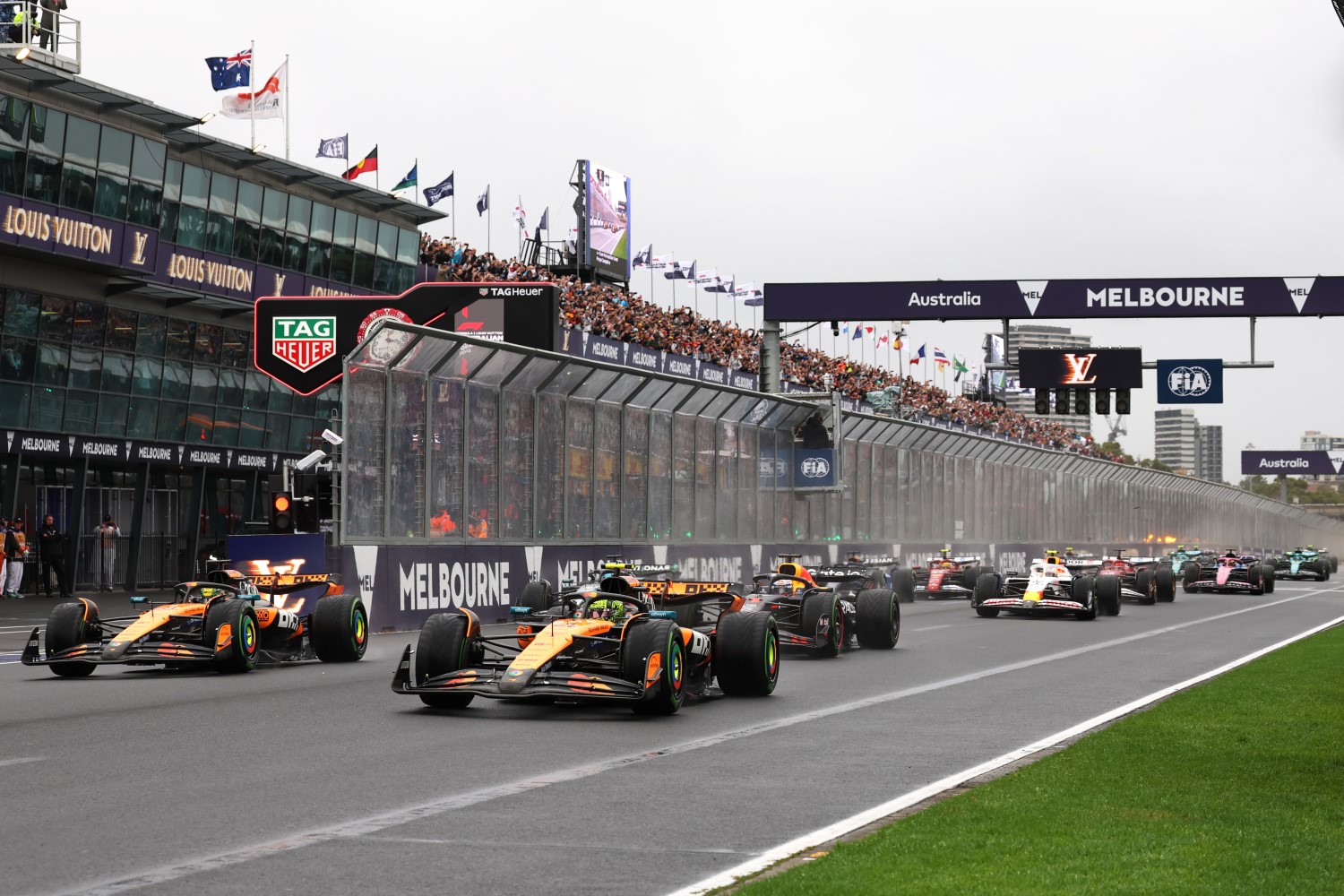
Formula 1 News: Drivers will need talent for F1 standing starts in 2026
Formula 1 is set for one of its most significant overhauls in decades with the 2026 regulations, and a subtle but impactful change to race starts could place even greater emphasis on raw driver skill. As teams prepare for smaller, lighter cars with a near 50/50 split between internal combustion and electric power, the FIA has introduced a restriction that strips away electrical assistance in the critical opening moments of a grand prix.
From 2026, drivers will be prohibited from deploying the MGU-K (Motor Generator Unit – Kinetic) during the initial phase of a standing start. For the first 50 meters (or approximately the first 50 km/h), the launch will rely solely on the internal combustion engine — no instant electric torque to smooth out imperfections or compensate for wheelspin.
This marks a departure from current hybrid systems, where the MGU-K’s seamless power delivery helps mask minor errors in clutch control and throttle application. Without that electric boost, a clean getaway will demand pinpoint precision: perfect rev-matching, impeccable clutch bite, and flawless management of mechanical grip. Any hesitation, bog-down, or excessive wheelspin could prove costly, potentially costing multiple positions before drivers even reach Turn 1.
The reasoning ties into the broader goals of the 2026 power unit rules, which prioritize energy efficiency, sustainability, and fairness. The MGU-K itself receives a massive upgrade — jumping from 120 kW to 350 kW — to enhance overtaking and straight-line performance later in the lap. However, its deployment is carefully regulated, including a ramp-down at higher speeds to prevent runaway top speeds and keep racing competitive. By banning early use at the start, the FIA aims to eliminate low-speed power exploits through software or battery tricks, forcing teams and drivers to focus on mechanical fundamentals and driver talent.
This change aligns with the elimination of the MGU-H (Motor Generator Unit – Heat), simplifying the hybrid system while making it more road-relevant. The result? Race starts that feel more raw and unforgiving, reminiscent of pre-hybrid eras but in cars still packing over 1,000 horsepower overall.
The impact could be dramatic. In today’s grid, strong launches often blend hardware advantages with driver technique. Come 2026, the playing field levels in those first crucial seconds — rewarding drivers with exceptional feel, reaction time, and composure under pressure. Veterans known for masterful starts, like Max Verstappen or Lewis Hamilton, may gain an edge, while rookies could face steeper learning curves. Small errors will be punished immediately, turning the five red lights into a true test of talent rather than just technology.
As one analysis notes, this forces drivers to rely purely on mechanical grip and clutch control, with “no instant electric torque to mask a poor launch, and any mistake will be punished immediately.” The first launch could now decide whether a driver gains places or gets swallowed by the pack.
With active aerodynamics, new overtaking modes, and sustainable fuels also on the horizon, 2026 promises closer battles and more driver-focused racing. But right from lights out, it will remind everyone that in Formula 1’s new era, talent behind the wheel remains the ultimate differentiator.
The countdown to Melbourne in March 2026 is on—and those opening seconds under the lights may never feel the same again.