Formula 1 News: Engineering a Greener Future – Mercedes-AMG PETRONAS F1 Team’s 2025 Sustainability Triumphs
In the high-octane world of Formula One, where speed and precision reign supreme, the Mercedes-AMG PETRONAS F1 Team is accelerating toward a bolder goal: becoming one of the most sustainable global professional sports teams.
–by Mark Cipolloni–
As the checkered flag fell on the 2025 season, the team reflected on a year of groundbreaking innovations that blended cutting-edge engineering with environmental stewardship, proving that racing excellence and planetary responsibility can coexist on and off the track.
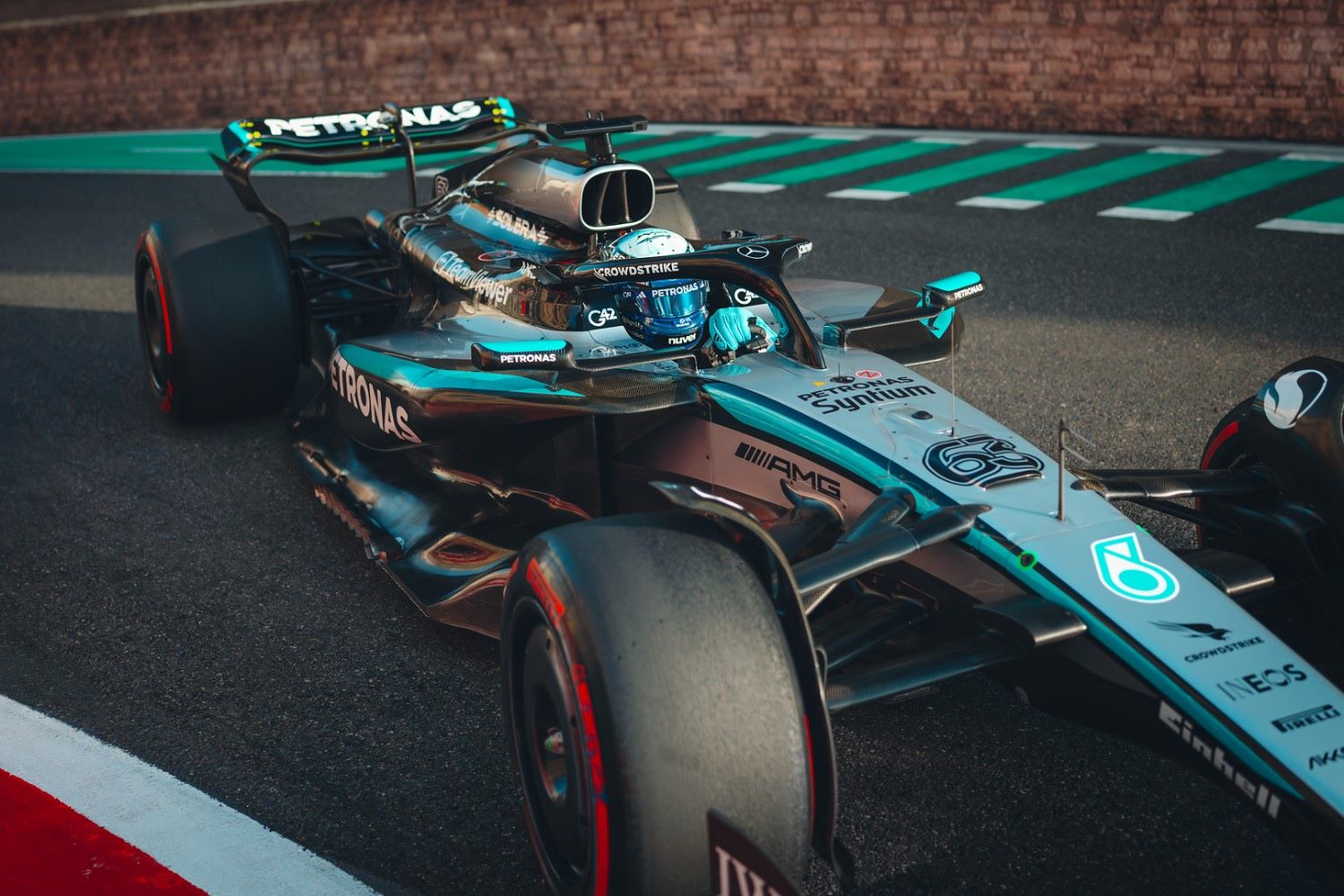
The story began in the sweltering streets of Baku at the 2025 Azerbaijan Grand Prix, where the team unveiled a revolutionary bio-based carbon fiber composite on the rear brake duct wheel shields of the #63 W16 car. This marked a historic first for the sport—a material derived from renewable sources, engineered to endure the brutal demands of F1 racing. Developed through tight collaboration with their carbon fiber supply chain, the component didn’t just debut; it thrived.
Over the subsequent races, it clocked more than 7,000 kilometers, powering the #63 W16 to a thrilling victory in Singapore, a podium finish in the glitzy lights of Las Vegas, and top-three results in the Sprint Races at Austin, São Paulo, and Qatar. This wasn’t just a technical win; it was a proof-of-concept that sustainable materials could handle the extreme heat, forces, and speeds of elite motorsport without compromise.
Back at the team’s headquarters in Brackley, sustainability wasn’t confined to the garage—it extended to the daily lives of the crew. Through a simple yet effective internal car-sharing initiative, team members collectively slashed 360,000 miles of commuting in 2025. To put that in perspective, it’s the equivalent of lapping the iconic Silverstone Circuit 99,000 times, a massive reduction in emissions that highlighted how small collective actions can drive big change.
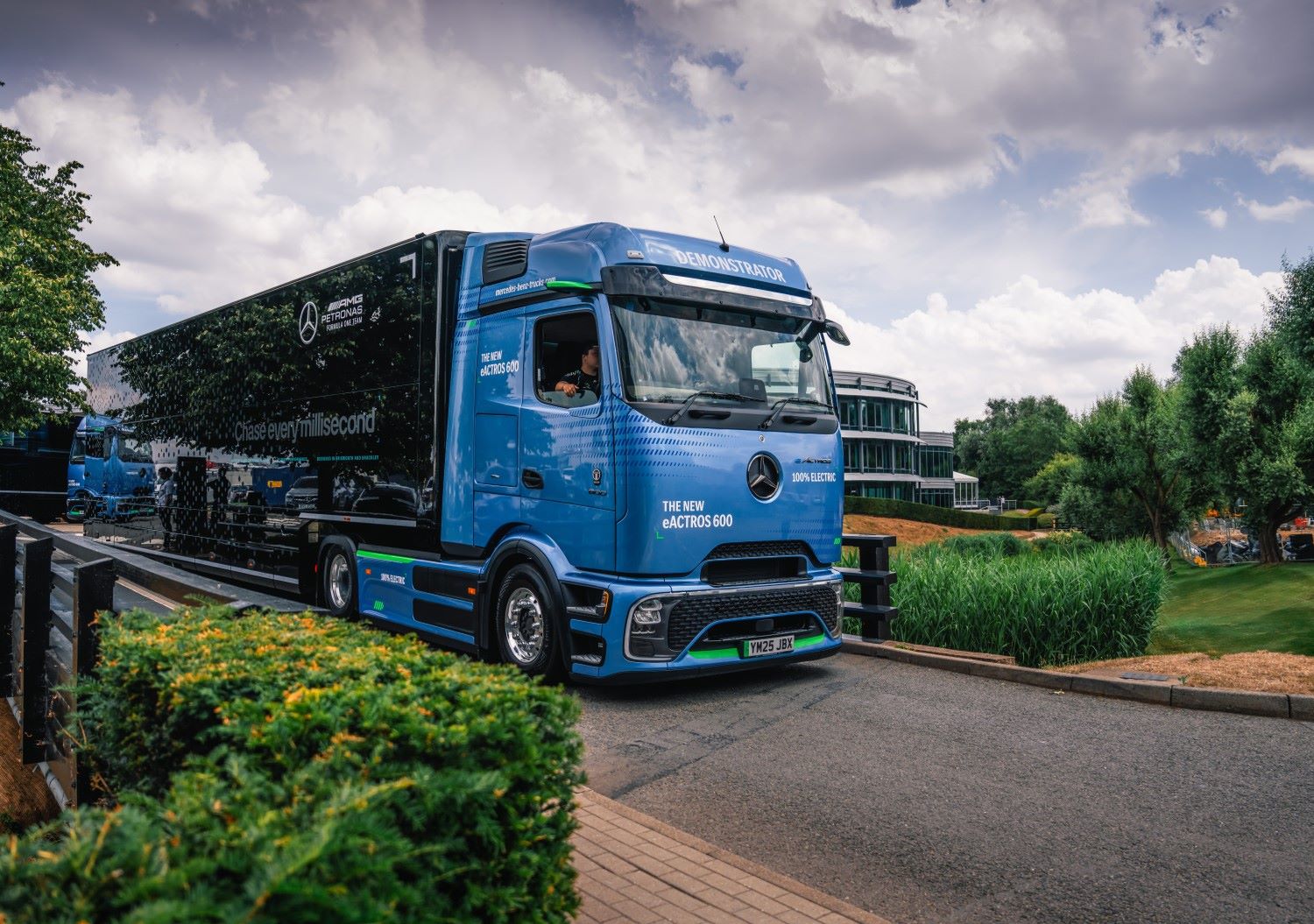
On the road, the team’s logistics operations went electric—literally. For the 2025 Dutch Grand Prix, they transported the W16 race cars and equipment 673 kilometers from Brackley to Zandvoort using the all-electric Mercedes-Benz Trucks eActros 600, one of the first of its kind in operation. Building on a successful pilot at the British Grand Prix earlier that year, Mercedes became the pioneering F1 team to rely on electric power for hauling its fleet to a European race weekend. This zero-emission journey symbolized a shift toward cleaner transport in a sport often criticized for its carbon footprint.
Complementing this, the team ramped up its use of HVO100 biofuel in the internal combustion engine trucks handling European season logistics. The switch avoided over 410 tons of CO2 equivalent emissions—comparable to the annual carbon-sequestering power of 33,600 fully grown mangrove trees. Mangroves, those resilient coastal guardians, emerged as a recurring theme in the team’s 2025 narrative.
These natural carbon sinks not only combat climate change but also safeguard ecosystems and biodiversity. Inspired by their potential, Mercedes launched the Blue Carbon Collective in June 2025 alongside Title and Technical Partner PETRONAS. This initiative funds mangrove restoration research in Brazil and Malaysia, tying directly to the team’s racing calendar—eight circuits, including Singapore and São Paulo, lie within 100 kilometers of mangrove forests. The theme even influenced merchandise designs for the Miami Grand Prix, blending environmental advocacy with fan engagement.
The team’s commitment rippled beyond F1’s elite level, reaching into the grassroots of motorsport. In partnership with Motorsport UK, they co-funded the adoption of sustainable fuel for the 2025 IAME Waterswift Restricted Cadet Class in the British Karting Championships. Starting from Round Three, this fuel delivered a 55% emissions cut compared to traditional fossil alternatives, nurturing the next generation of racers while embedding sustainability into the sport’s foundation. It was a nod to Mercedes’ legacy of talent development, now fused with a forward-thinking eco-ethos.
Bradley Lord, the team’s representative, captured the spirit of the year: “We are proud of the progress made in 2025 across the environmental sustainability landscape and within the inclusion and social impact space. Our actions matter to us, and we know it matters to our fans. We are energized by what is to come in 2026 and determined to keep raising the bar—at home, on track, and in the communities that we live and race in.”
Echoing this, Alice Ashpitel, Head of Sustainability, added: “As we look to the coming season, it’s rewarding to see the progress that our team made in 2025. Our progress would not have been possible without the contributions of our team members in Brackley and Brixworth, and the support of our partners and suppliers. There were many highlights in 2025 but the significance of applying a bio-based carbon fiber composite material to the W16 cannot be underestimated, and we are grateful to all of those involved. We look forward to 2026 as we work to shape a more sustainable future for Formula One.”
As 2026 dawns, Mercedes-AMG PETRONAS F1 Team isn’t just chasing championships—they’re engineering a legacy where victory laps leave a lighter footprint on the planet.