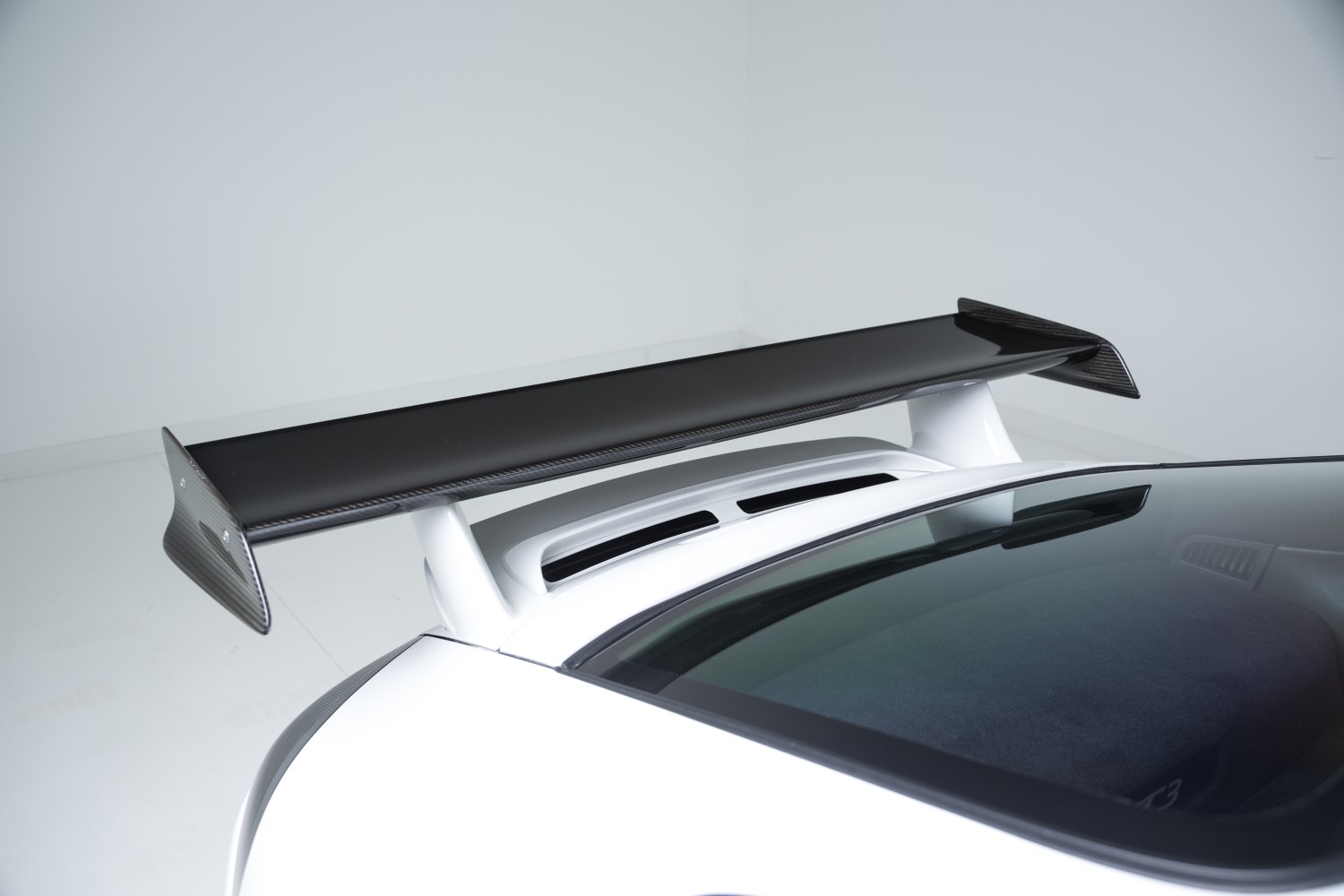
Sports car Spoiler Materials 101 from From Fiberglass to Carbon Fiber
Spoilers (example pictured) are definitely some of the most popular add-ons people install on their cars, no matter if they are car enthusiasts, racers or just regular car owners not involved in car culture. Drive through any city and you’ll spot all kinds of spoilers on Civics, WRX’s, BMWs, even some crossovers now.
They’ve become such a standard mod that the aftermarket offers them for nearly every production car. But here’s where it gets interesting: walk into any aftermarket shop or browse online, and you’ll see the same spoiler design listed at wildly different prices. A lip spoiler in fiberglass costs $120. The exact same design in carbon fiber? $1,800. What gives?
If you’ve ever browsed for spoilers online and got overwhelmed by all the options (like these for instance), you probably noticed the same design can cost anywhere from $120 to $1,800 depending on material. This parameter is very important as it determines the weight, painting requirements and even sometimes the installation method (light lip spoilers can be just attached with a 3M tape, instead of bolting on).
The material isn’t just about the price tag or aesthetics. It determines whether your spoiler survives a parking lot tap or shatters, if it’ll crack after one winter, and how much prep work you need before painting. This article digs into the most common spoiler material options like fiberglass, ABS plastic, carbon fiber, and some newer alternatives for sports cars.
Spoiler Fashion
Back in the day, spoilers weren’t really a thing. In the 1980s and early 1990s, you’d only see them on actual performance cars like Porsches, Supras, RX-7s, maybe a Mustang GT, but not on regular economy cars. Although with the manufacturers leaning towards the more aerodynamic-friendly designs and producing more powerful cars, spoilers as pure functional elements started to appear on sedans and hatchbacks in sporty trim levels.
The modified car scene was also influenced by top American tuners like Saleen and European shops like AMG, Brabus, Koenig etc. that used sick-looking spoilers on their high-performance cars. Later down the road, a growing trend on modified cars, especially in the US, Germany and Japan, popularized the spoilers as a simple and cost-effective way to spice up the looks of any car and give it a sporty touch.
Popular Culture
Of course, it would be wrong not to mention the holy movie of all modified car fans – Fast and Furious which dropped in 2001. It completely changed what people thought modified cars should look like and massively popularized the modified car culture. Paul Walker’s Skyline GT-R had that massive Nismo wing. Vin Diesel’s Charger, the Supras, the Eclipses, everything had aggressive body kits and of course the spoilers. Suddenly every kid with a Civic or Integra wanted the same look. Didn’t matter if your car made 120 horsepower. You wanted that cool-looking rear wing.
Then the NFS Underground game hit PlayStation in 2003, and showed everyone that with some basic mods even a simple car can turn into an attention grabber. Kids spent hours building virtual cars with massive GT wings, then wanted to replicate it on their real rides. Of course, not everyone could afford to lower the suspension, get new custom wheels and a body kit, but installing a trunk spoiler was a piece of cake.
Key Materials
Not all spoilers are made equal, even if they look the same. Different materials have genuinely different properties that affect weight, durability, and of course the price.
Fiberglass
Fiberglass dominated aftermarket spoilers from the 1970s-1990s and still exists as the cheapest choice. Manufacturing is simple: fiberglass cloth layered in a mold with resin, then cured. Easy to make custom shapes, cheap to produce.
Among the problems of this material is that it’s brittle and can crack if hit. UV exposure weakens it and causes fading, while low temperatures make it even more fragile. The weight isn’t too low but manageable on smaller design spoilers.
ABS Plastic
Most factory spoilers are made of ABS (Acrylonitrile Butadiene Styrene) plastic, which is lightweight, durable, impact-resistant, and takes paint well. Unlike fiberglass, it flexes on impact instead of cracking. The weight is similar to fiberglass.
Carbon Fiber
Real carbon fiber is light and strong, although it doesn’t mean that it’s harder to damage. A carbon GT wing weighs 8-12 pounds versus 20-25 for fiberglass, which is about 50-60% lighter, making the strength-to-weight ratio of such spoilers unmatched.
The quality of manufacturing determines how durable and prone to weather elements it would be. Wet layup (cheapest) is basically a fiberglass process with carbon cloth. Pre-preg uses pre-saturated sheets cured in an autoclave. Dry carbon (most expensive) uses vacuum-bagging for maximum strength and minimum weight.
Aluminum – Racing Only
Aluminum material is used on high-performance and race car applications. You can spot GT3, formula and time-attack cars rocking huge aerodynamic wings made of this material. Combines light weight with extreme rigidity to handle hundreds of pounds of downforce without flexing.
For street cars, aluminum doesn’t make sense. Expensive to fabricate, requires powder coating or anodizing to prevent corrosion, no real advantage over carbon fiber for street use.
Summing up
Material choice comes down to what you’re building. Track cars justify carbon fiber for weight savings. Daily drivers and street builds should stick with ABS or polyurethane, as they’re durable and won’t break the bank. Spoilers remain one of the coolest mods you can do because they actually change how your car looks and performs, but only if you pick the right material and skip the fake carbon fiber garbage from unknown brands.