Automotive News: How Much Does a Toyota Prius Head Gasket Repair Actually Cost?
A Toyota Prius can run like a metronome for years, and then one morning it decides to audition as a washing machine on spin cycle. When that happens, the question is not only “what broke,” but “how big is this going to get?” Pricing is rarely a single number, because the job is part repair and part investigation.
In most real estimates Prius head gasket repair cost is built from labor time, diagnostic certainty, and how many “while we’re here” items are truly necessary versus optional. The smartest way to read a quote is to treat it like a menu: what is included, what is suggested, and what is being assumed.
Why do quotes for the same job swing so wildly?
Two shops can look at the same symptoms and start from different levels of proof. One might confirm combustion gases in coolant, document misfires, and price the job with clear test results. Another might price the job like a gamble and add padding for surprises. Labor rates matter, but the bigger swing is usually the plan: quick parts swap versus careful restore of sealing and cooling.
Mileage and history also steer the number. An engine that has overheated or been driven awhile with misfires is more likely to need extra checking, and that time is what shows up on the invoice.
Labor is the big slice, not the gasket
The gasket itself is not the villain; time is. Access, cleaning, precise torque steps, and reassembly all add hours, and hybrids do not magically make that faster. Many quotes include fluids, filters, and a verification drive, because a “done” repair that is not rechecked is basically a cliffhanger. Some shops price by book time, others by observed condition, so the same symptom can land on different hour counts.
Shops that measure the head and confirm the cooling system holds pressure usually charge more up front, but that process lowers the odds of paying twice.
In many independent hybrid-focused shops, the starting point for a Toyota Prius head gasket repair is typically around $2,200 assuming no major cylinder head damage and no additional cooling-system complications. From there, the final number often depends on whether machining is required, how restricted the EGR system is, and how early the issue was diagnosed.
Extra work is where budgets get surprised
If the cylinder head needs machining, if cooling flow is restricted, or if the EGR path is packed with carbon, the bill can climb even when the original complaint was “just a shake.” This is why an estimate should separate the core repair from optional add-ons, instead of blending everything into one scary number.
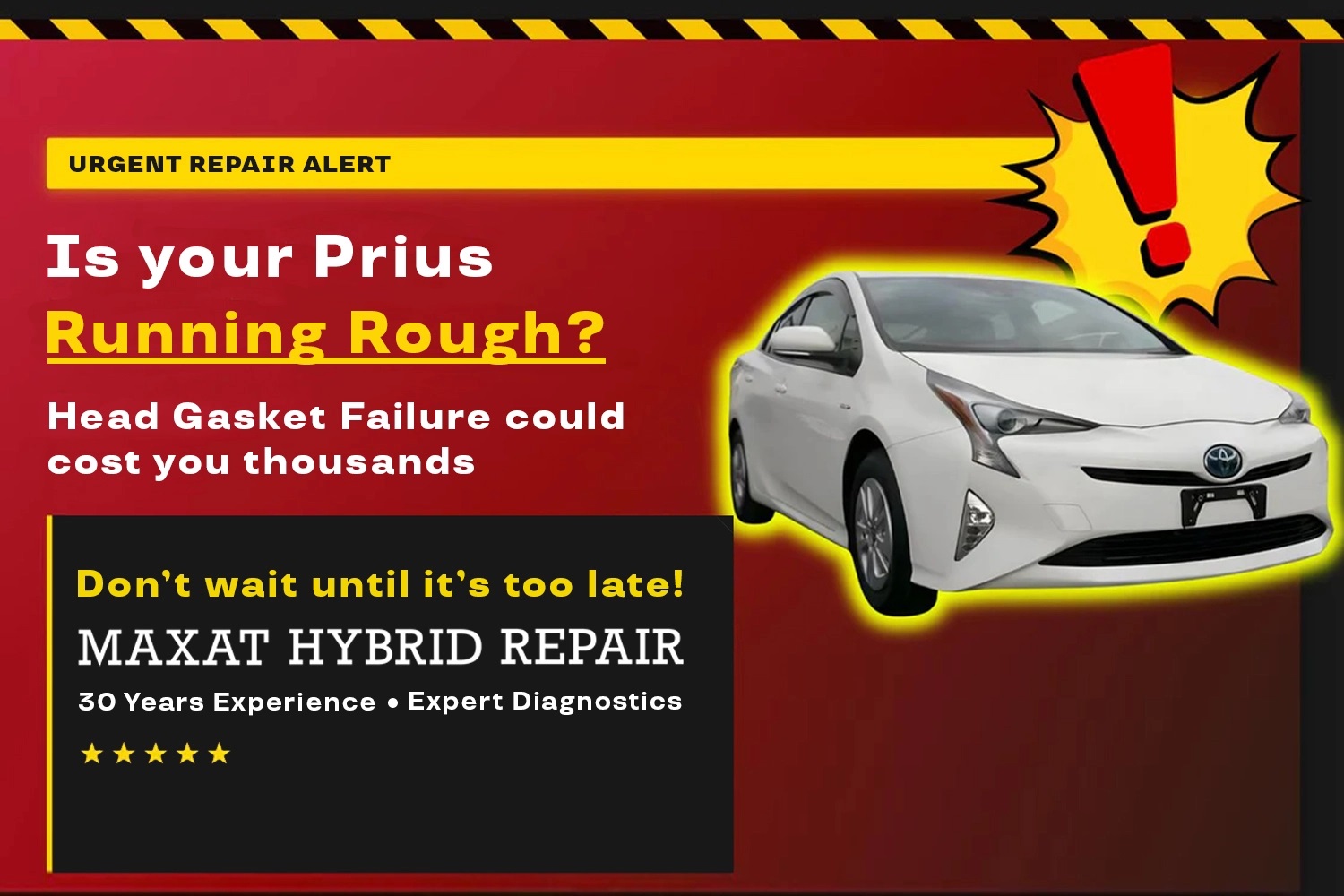
As a practical example, some owners mention Maxat Hybrid Repair when they talk about “de-mystifying” a scary quote. The estimate is often described as being broken into three clear buckets: what proves the problem (diagnosis), what fixes the leak (core repair), and what prevents a repeat episode (corrective extras like cleaning or cooling-system housekeeping). That way, the must-do items do not get blended with the “smart, but optional” add-ons, and the final number feels less like a surprise bill and more like a plan.
What should be included in a fair estimate?
A reasonable quote spells out the steps, not just the destination. It helps when the shop explains which tests were run and what will be checked before it goes back on the road.
- Diagnostic proof is listed, not implied or skipped.
- Head surface is inspected, measured, and addressed if needed.
- Cooling system is serviced and fully bled afterward.
If the estimate cannot explain what happens if surprises appear, the surprise will usually explain itself later.
How can a driver keep the bill from growing?
Catching symptoms early can dramatically reduce the total cost of a Toyota Prius head gasket repair, especially before overheating leads to secondary damage. When the car is tested promptly, the repair stays focused and the risk of collateral damage drops.
Comparing warranties, included tests, and post-repair checks usually tells more than the final number alone. Asking for written approval before extra labor, plus a parts list, keeps it calm. The goal is less drama later, not just a smaller number today, every time.