Formula 1 News: How Much Horsepower Does an F1 Car Have?
In the high-stakes world of Formula 1, power is the absolute currency of speed. As we look at the 2025 season, a modern Formula 1 car produces approximately 1,000 horsepower (745 kW). However, unlike a standard road car where the horsepower figure is a fixed number generated by a single engine, an F1 car’s power is dynamic. It is the result of a complex marriage between a highly tuned internal combustion engine and a sophisticated hybrid electric system.
The total output fluctuates depending on how the driver deploys the electrical energy stored in the battery. For the majority of a lap, the car relies heavily on its internal combustion engine, which provides the baseline performance. When the driver engages the full potential of the hybrid system—typically for around 33 seconds per lap—the combined output surges to that magical 1,000 horsepower figure, propelling the car to speeds exceeding 220 mph (354 km/h).
When discussing the extreme horsepower produced in Formula 1, it’s equally important to understand how high-output engines are managed in real-world conditions. A solid performance engine maintenance resource can help drivers recognize early warning signs and prevent costly failures, a principle that applies whether you are managing a race team or a high-performance road car. Just as F1 teams use telemetry to monitor engine health, understanding the stress placed on high-performance machinery is critical for longevity and reliability.
The 2025 F1 Power Unit Specification
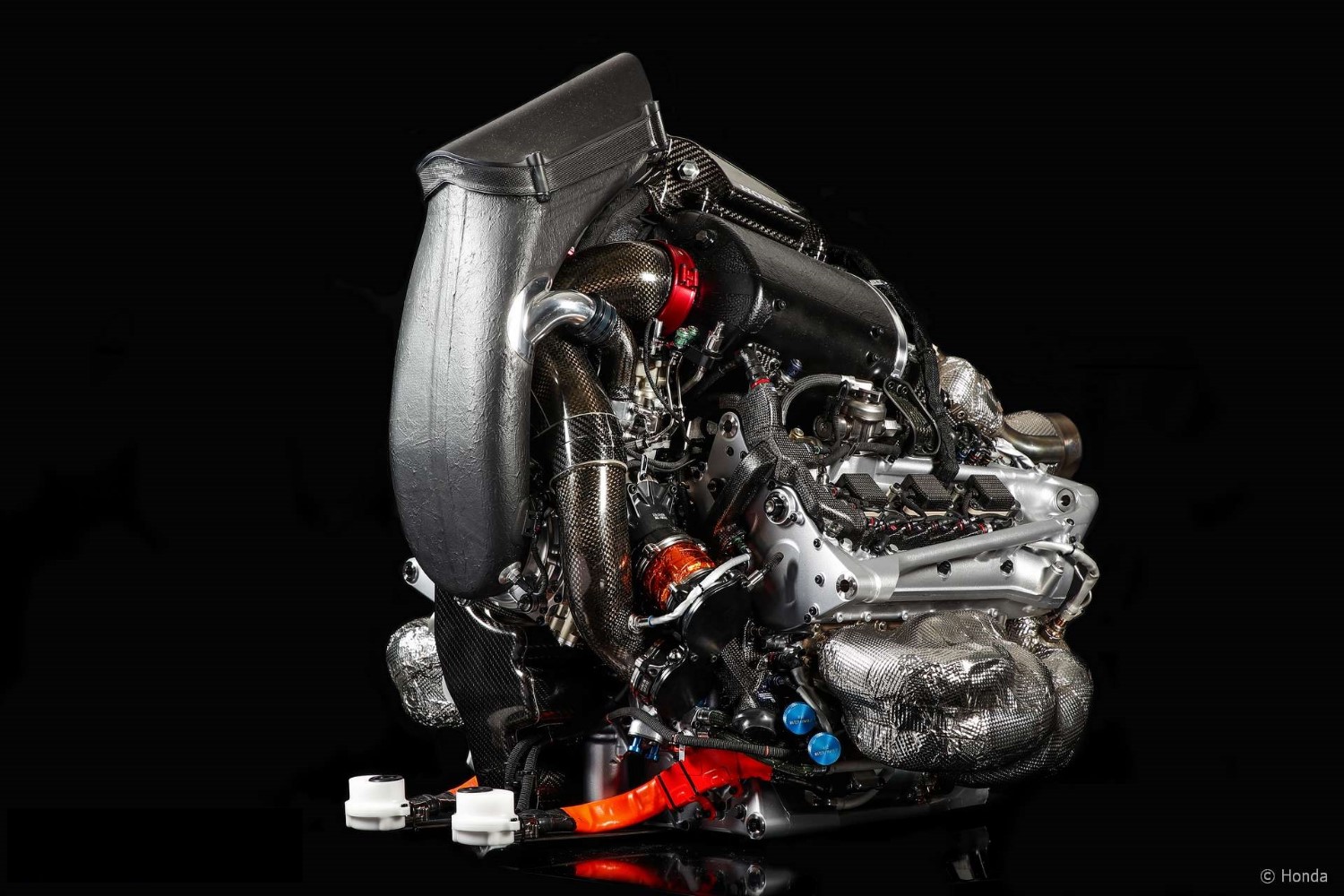
To understand where the power comes from, we must look at the “Power Unit” (PU). In F1, we don’t just say “engine” anymore because the system is so integrated. The current regulations mandate a 1.6-liter V6 turbocharged hybrid configuration. This isn’t just about burning fuel; it’s about harvesting energy that would otherwise be wasted.
Internal Combustion Engine (ICE) Breakdown
The heart of the beast is a 1.6-liter (1600cc) V6 engine. Despite its small displacement—similar to a Ford Fiesta or a Honda Civic—this engine is a marvel of efficiency and engineering. It spins at a regulated maximum of 15,000 revolutions per minute (RPM).
The ICE alone generates between 830 and 850 brake horsepower (bhp). To achieve this, engineers focus heavily on thermal efficiency. These engines convert over 50% of the fuel’s energy into motion. For comparison, a standard road car engine typically operates at around 30-35% efficiency. This gap highlights just how advanced F1 combustion technology has become.
The Hybrid System (ERS) Explained
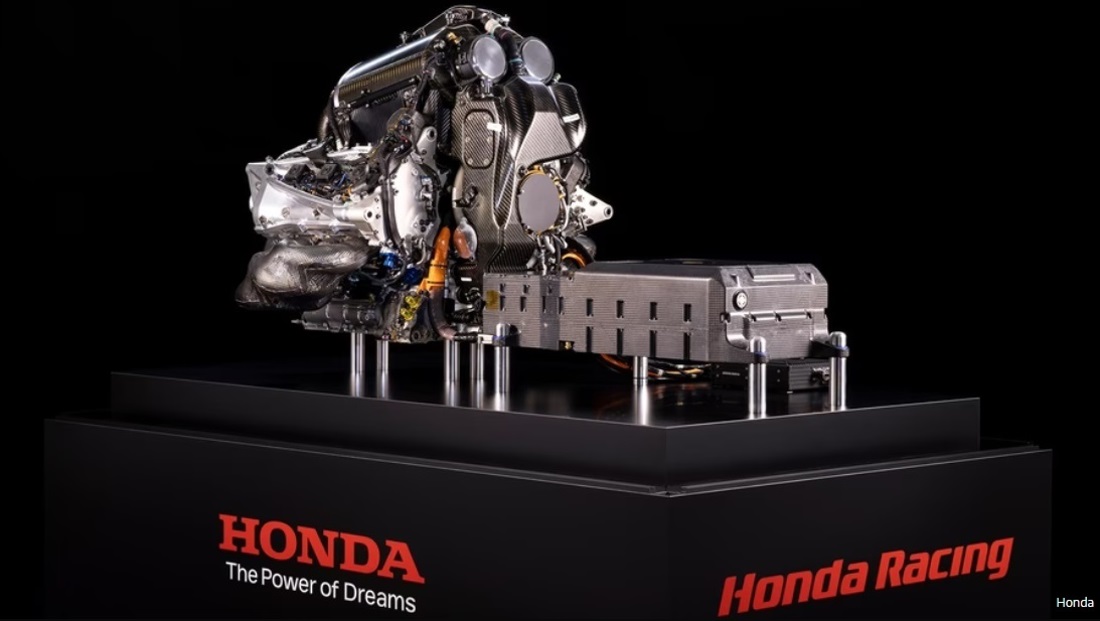
The “Energy Recovery System” (ERS) is what pushes the F1 car into the territory of hyper-performance. It consists of two main electric motor-generator units that work in tandem to keep the battery charged and the power delivery smooth.
The first is the MGU-K (Motor Generator Unit-Kinetic). Connected directly to the crankshaft, this motor harvests kinetic energy during braking. It can then redeploy this energy to boost acceleration. In 2025, it is capped at providing roughly 161 hp (120 kW).
The second component is the MGU-H (Motor Generator Unit-Heat). It was used until the end of the 2025 season and then banned. We talk about here only as reference as to what this important component did. This unit sits on the turbocharger shaft. It harvests heat energy from exhaust gases to keep the turbo spinning, which effectively eliminates turbo lag. Its energy recovery is unlimited by regulations, making it a critical component for maintaining high speeds over a race distance.
Horsepower in Race Trim vs. Qualifying
The “1,000 horsepower” figure is often cited as a maximum, but an F1 car does not produce this power 100% of the time. The management of energy is a strategic game played by drivers and engineers, turning the cockpit into a high-speed chess match.
Energy Deployment Limitations
While the internal combustion engine runs continuously, the electric boost from the MGU-K is strictly limited by the regulations. A driver can deploy a maximum of 4 megajoules (MJ) of energy from the battery to the MGU-K per lap. This equates to roughly 33 seconds of full electric boost. Once that energy is depleted, the car relies solely on the ~850 hp from the combustion engine until the battery recharges via braking or exhaust gases.
“Party Modes” and Engine Mapping
In previous years, teams used aggressive engine settings known as “party modes” for qualifying. These maps maximized power at the expense of engine life. While specific “qualifying-only” maps are now restricted to ensure engines run in the same mode for both qualifying and the race, drivers still have tools at their disposal. The “Overtake” button on the steering wheel allows them to deploy the full 160 hp electric boost instantly, essential for defending a position or attacking a rival on the straights.
The Evolution of F1 Horsepower
Formula 1 has seen a dramatic evolution in engine configurations, moving from raw, naturally aspirated monsters to the current efficient hybrids.
The V10 era (1989-2005) is often considered the “golden era” of F1 sound. These 3.0-liter engines produced between 800 and 950 hp and revved close to 20,000 RPM. They were loud and visceral but guzzled fuel.
This was followed by the V8 era (2006-2013), where the FIA mandated 2.4-liter engines to cut costs and speeds. Power dropped to around 750 hp, but this era introduced the first KERS (Kinetic Energy Recovery System) hybrids in 2009. The current Turbo-Hybrid era began in 2014, and while initial power was lower, rapid development saw teams break the 1,000 hp barrier by 2019, proving that smarter engineering beats sheer displacement.
F1 vs. IndyCar, NASCAR, and WEC
It helps to contextualize F1’s power against other top-tier motorsport series to see where it stands in the hierarchy of speed.
While F1 cars sit at ~1,000 hp, IndyCar machines trail slightly with a 2.2-liter twin-turbo V6 producing around 700-750 hp. In the world of endurance racing, the WEC Hypercars are capped by regulations at roughly 670 bhp to ensure close competition over 24-hour races.
NASCAR presents an interesting comparison. A Cup Series V8 engine is capable of producing over 850 hp, but it is restricted via tapered spacers to around 670 hp at most tracks for safety. However, even if a NASCAR had equal power, an F1 car would still be vastly faster around a circuit. This is due to the F1 car’s lightweight carbon-fiber construction (798 kg) and immense aerodynamic downforce, which allows it to corner at speeds that would send a stock car spinning.
The Future: 2026 Engine Regulations
Looking ahead, Formula 1 is preparing for its biggest engine regulation shake-up in over a decade, arriving in 2026. The goal is to maintain the 1,000 horsepower spectacle while becoming more environmentally sustainable.
The Shift to 50/50 Power Distribution
The 2026 Power Units will see a complete rebalancing of power sources. The total output will remain at roughly 1,000 hp, but the split will change dramatically. The internal combustion engine output will decrease to approximately 535 hp (400 kW) due to reduced fuel flow rates.
To compensate, the electric power will increase massively from 160 hp to 470 hp (350 kW). This near 50/50 split means the electric motor will play a far more critical role in the car’s performance. Additionally, the complex MGU-H will be removed to simplify the engines, and cars will run on 100% sustainable fuels, ensuring the sport remains relevant in a changing world.