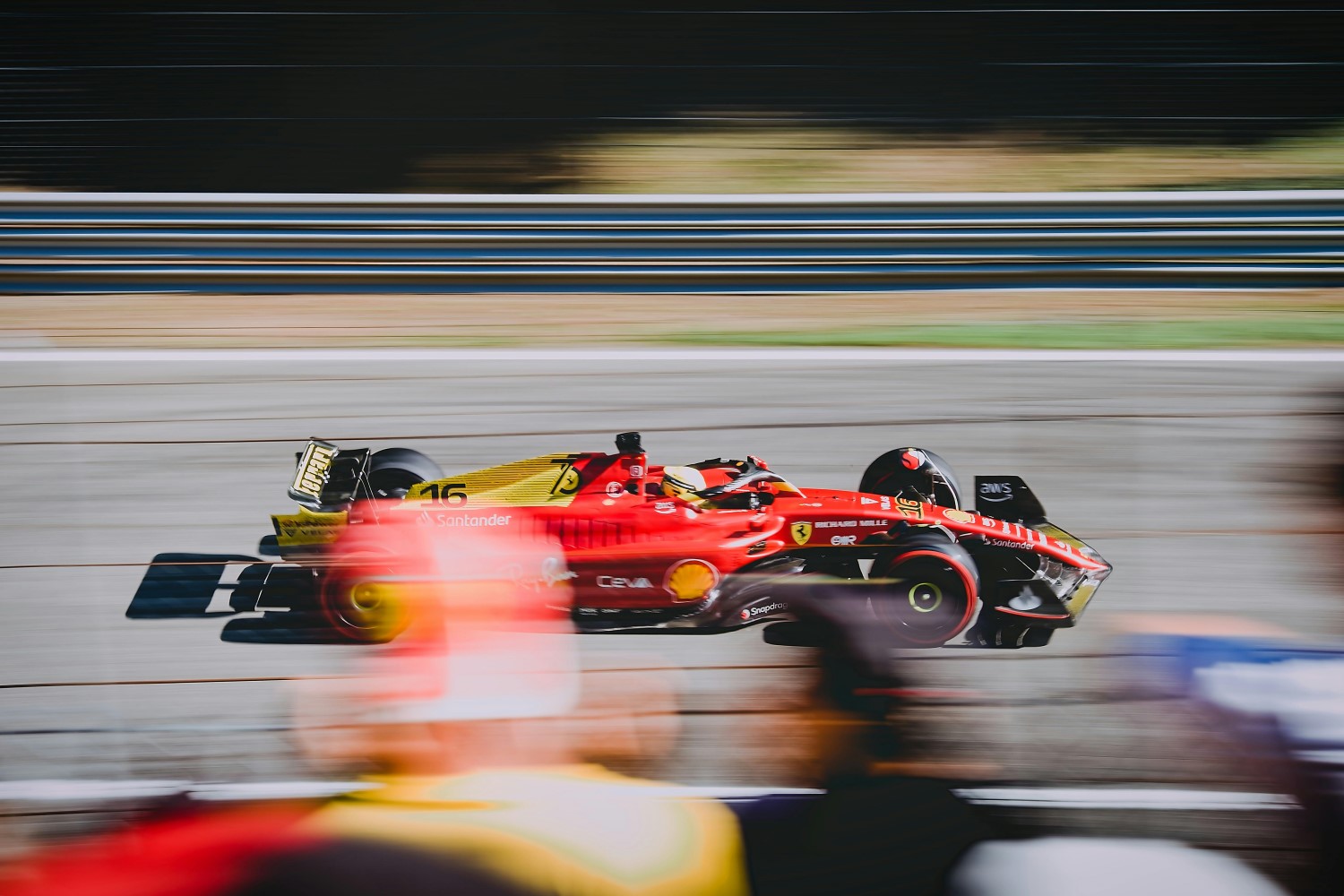
Formula 1 News: How fast are Formula 1 cars?
Formula 1 represents the absolute peak of automotive technology, a sport where engineering and bravery meet at 200 mph. For fans and newcomers alike, the most pressing question is often the most primal: just how fast do these machines actually go? The answer isn’t just a single number on a speedometer; it’s a complex mix of aerodynamics, raw power, and grip.
While F1 showcases elite engineering, these innovations eventually reach our driveways. For most of us, though, the focus isn’t just speed but durability, making car model reliability insights valuable for everyday vehicles that benefit from this race-bred tech.
To really understand the speed of a Formula 1 car, we have to look beyond just top speed and analyze acceleration, cornering, and the records that define the sport.
Top Speed Records: Official and Unofficial
When discussing the maximum velocity of an F1 car, we have to distinguish between speeds hit during a Grand Prix, qualifying sessions, and specialized record attempts. A car’s setup changes everything; a vehicle tuned for the tight, twisting streets of Monaco will be much slower in a straight line than one built for the long straights of Monza.
The Fastest Official Race Speed
The official record for the fastest speed ever recorded during a Formula 1 race belongs to Valtteri Bottas. Driving the Williams FW38 at the 2016 Mexican Grand Prix, Bottas hit a staggering 372.5 km/h (231.4 mph).
This record wasn’t just about the engine. It was made possible by the unique environment of the Autódromo Hermanos Rodríguez. The track is located at high altitude where the air is thinner. This reduces aerodynamic drag significantly, allowing the car to slice through the air with less resistance than at sea-level tracks like Silverstone or Spa.
Unofficial and Testing Records
Speeds outside of race conditions have gone even higher. During qualifying for the 2016 European Grand Prix in Baku, the same Valtteri Bottas was clocked at 378 km/h (234.9 mph). Since this happened during a qualifying session and not the race itself, it stands as an unofficial figure in the race record books, though the speed was very real.
However, the absolute fastest an F1-style car has ever traveled was during the Honda “Bonneville 400” project in 2006. The Honda F1 team took a modified RA106 car to the Bonneville Salt Flats. They removed the rear wing to eliminate drag and replaced it with a stability fin. The car achieved a top speed of 397.36 km/h (246.9 mph), setting the benchmark for the highest speed in an F1 car, albeit in a straight-line test rather than a Grand Prix.
F1 Car Acceleration and Lap Times
While top speed grabs headlines, acceleration is what actually wins races. An F1 car’s ability to explode from a standstill or rocket out of a slow corner is unrivaled on a circuit.
0-60 mph and 0-100 km/h Times
Formula 1 cars are rear-wheel drive and limited by traction rather than power. Despite having over 1,000 horsepower, they cannot apply full throttle instantly without spinning the wheels. The tires must bite into the asphalt to launch the car forward efficiently.
- 0-100 km/h (0-62 mph): Approximately 2.6 seconds.
- 0-200 km/h (0-124 mph): Approximately 4.6 seconds.
- 0-300 km/h (0-186 mph): Less than 10.6 seconds.
You might see road cars like the Rimac Nevera or Tesla Plaid claiming faster 0-60 times. However, an F1 car is not optimized for a drag strip launch; it is optimized to repeat that acceleration hundreds of times over a race distance, while cornering at speeds that would throw a standard hypercar off the track.
Cornering Speeds and G-Forces
The defining characteristic of F1 speed isn’t just velocity; it’s grip. Thanks to immense downforce, F1 cars can take corners at speeds that defy logic. At high speeds, the air pressure pushes the car down onto the track with a force equivalent to double or triple its own weight.
This allows drivers to experience lateral G-forces of up to 6G in corners like Silverstone’s Copse or Spa-Francorchamps’ Pouhon. Under heavy braking, drivers experience up to 5G of deceleration. This means a driver’s head and helmet effectively weigh five times their normal weight during these maneuvers, requiring immense physical neck strength just to look straight.
Why Are F1 Cars So Fast?
The speed of a Formula 1 car is the result of a “Power Unit” that combines brute force with electrical efficiency, wrapped in an aerodynamic shell.
The Hybrid Power Unit Current F1 cars are powered by a 1.6-liter V6 turbocharged engine coupled with a sophisticated Energy Recovery System (ERS).
- ICE (Internal Combustion Engine): Generates roughly 850 bhp.
- ERS (Electric Motor): Adds approximately 160 bhp by harvesting heat from the exhaust and kinetic energy from braking.
- Total Output: The combined system produces over 1,000 horsepower.
Aerodynamics: Downforce vs. Drag In F1, the goal is twofold: create downforce to grip the road and minimize drag to drive fast in a straight line. The front and rear wings suck the car to the ground, while the DRS (Drag Reduction System) allows drivers to open a flap on the rear wing on designated straights. This reduces drag significantly, offering a speed boost of 10–20 km/h for overtaking.
Formula 1 Speed vs. Other Racing Series
To understand “how fast” F1 really is, it helps to compare it to other top-tier motorsport categories.
- F1 vs. IndyCar: This is the most common comparison. IndyCars are faster in a straight line, reaching speeds of 236 mph (380 km/h) at the Indianapolis 500 because they race on ovals with low-drag setups. However, on a traditional road course with left and right turns, an F1 car is significantly faster due to superior braking and cornering downforce.
- F1 vs. MotoGP: While MotoGP bikes accelerate incredibly fast, they cannot match the cornering speed of an F1 car. Four wide tires and aerodynamic downforce allow the car to carry much more speed through a turn than a motorcycle ever could.
Factors Influencing Speed & Regulations
An F1 car does not perform at peak speed at all times; several factors dictate its velocity.
- Track Layout: Tracks like Monza (The Temple of Speed) feature long straights, leading to high average speeds. Street circuits like Monaco are tight and twisty, limiting top speeds significantly.
- FIA Regulations: Speed is strictly governed by the FIA to ensure safety. Fuel flow limits prevent engines from running at unsustainable power levels, and safety measures like the Halo add weight but ensure survival. While there is no speed limit on the track, the pit lane has a strict limit of 80 km/h.
The Future of F1 Speed: 2026 Regulations
Formula 1 never stands still. The upcoming 2026 Technical Regulations aim to redefine the sport again.
- Active Aerodynamics: Cars will feature moveable wings on the front and rear to dynamically switch between “high downforce” for corners and “low drag” for straights.
- Lighter Cars: The minimum weight is expected to drop by 30kg, making the cars more agile.
- Sustainable Fuel: Engines will run on 100% sustainable fuels with a 50/50 split between electric and internal combustion power.
Conclusion
So, how fast is a Formula 1 car? The numbers—372 km/h top speeds and 2.6-second 0–60 times—are impressive, but they don’t tell the whole story. The true speed of F1 lies in the engineering miracle that allows a car to corner at 5G and lap a circuit faster than anything else on four wheels. As regulations evolve in 2026, the cars may change shape and sound, but the relentless pursuit of speed will remain the heart of the sport.
Related Article: Formula 1 News: How Much Horsepower Does an F1 Car Have?