F1 Regulation Change: How do the 2026 F1 cars compare with the 2022-2025 generation?
The 2026 reset rewrites both chassis and power unit. F1 is chasing lighter, lower-drag cars, at the cost of a new racing style shaped by when drivers harvest, save, and deploy battery energy.
A smaller, lighter car than the 2022-2025 ground-effect generation
The 2022-2025 cars were conceived as floor-led downforce machines, with venturi tunnels underneath and large bodywork volumes above. The regulation also tolerated big footprints which gave us heavy cars: 2022’s minimum weight was 798kg, which drivers quickly felt in slow corners and quick direction changes, plus an uncomfortable inertia that made them tricky and too slide-prone.
For 2026, the FIA is shrinking the box. Maximum width drops for the first time in years from 2000mm to 1900mm and maximum wheelbase from 3600mm to 3400mm, while the maximum floor width is reduced to aid efficiency. Minimum weight is set 30kg lower than the 2022 baseline, with the concept breakdown at roughly 722kg for car+driver plus an estimated 46kg tyre mass. However, the first cars of this new generation are a bit overweight, according to reports.
On track, these cars look easier to place and more willing to rotate, particularly in low-speed sequences where the old machines felt reluctant to change direction. The compromise is packaging: less space for cooling and aero solutions also mean teams may face sharper trade-offs between the needed straight-line efficiency, tyre temperatures, and stability in traffic. The FIA also couples the “diet” with safety upgrades so teams can’t simply chase lightness at the expense of impact performance.
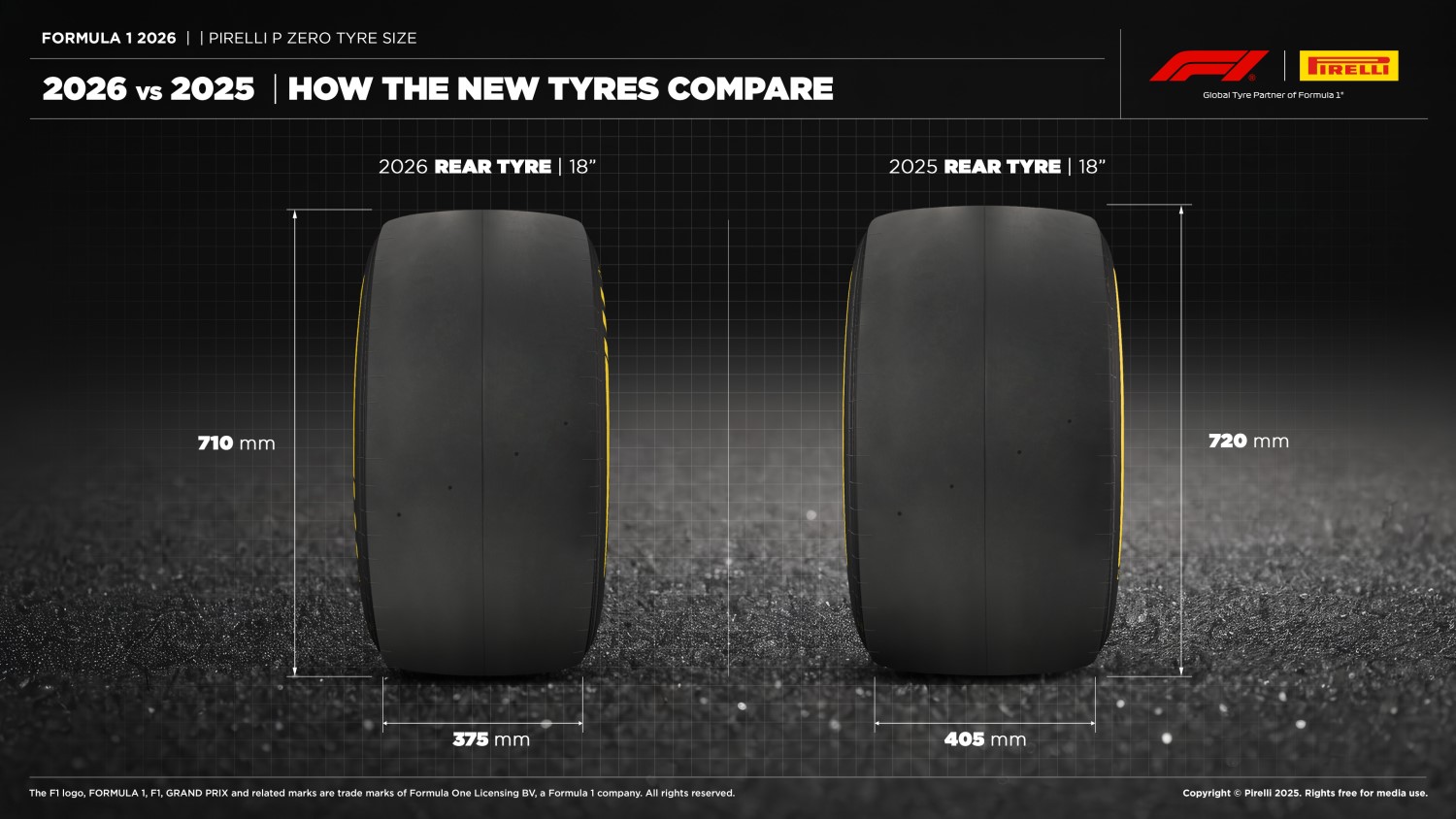
Pirelli tyres keep the 18-inch format introduced in 2022, but the 2026 rules narrow them (25mm less at the front, 30mm less at the rear) to achieve better drag numbers and trim mass. The secondary effect of that change is a more sensitive tyre when following closely, especially when a driver is forced off the racing line while the car is in a low-drag configuration.
F1 says goodbye to DRS
The 2022 rules brought back ground effect with prescribed underfloor geometry, trying to reduce how badly a following car loses downforce. In 2026, the aero target moves: according to the FIA, these new cars have 30% less downforce and 55% less drag versus the 2022 concept, because the new hybrid power units demand efficiency.
The signature device is “Active Aero”. Both front and rear wings have movable elements that switch between a higher-downforce corner state and a lower-drag straight state. F1’s own technical breakdown compares the moving elements to a “Venetian blind”: closed for downforce, open to shed drag. Thus, DRS is gone after 15 seasons in use.
Pre-season data will decide who starts fast at the 2026 Australian Grand Prix
The power unit is not so different from what we had until last season. The ICE is still a 1.6-litre turbo V6, but the hybrid is reshuffled. The MGU-H disappears and the MGU-K’s maximum output rises to 350kW, with a near 50-50 split between combustion and electric power, all running on 100% sustainable fuel.
Drivers also have different tools to overtake. With the new active aero and the disappearance of DRS, Formula One has introduced the “Overtake Mode”. If a car starts a lap less than a second behind the car in front, that car will have extra electric power to use to overtake at its disposal, and the driver is in charge of choosing where to deploy it. Other modes are the “Boost Mode”, which covers maximum combined power usage, while “Recharge” describes energy recovery, automated via ECU maps, with a lift-off regen option that recharges but disables active aero while it’s engaged.
This is where pre-season testing becomes unusually valuable. With the battery contribution so large, teams need real-world data to build energy maps. This data-gathering process helps feed the algorithms they use to get the best electric deployment possible to achieve the best racing time; in a similar way the online casinos’ algorithms use data gathered by the platform to recommend games to their user base. The principle is the same: have more information to better understand the situation and help achieve better results.
In the case of Formula 1, this means building energy maps: how quickly they can harvest on different brake profiles, where lift-and-coast is least painful, and how “super clipping” affects lap time. F1’s expanded 2026 pre-season schedule reflects the need for correlation time, with teams trialing reduced electric deployment to evaluate contingency options just in case.
All in all, Formula One is ready for the Australian Grand Prix, the new race of a new and electrical era.
Related Article: Formula 1 News: FIA confirms downforce has been cut 25% on 2026 cars