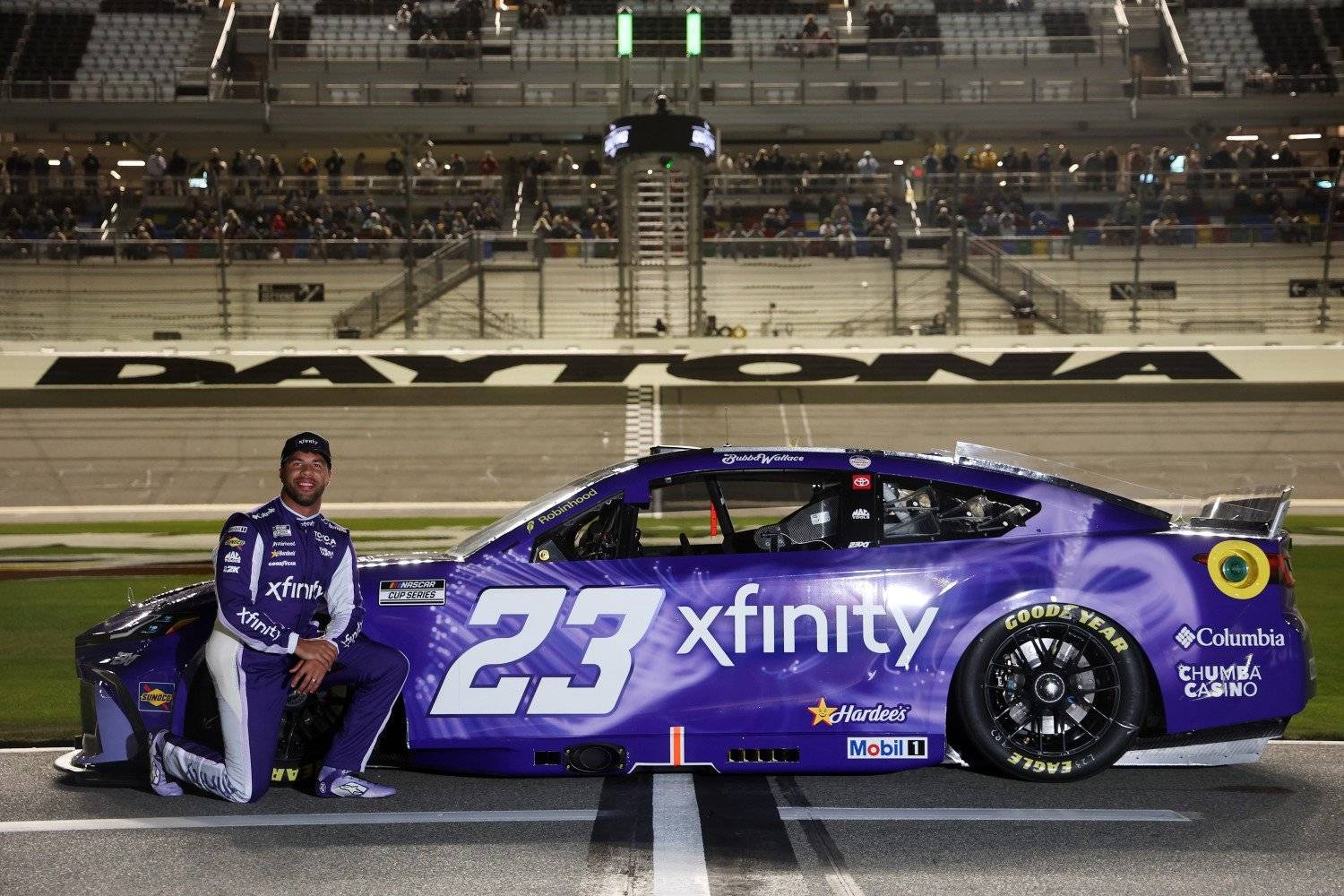
Bubba Wallace’s Martinsville Meltdown: Reckless Habit or Racing Reality?
The Cook Out 400 at Martinsville Speedway on March 29, 2026, was shaping up as another strong day for Bubba Wallace (pictured)—running third in the Cup Series standings entering the race with 23XI Racing’s No. 23 Toyota showing real speed. Then, on a late restart in the final stage (Lap 324), it all unraveled in classic short-track fashion. Wallace drove hard into the side of Carson Hocevar’s No. 77 Spire Motorsports Chevrolet exiting Turn 4, spinning Hocevar and triggering a 12-car pileup that brought out the caution and ended multiple drivers’ afternoons.
–by Mark Cipolloni–
Hocevar, who had started seventh and was battling inside the top 15 most of the day, wasn’t thrilled. On his team radio, he bluntly called it: “I just tried not to run over him. Got destroyed. That’s frustrating.” His crew chief piled on: “You caught him sleeping, he left it open. Then he just ran over you—he lost his mind.” Hocevar salvaged a 17th-place finish, matching his career-best at the track, but the damage was done. Wallace, meanwhile, tumbled from third to 11th in points after the incident sidelined him.
Post-race, Wallace owned the contact but framed it as a misjudgment, not malice. “I didn’t appreciate the three-wide into Turn 1, which is fine,” he told FOX Sports. “Then I misjudged the center of the corner, but I didn’t mean to turn him. What a frustrating day, man. Just wasn’t the day we wanted. I hate it for our team.”
Broadcast analysts weren’t so forgiving. Steve Letarte and Kyle Petty broke it down as frustration boiling over—Wallace reacting to Hocevar’s earlier aggressive restart move. Kevin Harvick, no stranger to Martinsville tempers, called it straight: Bubba “lost his cool” after getting put in a bad spot three-wide, but “it’s tough when you crash a guy like that and then wind up in the crash yourself.”
This wasn’t an isolated lapse. The user is right—Bubba *does* this a lot. Wallace has a documented pattern of high crash involvement that stands out even in NASCAR’s contact-heavy environment. In 2024, he was involved in 14 accidents across 36 races (36% of starts, or 0.39 per race). In 2025, he tied for the series lead in terminal crashes (DNFs due to wrecks) at 31%, with five such DNFs in just 16 races early that season.
His career stats tell the tale of talent paired with inconsistency: 298 Cup starts over 10+ years, three wins, three poles, and 64 top-10s. Yet his average finishes hover in the mid-teens, dragged down by self-inflicted wounds. The most infamous? His 2022 retaliatory hook on Kyle Larson at Las Vegas that wrecked multiple cars and earned him a one-race suspension.
Talent Issue or Discipline Problem?
Is Bubba Wallace simply “running out of talent”? Hardly. Look at 2026: Before Martinsville, he hadn’t finished worse than 11th, posted the second-best average finish in the series (8.8 through the first handful of races), led laps, and sat third in points. His teammate Tyler Reddick has been winning races, proving 23XI’s equipment is elite. Wallace has speed, qualifying prowess, and the ability to charge through the field when the car is right.
The problem isn’t raw ability—it’s decision-making under pressure. Short tracks like Martinsville amplify emotions, and Wallace has a history of letting them get the best of him. Harvick nailed it: plenty of veterans have “done stuff like this” at the paperclip. But when it becomes a repeatable pattern—especially one that takes out teammates, wrecks your own day, and costs points—it crosses from “aggressive racer” into liability.
NASCAR has the tools to address it. They’ve parked drivers before for clear retaliation (Wallace included). This one was ruled a racing incident, not intentional enough for a penalty under current standards. But a pattern like Wallace’s invites scrutiny. A “behind the shed” conversation from NASCAR officials—formal or otherwise—wouldn’t be out of line. Fines, points deductions, or even a temporary parking order have been used on others for less consistent offenses. The sanctioning body protects the product: 12-car wrecks on national TV aren’t great for the sport’s image or sponsor appeal.
The Bigger Picture for Wallace
At 32 years old and with Michael Jordan as co-owner, Wallace isn’t some rookie learning the ropes. He’s a veteran in good equipment who has shown flashes of championship-caliber runs (multiple wins, strong playoff pushes in spots). The 2026 season was his chance to silence critics and build on a career-best trajectory. Instead, this wreck handed points back to the field and revived the “Bubba wrecker” narrative.
Short-track racing demands aggression—everyone knows that. But sustained success demands control. Wallace’s talent is real. His judgment in the heat of battle has been the weak link too often. NASCAR doesn’t need to “take him behind the shed” every time emotions flare, but ignoring the pattern does no favors for Wallace, his team, or the series.
Until he channels that fire without the self-sabotage, the wrecks will keep coming—and the questions about whether he’s his own worst enemy will only get louder. Martinsville was just the latest chapter.