Formula 1 News: Mercedes’ Suzuka Masterclass Turns Into a Psychological Showdown
The Japanese Grand Prix was billed as the ultimate technical test for Formula 1’s 2026 regulations. Instead, it became a high-speed drama that left the Mercedes garage reeling. While the silver cars once again demonstrated total mastery of the new 50/50 power split, the post-race mood in the paddock was anything but triumphant. Kimi Antonelli’s second straight victory has shifted the narrative from “impressive rookie debut” to “legitimate title contender.” The expression on George Russell’s face as he climbed from his car said it all—he knows the balance of power inside the team has just changed.
The Cruel Timing of a Safety Car
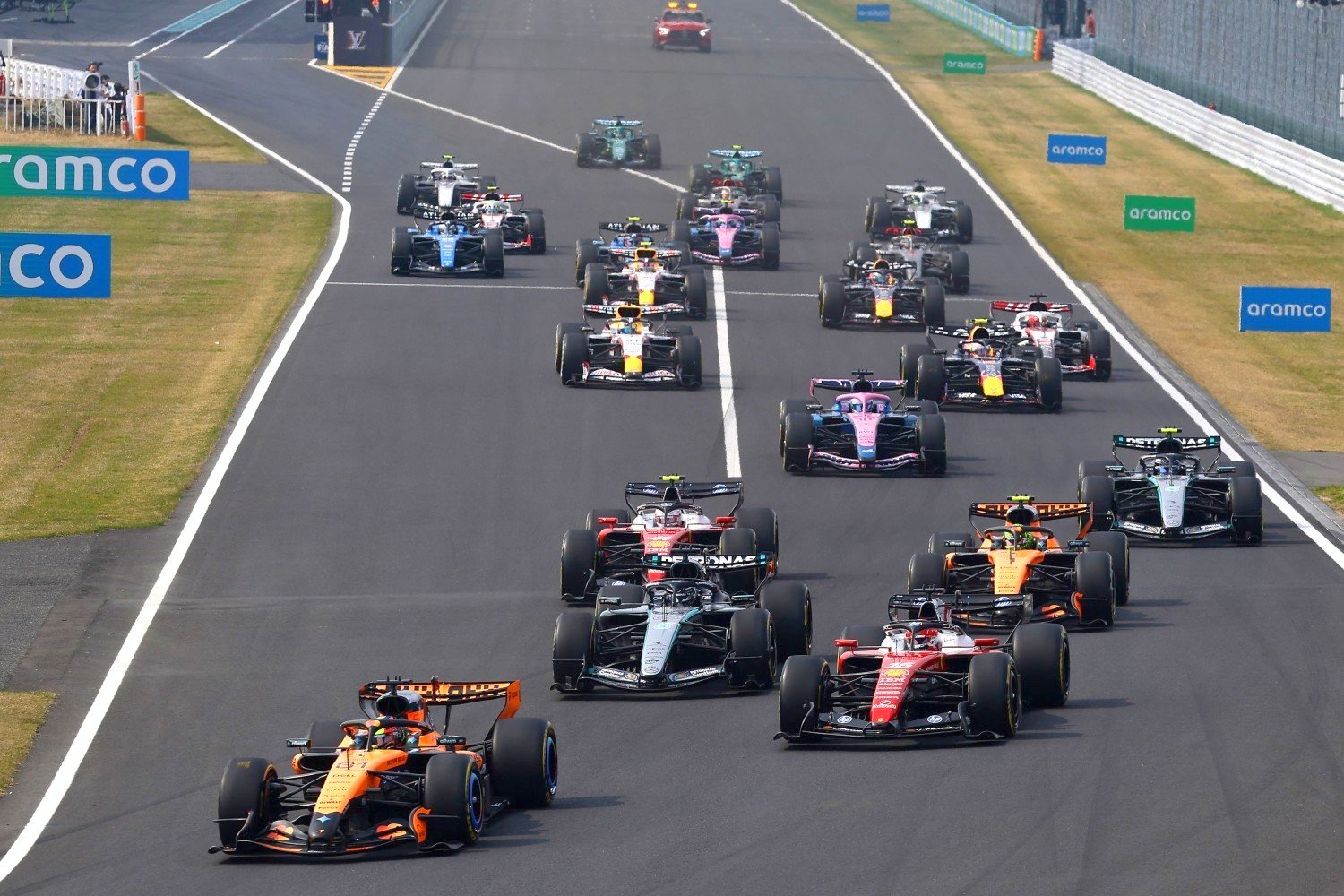
At 300 km/h, strategy is a brutal game of inches. Russell executed the first stint perfectly, managing his 350 kW electric boost with clinical precision. But the 2026 cars are lighter and sharper than ever, and one mistake can rewrite the entire race. When Oliver Bearman’s Haas slammed into the barriers at Spoon Curve with a 50G impact, the Safety Car erased Russell’s hard-earned advantage. Antonelli, who had dropped to sixth after a slow start, inherited a free pit stop. Russell had already committed to his fresh tires just one lap earlier.
Watching the tactical chess match unfold at 300 km/h is as unpredictable as finding a reliable best australian online casino – Rocketplay because the timing of a single yellow flag can bankrupt a perfect race strategy. George. The sting for Russell went deeper than lost track position. The 19-year-old rookie now leads the Drivers’ Championship by nine points. The internal dynamics at Mercedes are shifting fast:
– Antonelli has now shown he can dominate from the front (Shanghai) and fight back from the pack (Suzuka).
– Russell’s pointed comments about “the other side of the garage getting the rub of the green” mark the clear end of the polite teammate era.
– Toto Wolff suddenly finds himself managing two drivers who both believe they are the rightful number one in a title-winning car.
– The five-week break after Japan gives Russell more than a month to dwell on the fact that a teenager is outperforming him in identical machinery.
Technical Dominance and the New Energy Battle
Beyond the drama, Suzuka proved the Mercedes W17 is the class of the field. Red Bull and Ferrari showed flashes of improved pace, yet neither could match the energy-recovery efficiency of the Brackley power unit. On the restart after the Bearman incident, Antonelli flicked into X-Mode and instantly pulled three car-lengths on Oscar Piastri before the First Curve. It was a masterclass in harvesting the required 8.5 MJ per lap without sacrificing top-end speed.
The new regulations are also exposing the physical and mental toll on drivers. They are no longer simply steering—they are constantly juggling deployment modes to avoid running out of energy at the end of long straights. Antonelli sealed the win with a breathtaking outside pass at 130R, perfectly timed with a full battery discharge. Meanwhile, several teams (including Audi and Aston Martin) reported thermal issues in their MGU-K units through the high-speed Esses. The narrower 1,900 mm chassis made wheel-to-wheel combat through the Casio Triangle noticeably tighter, scattering carbon-fiber debris across the track.
A Five-Week Simmer
Formula 1 now enters a forced hiatus due to calendar shifts, leaving the Mercedes rivalry to simmer in the headlines. For George Russell, the numbers 72 and 63—the current points gap—will be a constant reminder of how quickly a season can slip away. He is faster in qualifying on average, but Antonelli is the one standing on the top step of the podium. This is no longer a “learning year” for the rookie; it is a full-blown title campaign that Mercedes was perhaps not entirely prepared to manage so early.
The technical verdict from Japan is clear: Mercedes has the best car of 2026. The sporting verdict is much more complicated. If the team cannot find a way to balance the strategic luck between their two stars, they risk a repeat of the 2016 civil war. With five weeks to analyze the data from Suzuka, the engineers in Brackley will be busy, but the psychologists might be the ones doing the most important work before the next green light.