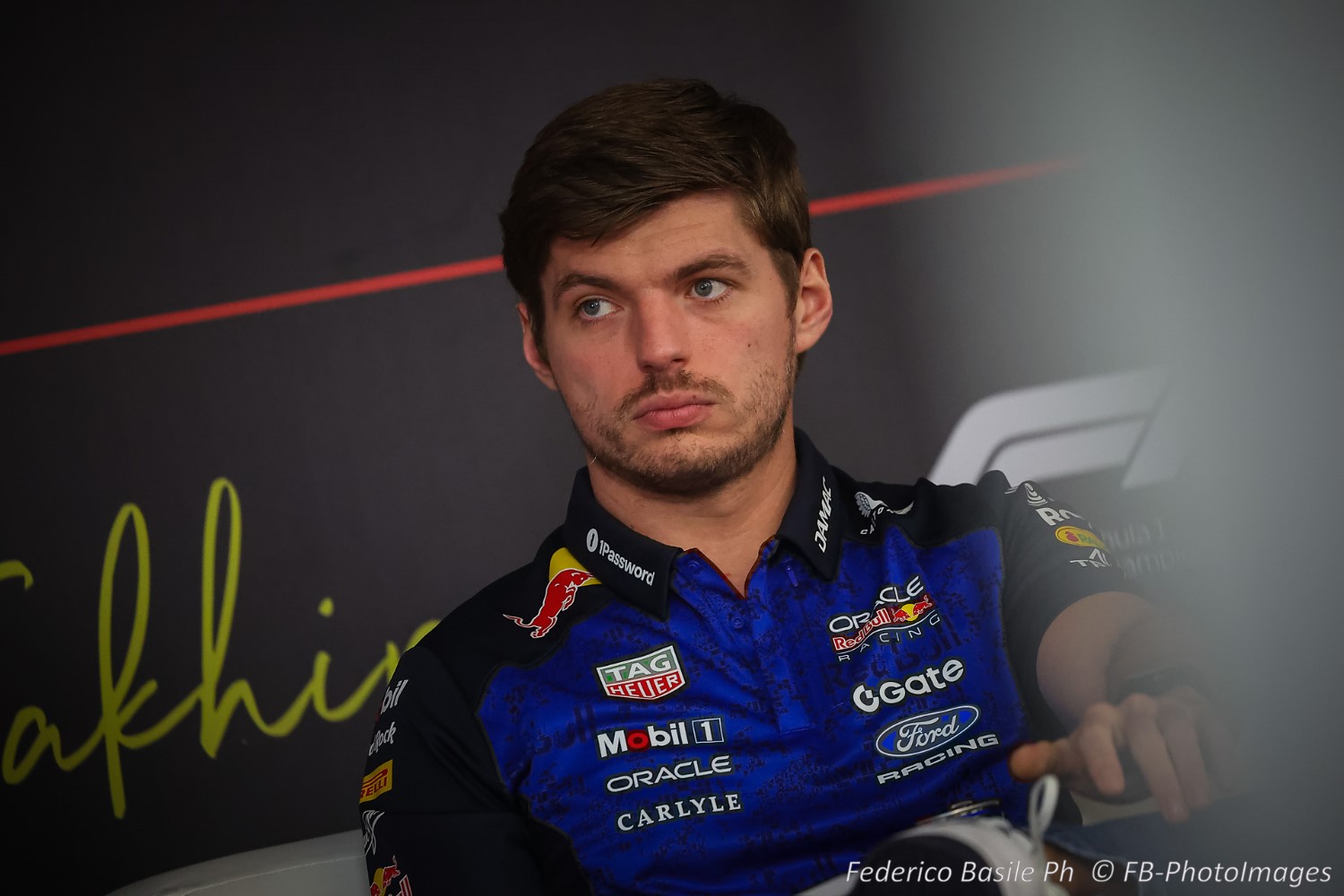
Verstappen’s Exit Scenario: What Happens to F1 If Max Walks Away?
Formula 1 has rarely faced a question with higher stakes than this one. Max Verstappen — four-time world champion, the most dominant driver of the ground-effect era, and arguably the biggest individual draw the sport has had since Michael Schumacher — is publicly and contractually positioned to leave. Not in the abstract, not in the distant future, but within the current 2026 season window. Understanding exactly what that means requires cutting through the noise and examining the mechanics, the precedents, and the cascade of consequences with the precision the situation demands.
For readers following the commercial and betting implications of a potential move, it’s worth checking the latest opportunities available here with the current Bet365 bonus code.
The Contract Architecture and What Actually Triggers an Exit
Verstappen’s Red Bull deal runs formally until the end of 2028. However, embedded within it are performance-linked exit clauses that have become the defining story of the 2026 season opener. According to reporting from Sky Sports F1, ESPN, and Motorsport.com, the threshold for the 2026 clause is a P2 finish — meaning that if Verstappen is not first or second in the Drivers’ Championship at the summer break, he is contractually entitled to terminate his deal with Red Bull without owing any compensation to the team. He has a window from August to October to formally activate that clause.
As of three races into the 2026 season, the math is brutal. Verstappen sits eighth in the championship with eight points. George Russell leads on 51. The gap is 43 points across 20 remaining races before the summer break, and Red Bull is currently running as the fourth-fastest team on the grid—trailing Mercedes, Ferrari, and McLaren by a considerable margin. ESPN reported that the clause was specifically added back in 2022 because of Verstappen’s longstanding apprehension about the 2026 regulations—the dramatic shift to a near 50/50 power split between the internal combustion engine and the battery. He demanded a contractual escape route before he even knew how bad it would feel to drive these cars. Now he knows.
His language at Suzuka was unambiguous for anyone who understands how deliberately Verstappen chooses his words. He told media that he has to “figure out” his future, that 22 races a year make him wonder whether it is “worth it,” and that privately he would rather be at home with his family if he is not enjoying his sport. He has called the 2026 cars “Mario Kart,” “anti-racing,” and “fundamentally flawed.” Red Bull’s own teammate Isack Hadjar was equally direct: “The problem is the chassis — it’s just terrible.”
The Sabbatical Scenario: Red Bull’s Calculated Gamble
Sources familiar with the situation have indicated to ESPN that Verstappen is leaning toward a sabbatical rather than permanent retirement—but that distinction, while meaningful, offers limited comfort to anyone who has studied how these situations tend to resolve. Mika Häkkinen took a sabbatical after 2001 and never returned. Fernando Alonso stepped away in 2019 and came back to a grid that had moved on without him. There is no guarantee that a driver who leaves, even one of Verstappen’s caliber, will find sufficient motivation to return—particularly if the 2027 regulations do not change the fundamental balance he despises.
The Telegraph reported that Red Bull is exploring an extraordinary solution: continuing to pay Verstappen his estimated £60 million per year contract even if he does not race in 2027, effectively funding a sabbatical in the hope he returns for the final year of his deal in 2028 once the regulatory picture clarifies. This is an unprecedented arrangement in F1 history and reflects how acutely Red Bull understands the asymmetry of the situation—losing Verstappen on the grid is damaging; losing him permanently to another team or to retirement is existential.
The structure of Red Bull’s contracts also means Verstappen could remain within the company umbrella as an ambassador or competitor in other racing series. He has already been cleared to race at the Nürburgring 24 Hours this year. An expansion into Le Mans or GT endurance would allow him to stay connected to motorsport while bypassing the formula he currently finds unrewarding.
Red Bull’s Competitive Collapse Without Him
The constructors’ standings after three rounds tell a story that was almost unimaginable two years ago. Red Bull sits sixth with eight points—all scored by Verstappen. Hadjar has scored nothing from two retirements. The team is running at +5000 odds to win the constructors’ championship in a market where Mercedes is the -600 favorite with 43 points already banked.
The car, by multiple accounts, is designed around Verstappen’s extreme driving style — the late braking, the high-speed corner commitment, the ability to manage tire degradation at the limit. Those strengths become liabilities for drivers without his specific skill set. Without him, Red Bull would not merely struggle at the front—they would be fighting for points against Alpine and Haas. The critical infrastructure loss compounds the problem: Adrian Newey left for Aston Martin, Helmut Marko’s influence has diminished, chief mechanic Matt Caller has gone to Audi, and performance engineer Tom Hart is linked to Williams. The human architecture that made the RB19 and RB20 dominant no longer exists in its original form.
Martin Brundle has argued explicitly that Red Bull should reconsider alumni like Carlos Sainz, Pierre Gasly, or Alex Albon as potential replacements rather than promoting juniors prematurely. Sainz is the name with the most industry backing — David Croft and Brundle have both cited his experience and pressure management as rare qualities. His Williams contract expires at the end of 2026. Liam Lawson and Yuki Tsunoda represent the internal junior options, though Tsunoda’s recent demotion from Red Bull to Racing Bulls complicates any promotional narrative.
The F1-Wide Consequences: Viewership, Power Shifts, and Regulatory Politics
Verstappen’s presence on the grid is not merely a sporting variable — it is a commercial and media one. His fan base is among the most globally distributed in the sport, concentrated heavily in the Netherlands but extending through Germany, Japan, and increasingly the United States. An analysis from Beyond the Flag noted that his retirement or extended absence would trigger immediate and measurable viewership losses across F1 TV, Apple TV, Netflix’s Drive to Survive, and local broadcast deals within minutes of any announcement.
This is not speculation without precedent. Viewership patterns during Verstappen’s periods of dominance showed that polarization—the frustration of watching one driver win repeatedly—was offset by the emotional investment of his core fanbase. His exit removes that investment entirely. The sport gained enormous commercial momentum between 2021 and 2024 precisely because he was its protagonist, even a sometimes unpopular one.
The power shifts among teams would be immediate. Mercedes, already dominant in 2026, would face reduced competitive pressure at the front. Toto Wolff has publicly stated he is fully committed to Russell and Antonelli and has no interest in a line-up change, but behind the scenes the conversations about Verstappen have been ongoing since at least mid-2025. A sabbatical keeps the possibility of a future Mercedes-Verstappen pairing theoretically alive while simultaneously removing one of the few drivers capable of challenging their current advantage.
Aston Martin’s reported £1 billion five-year offer would remain on the table, though a team currently struggling with its own 2026 regulatory difficulties would be an unusual destination for a driver motivated primarily by having the fastest car. Ferrari represents the most intriguing long-term option—Lewis Hamilton’s initial contract runs through 2026 with an option for 2027, and Charles Leclerc remains one of the sport’s most gifted qualifiers. A Verstappen-Leclerc pairing at Maranello would be among the most compelling driver lineups in the sport’s history, but it would require Ferrari to consistently produce a championship-contending car—something they have not reliably done since 2022.
The Regulatory Dimension: What “They Know What to Do” Actually Means
Verstappen’s comment at Suzuka — “they know what to do” — was not throwaway. It was a direct signal to the FIA and Formula 1 management that the path to retaining him runs through regulatory changes for 2027. The specific objection is the power unit’s energy architecture: the current 50/50 split between the ICE and the battery creates the “super-clipping” phenomenon, where cars lose power abruptly when the battery depletes, producing the artificial overtaking sequences Verstappen finds antithetical to racing. A shift in that ratio toward the combustion engine would address his primary technical complaint.
The governance challenge is that any such change requires the consent of manufacturers who invested specifically because of the electrification mandate. Audi and Honda joined the grid in part because the 2026 rules moved toward carbon neutrality. Persuading them to walk back a fundamental pillar of those regulations requires either significant compensation or a compelling commercial argument. The FIA is aware of the tension — and aware that losing Verstappen over a regulatory disagreement would be a PR catastrophe that would dwarf any short-term gain from maintaining the current power split.
Whether meaningful changes arrive before the summer break—the timeline that actually matters contractually—remains the central uncertainty. Verstappen has been clear that his decision is conditional, not final. Five words leave the door open: “They know what to do.” The question is whether anyone with the authority to act will do so before he closes it.