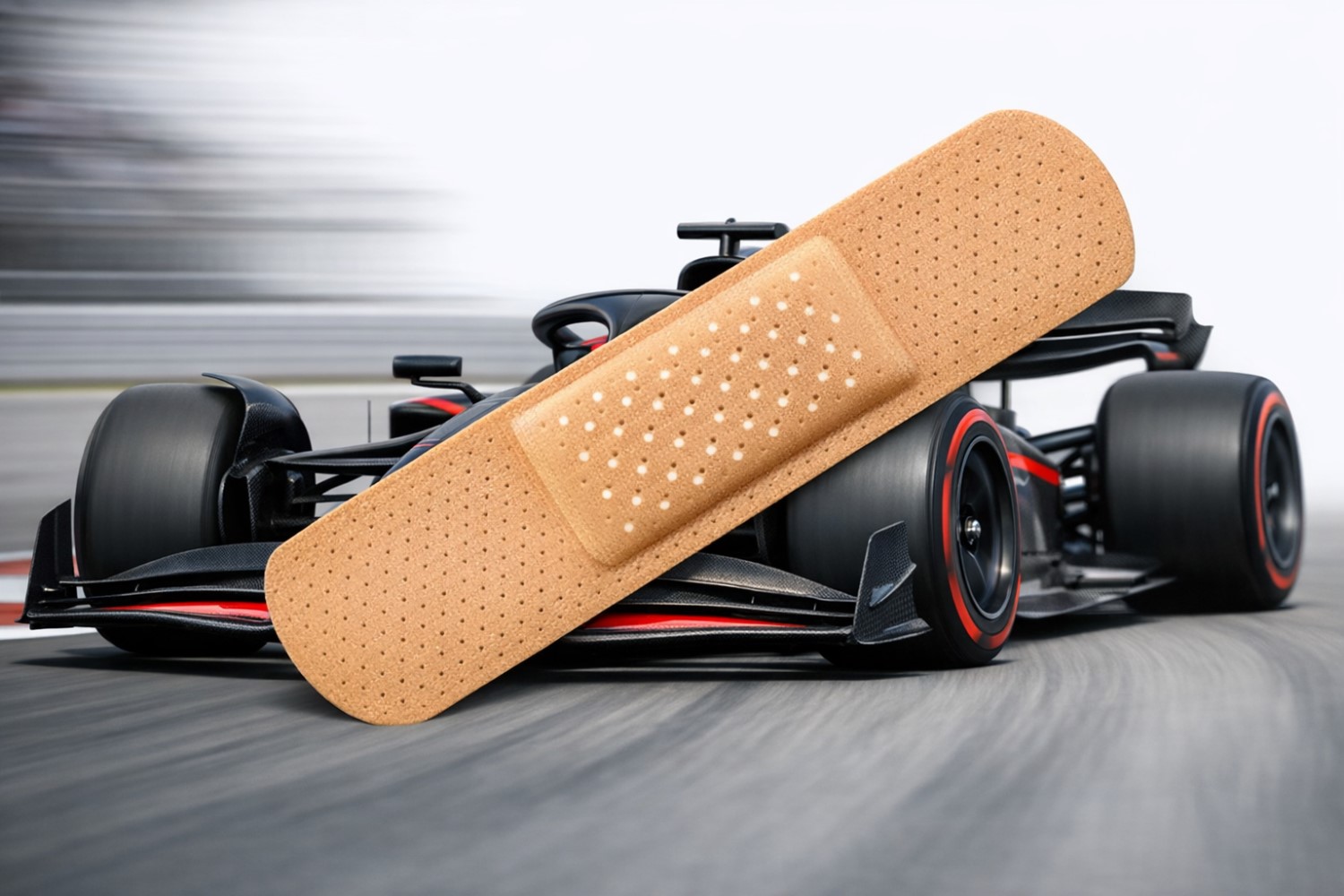
Formula 1 News: F1’s Miami Band-Aid fixes only ‘first step’ to fix 2026 Frankenstein Cars
(GMM) Formula 1’s governing body has confirmed a series of [band-aid] fixes to the controversial 2026 regulations [that created Frankenstein Cars] following an April 20 meeting of all key stakeholders.
The FIA said the refinements – shaped by driver feedback and early-season data and a sea of wider criticism – will be introduced from Miami, with a focus on energy management and safety.
Related Article: Formula 1 agrees to package of mid-season 2026 rule changes
Among the key measures are a reduction in maximum energy harvesting, an increase in peak ‘superclip’ power, and limits on boost usage in races to curb extreme speed differentials.
The FIA said a major target is for a “maximum superclip duration” of just “2-4 seconds per lap”.
Further changes include a new automatic system to prevent dangerously slow race starts, as well as adjustments for wet conditions.
The FIA said the aim is to “reduce excessive closing speeds while maintaining overtaking opportunities and overall performance characteristics”.
Reactions in the paddock suggest cautious approval – but little expectation that the tweaks will fully solve the issues.
“The adjustments made before Miami can only be a first step,” Tobias Gruner, of Auto Motor und Sport, wrote.
“To noticeably ease the situation, more power would also have to come from the combustion engine.”
He added that such deeper changes may not be possible before 2027 or even 2028.
Dutch journalist Erik van Haren, writing in De Telegraaf, agreed the impact may be limited – particularly for staunch critics like Max Verstappen.
“The minor changes currently being implemented will certainly not answer his prayers yet,” he said.
Meanwhile, Williams boss James Vowles welcomed the outcome.
“These are sensible changes and the teams, FIA and Formula 1 have done good work over the past few weeks to agree them,” he wrote on X.
“F1 has seen some great racing so far this year but it is right that we always look at ways to keep improving.”
McLaren team principal Andrea Stella also praised the collaborative approach.
“The sense of responsibility and spirit of collaboration that everyone is demonstrating represent the best response that Formula 1 can give at this moment,” he said.
For drivers, the technical direction broadly aligns with earlier suggestions, as George Russell had pointed to higher ‘superclip’ power as a key fix and “obvious solution”.
“This alone will avoid many situations where lift-and-coast has to be used,” he said.
Related Article: Formula 1 News: 10 hideous things the 2026 F1 Frankenstein cars do
—
Senior F1 writer at ESPN Nate Saunders said that the changes speak to the fact that they only making tweaks to a flawed system, while calling out the complex nature of the rules.
“Reading these bullet points is absolutely mystifying. So complicated,” Saunders wrote,
“This is the best example that exists on how flawed these new regulations are.
“How F1 and the FIA allowed themselves to arrive at this set of rules is baffling.”
Former McLaren and Renault aero design engineer Mark Lane was also scathing, claiming that F1 is paying the price for its overall philosophy.
“There are too many holes in this dike,” Lane wrote.
“The powers that be need to heed the writing on the wall and organize some V8 or V10 power before the whole house of cards falls down around their virtue signaling ears.”