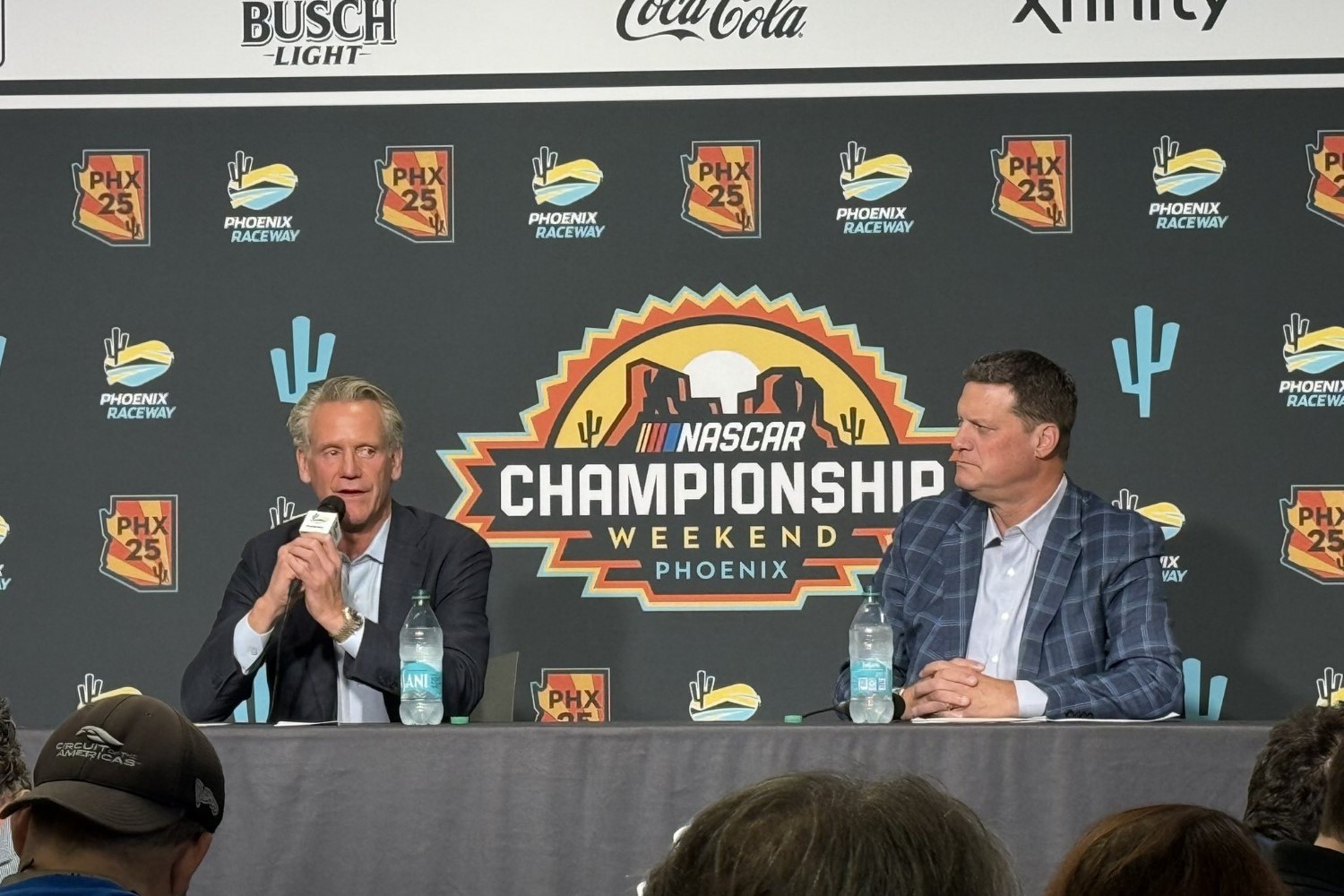
NASCAR Antitrust Lawsuit Heats Up: Leaked Texts Reveal Aggressive Tactics Against Rival Series as Trial Looms
Just weeks after U.S. District Judge Kenneth Bell dealt a significant setback to NASCAR by denying its motion for summary judgment, the antitrust lawsuit brought by 23XI Racing and Front Row Motorsports has taken a dramatic turn.
–by Mark Cipolloni–
Newly unsealed documents, including explosive text messages and emails from NASCAR executives, paint a picture of aggressive efforts to undermine a competing racing series, bolstering the plaintiffs’ claims of anticompetitive behavior. With jury selection set for December 1, these revelations could prove pivotal in the high-stakes trial.
Related Article: Judge Bell Delivers Blow to NASCAR in Antitrust lawsuit, Paving Way for High-Stakes Trial
The original ruling on November 4, handed down by Judge Bell, rejected NASCAR’s arguments that the case was time-barred or lacked merit, while granting partial summary judgment to the teams on key issues like market definition. The court affirmed NASCAR’s unchallenged monopsony power in the “input market” for premier stock car racing teams—effectively establishing the sanctioning body as the sole buyer with 100% control. This sets the stage for the trial to zero in on whether NASCAR leveraged that dominance through predatory practices, including the controversial 2025 charter extensions that critics say inflate entry barriers and suppress team payouts.
But the latest filings, unsealed this week ahead of the trial deadline, have shifted the spotlight to NASCAR’s internal communications during the fraught 2022 charter negotiations. At the center of the storm are candid texts between then-NASCAR President Steve Phelps and Chief Operating Officer Steve O’Donnell, who expressed visceral disdain for the Superstar Racing Experience (SRX), a short-lived exhibition series co-founded by Tony Stewart and Ray Evernham.
In messages dated June 29, 2022—mere days after Denny Hamlin, co-owner of plaintiff 23XI Racing, announced his participation in SRX’s season opener—Phelps didn’t mince words. “Need to put a knife in this trash series,” he wrote, labeling SRX as a direct affront to NASCAR’s authority. O’Donnell echoed the sentiment, replying, “This is NASCAR. Pure and simple. Enough. We need legal to take a shot at this.”
The executives fretted over SRX’s growing visibility, noting it had outrated NASCAR’s Xfinity and Truck Series broadcasts the previous weekend and featured high-profile Cup drivers like Chase Elliott, Justin Marks, Ryan Blaney, and Stewart himself. Phelps added a layer of paranoia, calling the series a “huge FU to us” and questioning why participants “don’t get it,” while raising concerns about intellectual property infringement and media partnerships, including FOX’s involvement via Darrell Waltrip.
These communications, now public, align suspiciously with SRX’s abrupt discontinuation later that year, fueling speculation—and legal arguments—that NASCAR’s pressure campaign contributed to its demise. Hamlin, a vocal critic of NASCAR’s business model, wasted no time responding to the leaks. In a terse post on X, he quipped, “Is it not obvious?”—a nod to the unnamed source in related texts and a subtle jab at the sanctioning body’s tactics.
The filings also uncover broader tensions from the charter talks. Documents show the Race Team Alliance (RTA), representing independent teams, floated ideas for unsanctioned exhibition races in exotic locales like the Sultanate of Oman, Mexico City, New Orleans, downtown Nashville, and even Churchill Downs during 2022 and 2023. These “Plan B” concepts emerged as leverage amid stalled negotiations, highlighting teams’ frustration with NASCAR’s proposed terms, which plaintiffs argue lock in monopsonistic control and stifle innovation.
NASCAR, defending its charter system as a pro-competitive framework built over decades of investment, has vowed to fight vigorously at trial and on appeal to the Fourth Circuit. The organization maintains that antitrust laws should reward its market leadership, not penalize it. However, the unsealed materials—part of a flood of emails, texts, and exhibits filed by Friday’s deadline—could sway jurors by illustrating a pattern of hostility toward any perceived threats.
Adding to the pre-trial intrigue, Judge Bell recently greenlit depositions of powerhouse team owners Rick Hendrick and Roger Penske, despite their bids for protective orders to shield confidential information. These testimonies, scheduled post-discovery, could delve into the inner workings of NASCAR’s alliances with its biggest players.
As the December 1 trial date approaches—barring a last-minute settlement—these developments underscore the lawsuit’s potential to reshape stock car racing. Plaintiffs contend NASCAR’s actions have squeezed team revenues, deterred sponsors, and limited growth for drivers and fans alike. For now, the leaked texts serve as a stark reminder: In the battle for control of America’s premier motorsport, no tactic is off-limits. Stay tuned to AutoRacing1 for live trial coverage starting next week.
Related Article: Likely outcomes should NASCAR lose antitrust lawsuit in court