NASCAR News: Will Heather Gibbs testimony be NASCAR’s downfall in antitrust lawsuit trial?
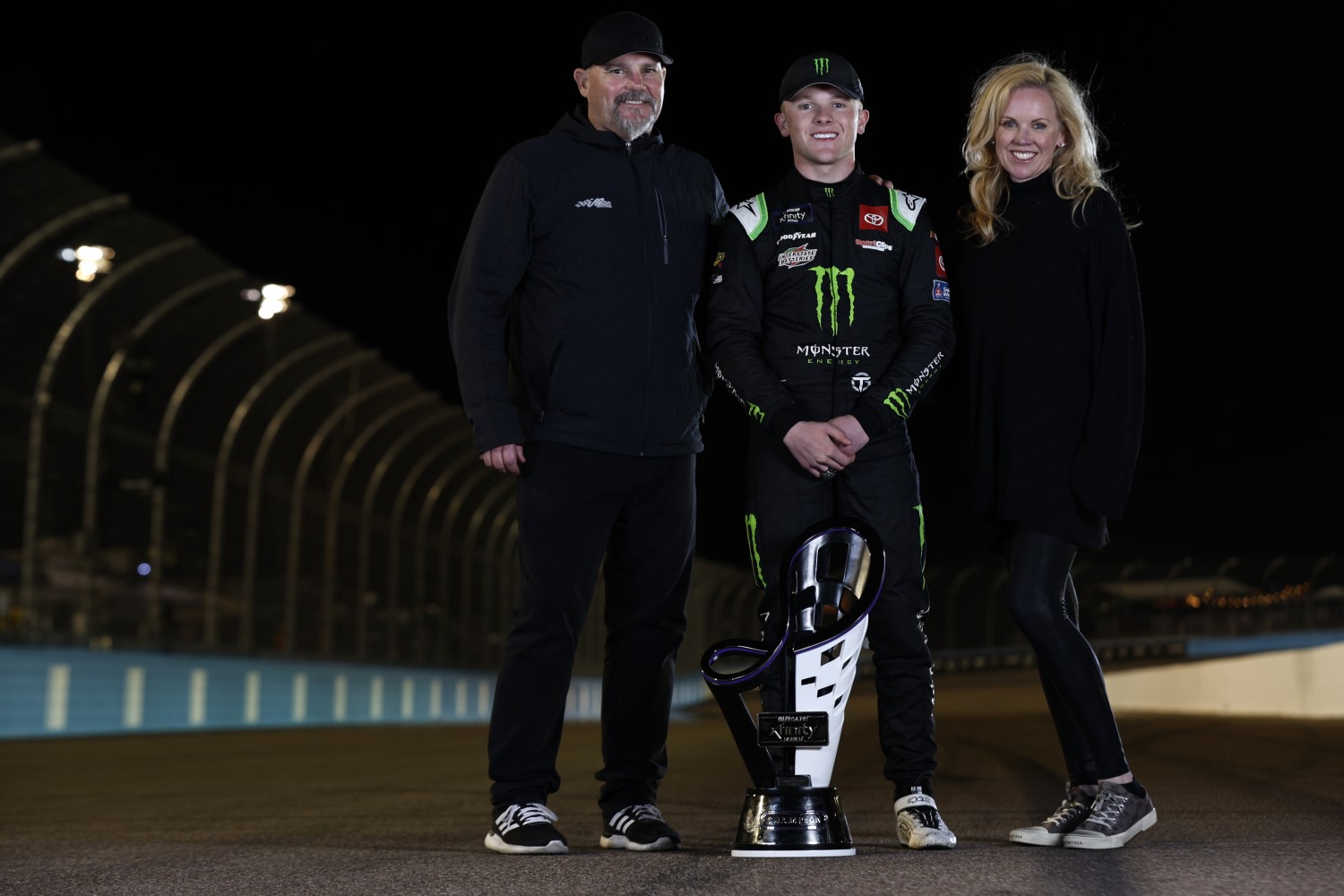
Heather Gibbs (pictured right with son Ty Gibbs), co-owner and COO of Joe Gibbs Racing (JGR), is a pivotal witness in the antitrust lawsuit filed by 23XI Racing (co-owned by Michael Jordan and Denny Hamlin) and Front Row Motorsports against NASCAR.
–by Mark Cipolloni–
The case, which alleges NASCAR operates as an illegal monopoly by restricting teams’ revenues, independence, and ability to compete elsewhere through its charter system, is set for trial on December 1, 2025, in Charlotte, North Carolina.
Gibbs’ testimony could be key for several interconnected reasons, drawing from her documented involvement in charter negotiations and her unique position within NASCAR’s ecosystem.
1. Provides Credible Evidence of Widespread Team Frustrations
– Gibbs represents a powerhouse team (JGR) that ultimately signed NASCAR’s 2025 charter agreement, unlike the plaintiffs who opted out. Her testimony could humanize the plaintiffs’ claims by showing that even “loyal” teams like JGR harbored deep concerns about the charter system’s fairness, non-permanent nature, and revenue splits. This broadens the narrative beyond “outlier” teams like 23XI and Front Row, suggesting systemic issues that violate antitrust laws by suppressing competition and investment in the sport.
– In a May 2024 letter to NASCAR leadership (including CEO Jim France), Gibbs passionately advocated for “permanent evergreen charters” to secure teams’ long-term value, emphasizing JGR’s 32-year commitment and how the lack of permanence undermines reinvestment (e.g., JGR reportedly funnels nearly all profits back into the team). She wrote: “When all the stakes are on the table, teams need to know their worth is valued and secure.” This letter, now public as an exhibit, mirrors the plaintiffs’ core arguments almost verbatim, potentially swaying a jury toward viewing NASCAR’s structure as anticompetitive rather than a standard league model.
2. Highlights NASCAR Leadership’s Hostile Response, Undermining Their Defense
– According to a 23XI/Front Row expert report, Jim France reacted explosively to Gibbs’ letter during an internal meeting, reportedly reading it aloud while “swearing every other sentence.” Other NASCAR executives concluded it “was not helping the teams’ cause,” revealing emotional tension and a lack of good-faith negotiation. Gibbs’ testimony could amplify this, portraying NASCAR as dismissive of reasonable team input—evidence of monopolistic control rather than collaborative governance.
– Civil law expert Shannon McMinimee has noted Gibbs’ testimony “stood out” in depositions for its “measured yet deeply personal” tone, combining business acumen with emotional weight (as the widow of the late Coy Gibbs and mother of driver Ty Gibbs). This contrast—polite advocacy met with profanity-laced rejection—could erode NASCAR’s argument that the charter system is broadly supported and pro-competitive, especially when contrasted with declarations from other owners (like Joe Gibbs himself) urging preservation of the status quo.
3. Serves as a Bridge Between “Insiders” and Plaintiffs, Influencing Jury Perception
– As a family-connected figure in a top-tier team, Gibbs offers an “unexpected voice” that transcends the binary of plaintiffs vs. NASCAR loyalists. Legal analysts suggest her input could “reshape the narrative” by illustrating how charter inequities threaten even stable franchises, potentially validating calls for remedies like permanent charters or revenue reforms. In a trial heavy on economic experts and data (e.g., comparing NASCAR to exempted leagues like MLB), her relatable perspective might make abstract antitrust concepts more accessible and sympathetic to jurors.
– She’s listed alongside heavyweights like Roger Penske, Rick Hendrick, and Richard Childress on trial witness lists, but her pro-team stance (despite JGR’s agreement) positions her as a wildcard. If cross-examined effectively, she could bolster the plaintiffs’ case that the sport’s “growth and prosperity” (as she phrased it) requires structural change, pressuring NASCAR toward settlement.
Overall, Gibbs’ testimony risks exposing fault lines in NASCAR’s monopoly-like control, making it harder for the sanctioning body to frame the lawsuit as mere renegotiation by dissatisfied outliers. While NASCAR may counter with evidence of the system’s wealth generation for teams, her words could tip sentiment toward reform, especially amid fan backlash over leadership’s temperament. The trial’s outcome could redefine stock car racing’s business model for decades.