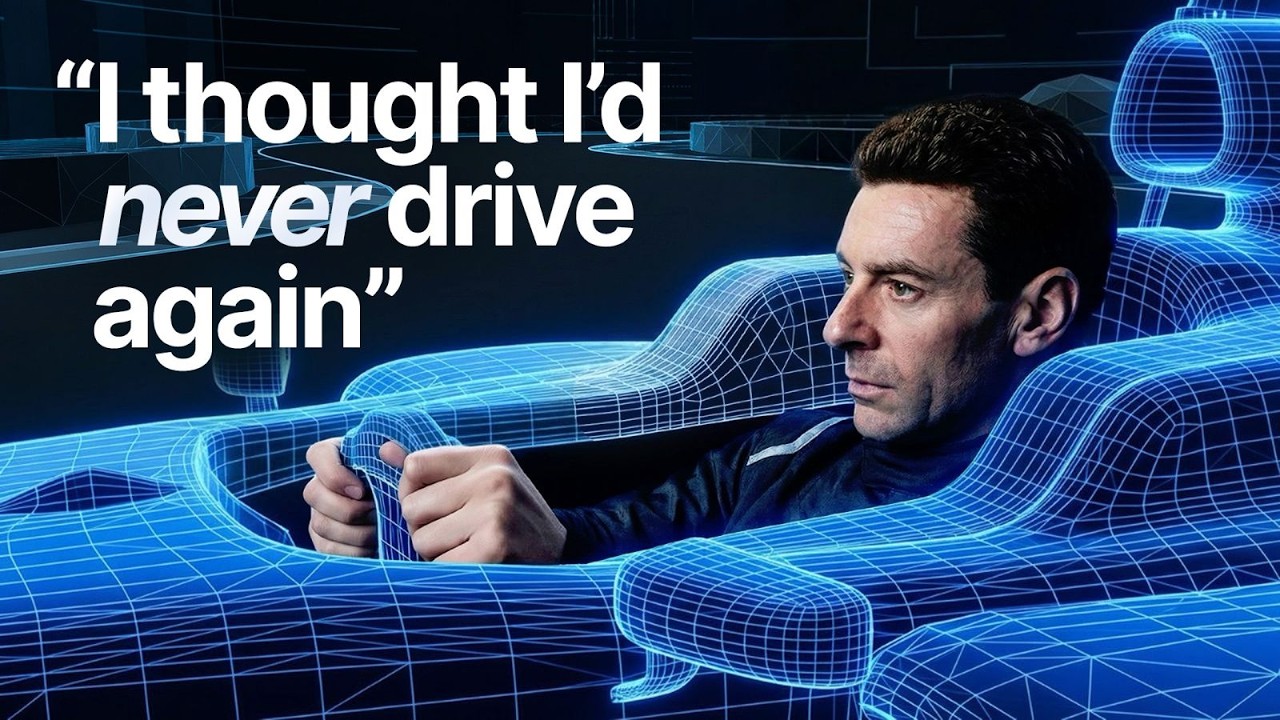
IndyCar News: Cadillac F1 Team Simulator Helping Simon Pagenaud Recover
In the high-stakes world of open-wheel racing, where split-second decisions collide with raw speed, Simon Pagenaud’s story embodies both the thrill and the terror. The 2019 Indianapolis 500 champion and 2016 IndyCar title winner had built a legacy of precision and poise: 15 series victories, 14 poles (including the Indy 500), and a reputation as a driver’s driver, honed across 13 seasons, seven with powerhouse Team Penske. But on July 28, 2023, during practice for the Honda Indy 200 at Mid-Ohio, fate intervened with brutal force.
–by Mark Cipolloni–
Pagenaud was pushing his No. 60 Meyer Shank Racing Honda to its limits, clocking nearly 185 mph down the back straightaway on a flying lap. Then, catastrophe: brake failure sent his car careening into the gravel trap, where it somersaulted violently—flipping multiple times in a blur of carbon fiber and airborne debris. Miraculously, the aeroscreen—a protective titanium halo introduced in IndyCar in 2020—shielded him from the worst. Pagenaud walked away under his own power, aided by marshals, but the invisible damage was profound: a severe concussion that unleashed a torrent of symptoms. Vertigo spun his world off-kilter, migraines pounded relentlessly, and memory lapses eroded the sharp instincts that had defined his career. “The first day after the crash, I couldn’t even remember where I was,” Pagenaud later recounted in a candid General Motors video. These weren’t fleeting aches; they were career-altering, forcing him to sit out the remainder of the 2023 season and ultimately part ways with Meyer Shank, replaced by Felix Rosenqvist in 2024.
The aftermath tested Pagenaud’s resilience in ways no podium ever could. Lingering effects sidelined him from IndyCar’s 2024 grid, where stand-ins like Conor Daly and Linus Lundqvist filled his seat across races from Iowa to Monterey. He returned to Team Penske as an advisor, mentoring talents like Scott McLaughlin at the Indy 500, but the cockpit’s pull remained. “I’m not done with racing,” he insisted, even as the psychological toll—frustration, isolation, the fear of irrelevance—loomed large. At 41, the Frenchman who had conquered Daytona twice (2022 and 2023 with Meyer Shank) and nearly the 2015 Indy 500 found himself grappling with a new reality: Could he ever harness that “talented butt”—his wife’s affectionate term for his uncanny ability to feel and articulate a car’s every nuance—without risking his health?
Enter Cadillac’s bold F1 foray, a lifeline disguised as opportunity. In October 2025, the team—poised to storm the grid as Formula 1’s 11th squad in 2026, powered by Ferrari units until GM’s in-house engines arrive in 2029—announced Pagenaud as a key simulator driver. Based in a state-of-the-art Driver-in-Loop facility in Charlotte, North Carolina, the setup isn’t just a virtual cockpit; it’s a digital forge where engineers tweak thousands of parameters—aero balances, tire models, suspension geometries—to birth Cadillac’s debut machine. Pagenaud joins a dream-team roster: Pietro Fittipaldi (Haas reserve and IMSA/Le Mans ace), Charlie Eastwood (ex-Mercedes sim driver and Corvette factory alum), with Colton Herta as test driver and race seats for Valtteri Bottas and Sergio Perez.
For Pagenaud, the simulator became both therapy and triumph. His debut session was a gut-wrenching echo of the crash: flashes in his eyes, crippling migraines, motion sickness that left him nauseous and disoriented, memory slips mid-lap. “It was rough—like reliving the accident in slow motion,” he admitted. Yet persistence paid off. Gradual exposure—short stints building to full simulations—rewired his brain’s response, easing symptoms and reigniting his passion. Today, he dives deep with engineers, dissecting setups for circuits like Monza or Suzuka, his feedback sharpening the car’s edge. “Optimizing the technical side and managing relationships with the factory has been my passion since I started racing,” Pagenaud shared. “I really enjoy talking to the engineers, developing the simulator, and making it as realistic as possible.”
Cadillac’s technical director praised the fit: “Simon has brought experience and energy to the process and has helped us hugely” in consolidating aero setups, race protocols, and cross-base communication between U.S., U.K., and trackside teams. For Pagenaud, it’s validation after feeling “forgotten” in IndyCar’s whirlwind— a sentiment echoed by fans on Reddit, who mourned how quickly a champion faded from headlines. Now, he feels “useful” again, bridging his IndyCar pedigree to F1’s pinnacle.
A nearly 14-minute GM/Cadillac YouTube video captures this renaissance in vivid detail: Pagenaud rolling up in his victorious 2019 Indy 500 Corvette C7, strapping into the sim rig—a cockpit of screens, pedals, and haptic feedback—then collaborating in war-room huddles. Hailey Pagenaud chimes in with humor, touting his sensory gifts, while Perez’s inaugural run adds star power, engineers hovering for real-time notes. It’s not just recovery; it’s reinvention.
As Cadillac revs up for 2026 preseason tests, Pagenaud eyes the horizon—not from the cockpit, but from its digital heart. His journey reminds us that in racing, as in life, the real wins come from adapting, not quitting. The aeroscreen saved his body once; the simulator is mending his soul. And with it, Pagenaud is helping forge a new American F1 contender, one virtual lap at a time.