NASCAR Antitrust Trial: Day 7 – The Day Chairman France Forgot
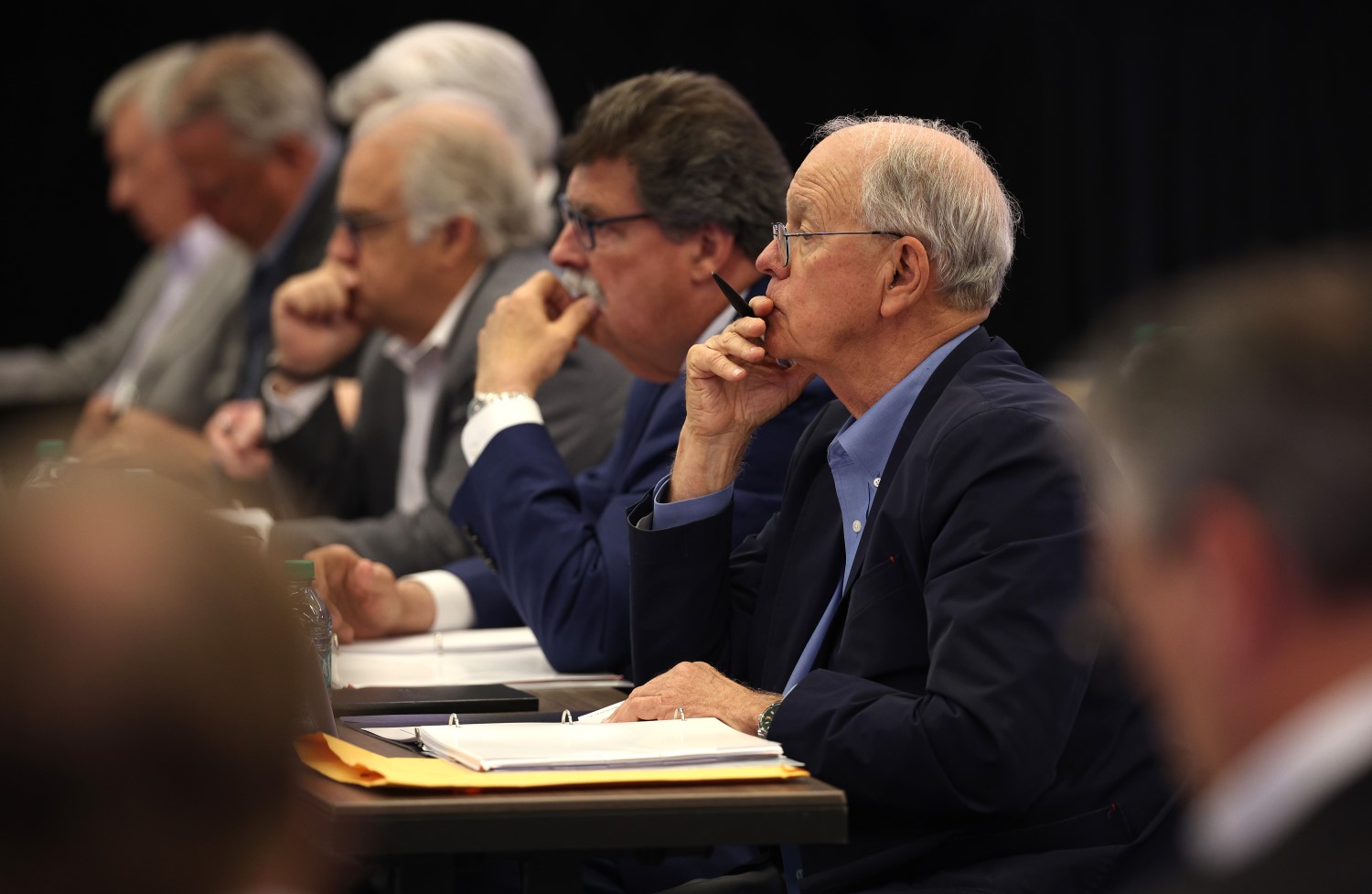
Charlotte, December 9, 2025 – By the time Jim France (pictured closest to camera) finally took the stand late Monday afternoon, the courtroom already felt like a garage running on fumes after seven straight days of testimony. What happened next left even the most jaded observers stunned.
–by Mark Cipolloni–
Richard Childress had just finished a blunt, 45-minute gut-punch. The 79-year-old Hall of Famer, voice gravel-rough from half a century of screaming over engines, told the jury that Richard Childress Racing only survives because his engine shop and Oklahoma vineyard pay the bills that racing itself cannot.
“Financially, I can’t lose my charters,” he said. “That money should be going into my bank account instead of keeping my race teams alive.” When NASCAR’s lawyer tried to wave RCR’s positive EBITDA in his face, Childress snapped, “That’s not racing money. That’s side-business money.” The room went quiet. A blue-collar legend had just admitted the sport he helped build no longer pays its own way.
Then came the main event.
Jim France, 80 years old, silver-haired and soft-spoken, walked to the witness box like a man heading to the grid for a parade lap. He is the last France still steering the family empire. Between his trust and his niece Lesa France Kennedy’s, they control 99.7% of NASCAR’s voting stock. For two hours, plaintiffs’ attorney Jeffrey Kessler tried to pin him down on the single biggest issue in the case: why he has repeatedly refused to grant teams permanent, transferable “evergreen” charters like every other major American sport.
France’s answer, delivered over and over in the same calm Carolina drawl, was simple: “I don’t recall.”
He didn’t recall the heartfelt letters from Rick Hendrick, Roger Penske, Joe Gibbs, Jack Roush, and Childress himself begging for permanent franchises.
He didn’t recall executives telling teams, “We wish we could give you permanent charters, but Jim doesn’t want that.”
He didn’t recall allegedly reading Heather Gibbs’s emotional plea aloud to senior staff and cursing over it.
He didn’t recall telling a 2021 strategy meeting, “WE ARE IN COMPETITION. WE ARE GOING TO WIN.”
He didn’t recall the exact details of buying Speedway Motorsports, or the exclusivity clauses that lock tracks into NASCAR forever, or even, when pressed, whether his own salary is closer to $3.5 million or $3.8 million a year.
Kessler, barely hiding a grin, flashed slide after slide of emails, memos, and meeting minutes. France stared at them like they were written in another language. “Possible,” he’d say. “I might have been there.” “I don’t remember saying that.”
The low point (or high theater, depending on your seat) came when Kessler asked about the $397 million in charter payments NASCAR made to teams from 2021 through 2024. After taxes, roughly $99.25 million of that money landed in the France family trusts. France confirmed the math, then immediately returned to the fog.
By 5:30 p.m., when the judge finally called it a day, reporters were already typing the same phrase on X: “shockingly bad testimony.” One veteran beat writer called it “the most expensive case of selective amnesia in sports history.”
Jim France returns to the stand Wednesday morning for cross-examination. NASCAR’s lawyers will try to clean up the wreckage. The plaintiffs are expected to rest their case by the end of the day.
Whatever happens next, Day 7 will be remembered as the afternoon the man who owns NASCAR suddenly couldn’t remember why he runs it the way he does.