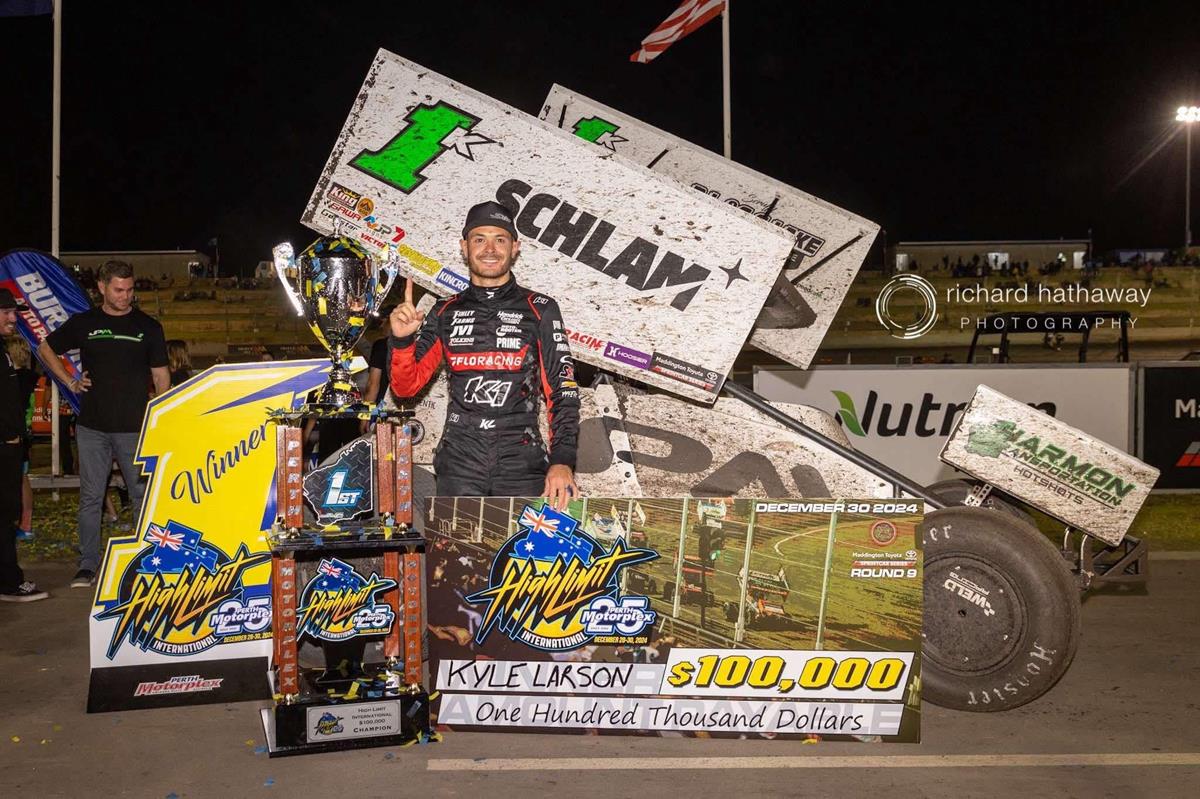
2026 Sprint Car Series Comparison: World of Outlaws vs. Kubota High Limit Racing
The two premier national winged 410 Sprint Car series in the US have released their 2026 schedules, offering teams and drivers distinct paths with overlapping dates but different philosophies. World of Outlaws vs. High Limit Racing.
Race Count
– World of Outlaws (WoO) NOS Energy Drink Sprint Car Series: 86 race nights (an 86-night national campaign across at least 40 tracks in nearly half the US states plus one Canadian province).
– Kubota High Limit Racing (co-owned by Kyle Larson and Brad Sweet): 65 race nights (planned at 34 tracks across 21 states, with some multi-day events).
High Limit indeed features fewer races (about 21 fewer nights), continuing its trend of a lighter national schedule compared to the Outlaws’ grueling, near-weekly grind.
Key Schedule Differences
– World of Outlaws (WoO): Starts early February at Volusia Speedway Park (FL), runs through November at The Dirt Track at Charlotte. Features massive crown jewels like the Kings Royal ($175k+ to win), Knoxville Nationals prep events, and high-bank spectacles (e.g., expanded Huset’s High Bank Nationals). Emphasizes volume with returning tracks, new additions (e.g., Creek County Speedway), and traditional rivalries (e.g., PA Posse clashes).
– High Limit Racing: Kicks off mid-March at Las Vegas Motor Speedway (three-night opener), runs through fall (ending around Texas Motor Speedway area). Focuses on higher-purse standalone events, expanded multi-day shows (e.g., Las Vegas and Central Arizona to three nights), and debuts in new states (e.g., New Mexico, Minnesota, North Dakota, Montana). Port Royal Speedway (PA) remains the most-visited track with eight nights.
Both series avoid heavy direct conflicts in many regions but compete for top talent, with combined schedules (including PA Posse events) approaching nearly 200 races nationwide.
Why Kyle Larson Believes Fewer Races Are Better for High Limit
Larson has been vocal about designing High Limit’s schedule to prioritize freedom, flexibility, and sustainability over the Outlaws’ exhaustive approach. In discussing the 2026 slate (66 races in some reports, aligned closely with 65), he explained:
– Teams need off weekends to “have the freedom and flexibility to go do what they want”—whether resting at home base, spending time with family, or pursuing additional local/regional races if desired.
– The Outlaws’ typical ~90-race schedule (86 in 2026) means racing “every weekend” with few breaks (e.g., only around Easter and Fourth of July), creating immense stress—even more demanding than NASCAR’s Cup Series.
– An overly packed calendar risks driver burnout and boredom: “Drivers would eventually get bored with such a schedule.”
– High Limit’s model allows teams to “race for money in a less amount of races,” focusing on higher purses and quality events while leaving room for balance. Larson rhetorically asked, “I don’t know why you wouldn’t [choose this]… Everybody would want to follow what we are doing because the flexibility of it all is incredible.”
This philosophy positions High Limit as a more team-friendly alternative, aiming to attract top drivers with better work-life balance and opportunities to supplement income elsewhere, while still delivering big-payday national competition. As the series grows (from 12 races in 2023 to 65+ in 2026), Larson sees this lighter load as key to long-term health for participants.