Formula 1 in 2026: The Most Radical Technical Revolution of the Modern Era
Formula 1 has continually evolved through cycles of innovation, regulation, and adaptation. However, the 2026 season represents something far more profound than a routine rule update. It marks a structural reset of the sport’s technical DNA, touching every major pillar: car design, aerodynamics, power units, fuels, racecraft, and even the competitive landscape itself.
The FIA’s stated goal is ambitious yet precise: closer racing, improved sustainability, enhanced safety, and greater relevance to road-car technology—all without sacrificing the spectacle that defines Formula 1. Achieving this balance has never been easy, but the 2026 regulations attempt to reconcile performance with efficiency in ways the sport has never tried before.
What follows is a detailed analysis of the most important changes coming to Formula 1 in 2026, why they matter, and how they could reshape racing on Sundays—and beyond—insights that are increasingly relevant not only for fans and analysts, but also for those who closely follow performance trends on sports betting sites uk.
Smaller, Lighter Cars: Reversing a Decade-Long Trend
One of the most visible shifts in 2026 is the physical downsizing of Formula 1 cars. After years of criticism regarding oversized, heavy machines, the FIA has acted decisively.
The new cars will be:
- 200 mm shorter
- 100 mm narrower
- Approximately 30 kg lighter, bringing the minimum weight down to around 768 kg
This reduction is more than cosmetic. Smaller and lighter cars improve agility, braking distances, and responsiveness—key factors for wheel-to-wheel racing. Tracks with tight sections, such as Monaco, Singapore, or Budapest, stand to benefit significantly from cars that are easier to position and defend with.
From a driving perspective, this shift restores a more “pure” feel, demanding precision and finesse rather than brute aerodynamic dependence.
Active Aerodynamics: A New Philosophy of Downforce
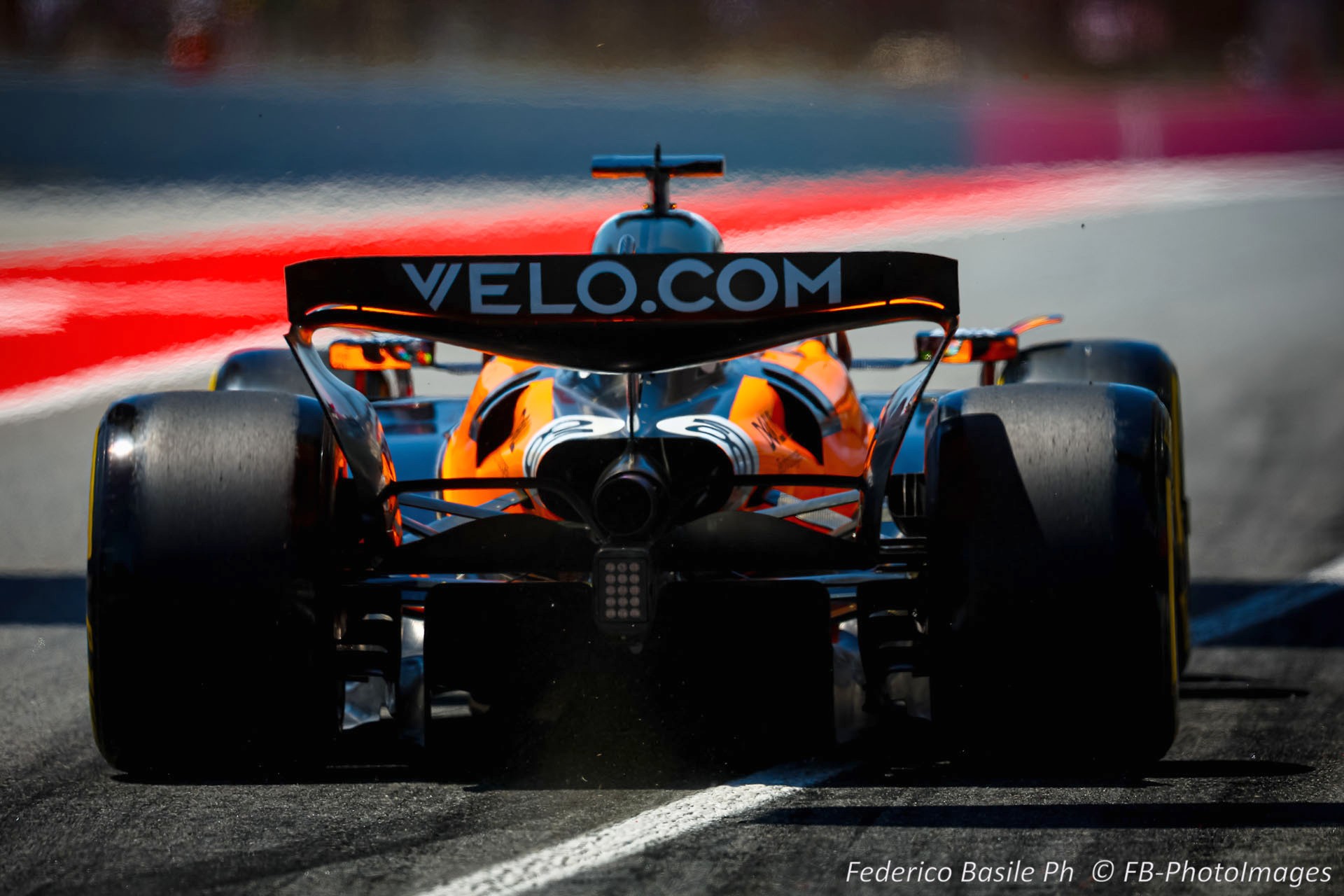
Perhaps the most revolutionary change lies in the introduction of active aerodynamics for all cars, fundamentally redefining how downforce is generated and deployed.
Instead of static wings optimized for compromise, 2026 cars will feature:
Movable front and rear wings
Two aerodynamic modes:
- Z-Mode: High downforce for cornering
- X-Mode: Low drag for straights
This system is automatic, track-mapped, and universal—meaning every team has access to the same aerodynamic flexibility.
Crucially, the new rules shift the balance of downforce generation:
- 46% from the floor
- 23% from wings
This reduces turbulent “dirty air,” allowing cars to follow each other more closely through corners—one of the biggest weaknesses of past regulations.
Goodbye DRS, Hello Hybrid “Override”
The Drag Reduction System (DRS), introduced in 2011, has been both praised and criticized. While effective, it often led to artificial overtakes with little defensive counterplay.
In 2026, DRS is completely removed.
In its place comes a driver-activated “Override” system, which provides a temporary boost of electric power from the hybrid system—but only when a car is within one second of the car ahead.
Key differences from DRS:
- Power-based, not drag-based
- Requires strategic energy management
- Usable in more dynamic racing scenarios
Overtaking becomes less binary and more tactical. Drivers must decide when to deploy energy, not simply open a flap on a straight. Defensive driving regains importance, restoring a more organic race dynamic.
Power Units: The 55/45 Hybrid Era Begins
The 2026 power unit regulations represent the most dramatic shift since the introduction of hybrids in 2014.
A Near-Equal Split
Power output will be divided almost evenly:
- ~55% Internal Combustion Engine (ICE)
- ~45% Electric (MGU-K)
This is a massive increase in electrical contribution, making Formula 1 the most electrified elite racing series in the world.
MGU-H Removed
The complex and costly MGU-H is eliminated entirely, simplifying:
- Development
- Reliability
- Entry barriers for new manufacturers
Regenerative Braking
Regeneration capacity triples, meaning:
- Drivers harvest far more energy under braking
- Brake balance and lift-and-coast techniques become critical
- Driver skill plays a larger role in energy efficiency
100% Sustainable Fuel: Performance Without Compromise
From 2026 onward, Formula 1 will operate exclusively on 100% sustainable fuels, marking one of the most consequential technical shifts in the championship’s modern history. These fuels will be developed through two complementary pathways:
- Advanced non-food biomass, derived from agricultural waste, forestry residues and organic by-products that do not compete with food production or arable land use.
- Synthetic e-fuels, produced by combining green hydrogen with captured CO₂ from industrial processes or directly from the atmosphere, creating a closed-carbon loop.
Crucially, these fuels are engineered to match the energy density and combustion characteristics of current fossil-based fuels. This means teams will not face inherent performance penalties in terms of power output, efficiency or race strategy. Instead, the challenge shifts toward optimizing combustion, thermal efficiency and fuel flow within the same competitive framework that defines Formula 1 engineering.
This transition is far from symbolic. Unlike full electrification—which remains constrained by battery mass, charging times and uneven global infrastructure—sustainable fuels present a scalable and technology-agnostic solution for the existing global vehicle fleet. For many regions where electric vehicle adoption is slowed by grid limitations, cost barriers or geographic constraints, carbon-neutral combustion represents a more immediate and realistic decarbonization pathway.
By embracing sustainable fuels rather than abandoning internal combustion altogether, Formula 1 deliberately positions itself as a high-pressure laboratory for carbon-neutral combustion technology. The sport’s extreme performance demands accelerate innovation in fuel chemistry, engine calibration and energy recovery—advances that can be transferred directly to road cars, heavy transport and aviation. In this context, Formula 1 is not resisting change; it is redefining the future role of combustion in a decarbonized mobility ecosystem.
Narrower Tires and Mechanical Grip
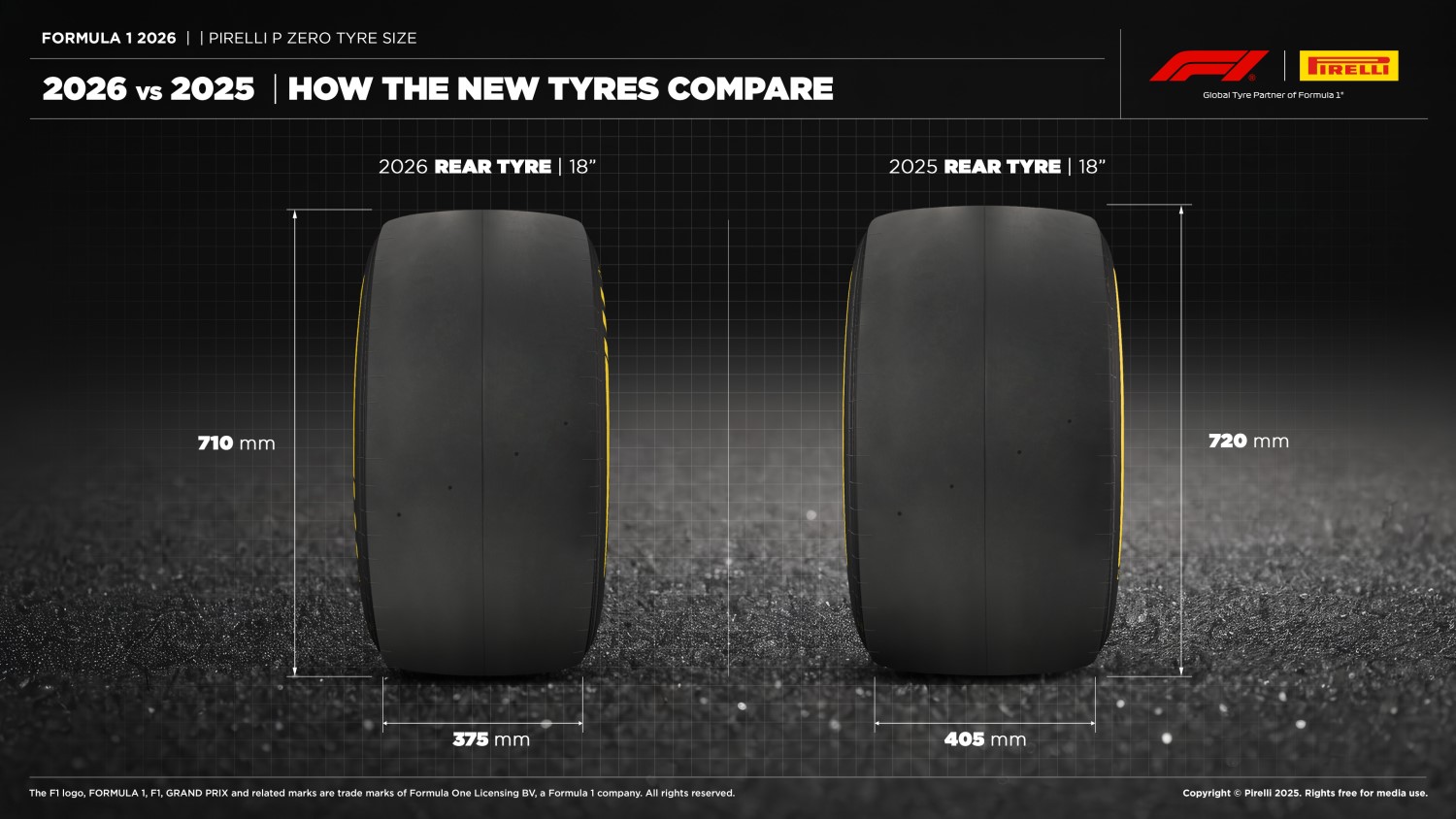
Tires will also undergo a substantial transformation. From 2026, both the front and rear tires will be narrower—by 25 mm at the front and 30 mm at the rear—fundamentally altering how cars generate grip. The reduction in tire width contributes to a smaller aerodynamic wake, making it easier for cars to follow one another closely, but it also shifts a greater share of performance responsibility back to mechanical grip rather than pure downforce.
For drivers, this change raises the technical and physical demands behind the wheel. Managing slip angles, traction on corner exit and tire temperatures will become far more critical, particularly during long stints and in race conditions where fuel loads and track evolution vary significantly. The narrower contact patch punishes imprecision and rewards smoothness, forcing drivers to constantly balance aggression with control.
From a spectator’s perspective, the impact should be immediately noticeable. Cars will appear more “alive,” with more visible driver input, clearer differences in driving styles and a higher likelihood of small errors turning into meaningful consequences—or, just as importantly, recovery drives that showcase skill rather than pure aerodynamic advantage.
Alongside these performance-oriented changes, safety remains an uncompromising priority, even as technical complexity increases. The 2026 regulations introduce stronger roll hoops capable of withstanding forces of up to 20G, as well as redesigned two-stage nose structures that improve energy absorption during frontal impacts. In parallel, clearer and more visible ERS status lights will enhance situational awareness for marshals and fellow drivers, particularly in incidents involving high-voltage systems.
These measures operate largely out of sight, but they are fundamental. They ensure that the shift toward greater electrical integration and new structural concepts does not dilute Formula 1’s safety standards, reinforcing the principle that innovation and protection must evolve together rather than compete.
A New Competitive Landscape: Manufacturers and Teams
The 2026 regulations have already reshaped the grid.
- Audi enters as a full works team
- Ford partners with Red Bull Powertrains
- Cadillac joins as a new team, initially using Ferrari engines
This influx validates the new ruleset. Lower complexity, sustainable branding, and cost controls make Formula 1 attractive again to major manufacturers—something the sport struggled with in previous eras.
How the 2026 Rules Could Impact Formula 1 Betting Markets
The 2026 reset is not only a sporting revolution—it also reshapes how races may be predicted and analyzed.
First, competitive convergence is likely. With new power units, active aero, and simplified hybrid systems, historical dominance becomes less reliable. Early seasons may see wider performance swings, increasing the value of:
- Practice session analysis
- Reliability trends
- Energy management efficiency
Second, driver influence increases. Hybrid deployment, regenerative braking, and manual override usage reward intelligent racecraft. This could elevate drivers known for adaptability and technical understanding, not just outright speed.
Third, overtaking becomes less predictable. Without DRS, passes depend on timing, energy state, and defensive positioning. This may reduce “guaranteed” overtakes and create more variability in race outcomes—especially on circuits previously dominated by DRS zones.
Finally, new teams and power unit suppliers introduce uncertainty. Early-season volatility is historically fertile ground for informed bettors who understand regulation cycles and development curves rather than relying on legacy hierarchies.
In short, the 2026 regulations are likely to make Formula 1 betting more analytical, less mechanical, and far more dependent on deep technical understanding.
A Necessary Leap Forward
Formula 1 in 2026 is not simply evolving—it is redefining itself. Smaller cars, active aerodynamics, electrified power, sustainable fuels, and a refreshed grid represent a coherent vision rather than a fragmented compromise.
If successful, these regulations could deliver:
- Closer racing
- Greater driver influence
- Environmental credibility
- Renewed manufacturer interest
For fans, analysts, and stakeholders alike, 2026 is not just another season. It is the beginning of a new Formula 1 era—one where intelligence, efficiency, and adaptability matter as much as raw speed.