Shadows in the F1 Dyno Rooms: The 2026 Compression Whisper (2nd Update)

Some additional quotes from Red Bull Powertrains-Ford technical director Ben Hodgkinson and driver Max verstappen on this story.
“I imagine there’s some nervousness among the engine manufacturers that some teams have put a lot of engineering brainpower into this,” he said. “I don’t know how much weight to give to all this talk. I’ve been in this business for quite some time, and most of the time it’s just noise.
“Everyone should concentrate on their own work. I know what we’re doing, and I’m confident that everything we’re doing complies with the regulations.
“Sure, we’re pushing the limits of the rules. And I’d be genuinely surprised if the others weren’t doing the same. But quite honestly, I think all the fuss is much ado about nothing.”
“As an engine engineer, I say the compression ratio is already set too low,” he said. “We could easily run at 18:1 – the power units would handle it without any problem.
“The manufacturers will all try to achieve 15.999:1 to get everything out of the engine while remaining within the regulations.”

He was also dismissive of claims from Toto Wolff that Red Bull faces an Everest-scale challenge with its first in-house power unit.
“There have been over 14,000 ascents of Mount Everest,” Hodgkinson replied. “So that seems like a manageable task and isn’t a good comparison.”
As for suggestions that Mercedes already holds a decisive engine advantage, Hodgkinson pushed back sharply. “Nobody knows how good the competition is,” he said. “I can imagine they spread that rumor themselves last season to distract from their mediocre season.”
Four-time world champion Max Verstappen insists he is playing little attention to the chatter.
“It’s impossible to know,” Verstappen told Bloomberg.
“Everyone is just trying everything they can and from our side, especially from my side, I have to focus on the driving.
“I’m not there to be the engine technician will explain everything in detail to you.
“At the end of the day, it’s also something between the FIA and the engine manufacturers to sort out.
“I drive the car, and I trust that from our side, we always try to do our very best to get the most performance out of the engine.”
Cutaway view of an F1 car 🏎️😮 pic.twitter.com/Bn6JO5nIXR
— FORMULA ADDICT (@Formuladdict) January 18, 2026
January 16, 2026
In the wake of growing speculation about a potential loophole in the 2026 Formula 1 power unit regulations—detailed in our earlier article [“Shadows in the F1 Dyno Rooms: The 2026 Compression Whisper”]—Red Bull Powertrains boss Ben Hodgkinson has broken his silence, firmly downplaying the controversy.
–by Mark Cipolloni–
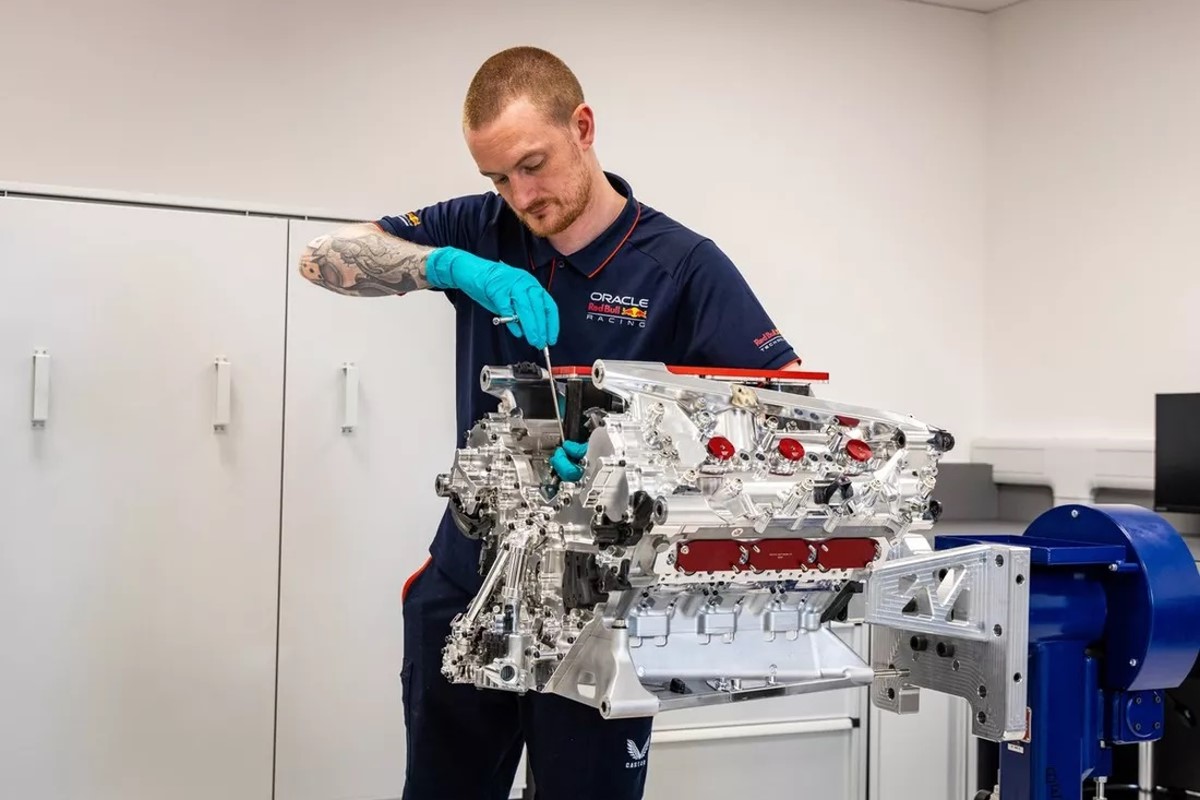
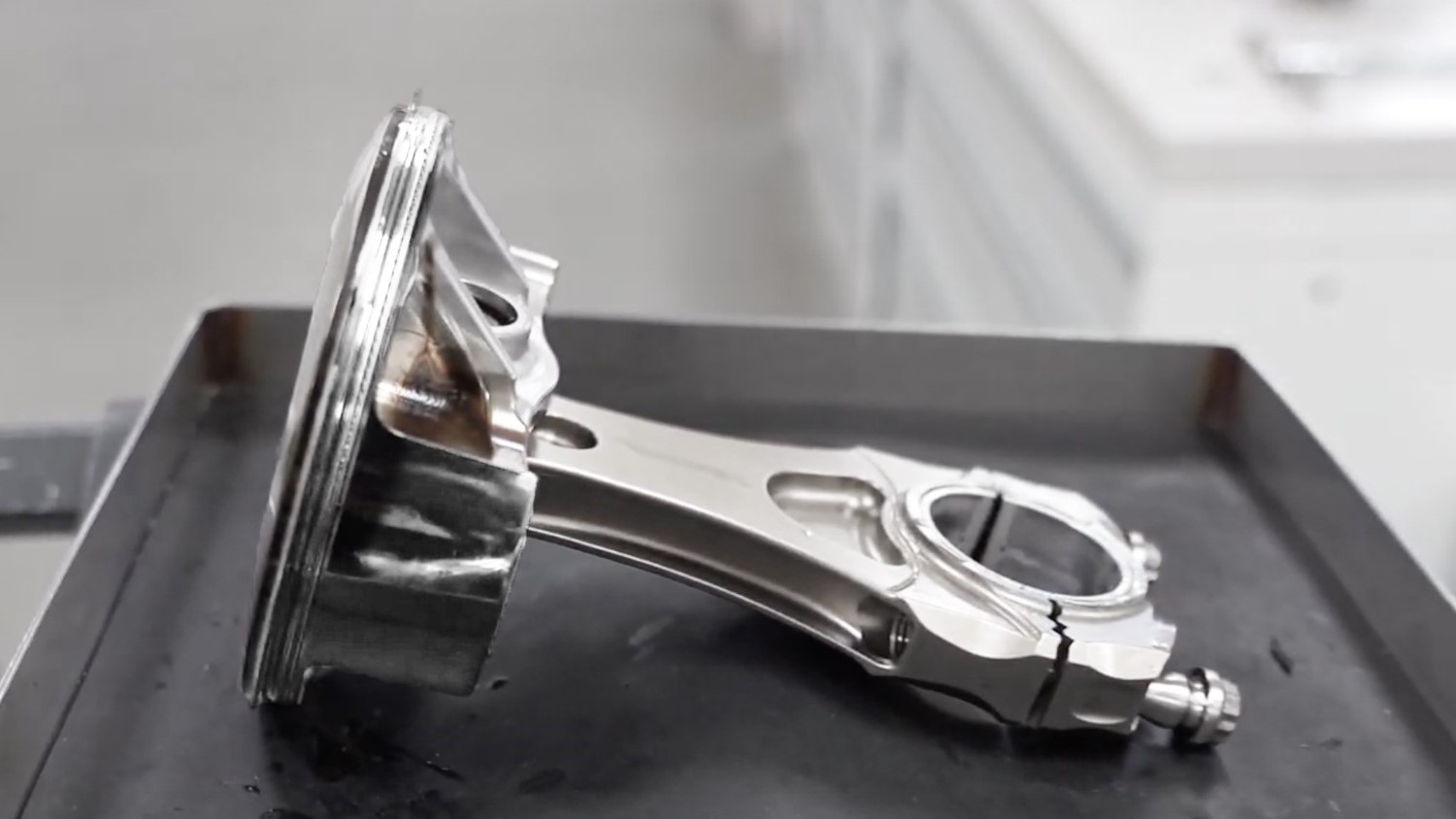
Speaking at Red Bull’s 2026 livery launch, Hodgkinson addressed reports suggesting that his team—and Mercedes—had engineered components (such as connecting rods made from exotic alloys) that thermally expand under race conditions. This would allegedly allow an effective compression ratio closer to the previous 18:1 limit while passing FIA static checks at the regulated 16:1 ambient measurement.
Hodgkinson dismissed the chatter outright:
“I think there’s some nervousness from various power unit manufacturers that there might be some clever engineering going on in some teams. I’m not quite sure how much of it to listen to, to be honest. I’ve been doing this a very long time and it’s almost just noise. You just have to play your own race really.”
He expressed full confidence in Red Bull’s approach:
“I know what we’re doing, and I’m confident that what we’re doing is legal. Of course, we’ve taken it right to the very limit of what the regulations allow. I’d be surprised if everyone hasn’t done that. My honest feeling is that it’s a lot of noise about nothing. I expect everyone’s going to be sitting at 16, that’s what I really expect.”
The Red Bull Powertrains chief also took aim at the regulation itself, arguing the 16:1 cap—introduced partly to aid newcomer Audi—is unnecessarily conservative:
“From a purely technical point of view the compression ratio limit is too low. We have the technology to make the combustion fast enough, so the compression ratio is way too low. We could make 18:1 work with the speed of combustion that we’ve managed to get, which means there’s performance in every tenth of a ratio that you can get. Every manufacturer should really be aiming at 15.999 as far as they dare when it’s measured.”
The rumors, which gained traction late last year, prompted concerns from Ferrari, Honda, and Audi, with some rivals threatening protests if the alleged advantage materialized on track. The FIA has maintained that static ambient-temperature measurements are sufficient and has not mandated hot-condition testing.
With preseason testing just weeks away in Barcelona, the dyno-room whispers may soon give way to on-track reality. Hodgkinson’s confident dismissal suggests Red Bull is unfazed—but rival teams will be watching closely for any hint of that rumored 15-horsepower edge.
Stay tuned as the 2026 season approaches. The shadows may be lifting, but the intrigue remains.
December 20, 2025
In the dim glow of the dyno cells at Brackley and Milton Keynes, alarming whispers had started circulating weeks before the Christmas lights went up in 2025. Formula 1’s 2026 power unit regulations were meant to usher in a new era: more sustainable, more electric, and—crucially—more equal.
–by Mark Cipolloni–
The FIA had dropped the geometric compression ratio of the internal compression engine portion of the overall F1 power unit from 18:1 to 16:1, a deliberate step to curb outright power from the internal combustion engine while ramping up the hybrid contribution to nearly 50/50.
But in the high-stakes world of F1 engine development, rules are never just words on paper. They are battlegrounds.
The rumor began as a quiet murmur among technicians: two power unit manufacturers—Mercedes and Red Bull Powertrains—had allegedly cracked a way to bend the new limit without breaking it.
The key? Thermal expansion.

By crafting connecting rods (or possibly other components in the piston assembly) from exotic alloys that swell dramatically when the engine hits full operating temperature, the piston could be pushed fractionally higher at top dead center during a hot run. On the cold dyno bench, where the FIA measures compression statically at ambient temperature, the ratio stays safely at 16:1.
But on track, under race conditions, that clever expansion could squeeze the combustion chamber tighter—effectively restoring an 18:1 ratio and unlocking an extra 15 horsepower, or roughly three-tenths of a second per lap.
It was brilliant, if true. And infuriating to the others.
Ferrari’s engineers, poring over their own dyno data in Maranello, were the first to raise the alarm. “If they’re doing this,” one senior figure reportedly told the FIA technical working group, “it’s not just an advantage—it’s a gulf.”
Honda, preparing to supply Aston Martin, and Audi, gearing up for their debut with Sauber, echoed the concern. They lobbied for clarification, arguing that the rules’ static measurement method—unchanged since the hybrid era—left a loophole wide enough to drive a turbo through.
The FIA’s response was measured: “The regulations clearly define the maximum compression ratio and the method for measuring it, based on static conditions at ambient temperature.”
They acknowledged thermal expansion as a natural phenomenon but noted no hot-condition testing was required, or even possible. Yet behind closed doors, discussions intensified. Some feared protests at the first race in Australia; others worried that if the “trick” was allowed, rivals wouldn’t have time to retrofit stronger pistons and rods without compromising reliability.
In the paddock, the rumor grew legs. Anonymous sources pointed fingers at Mercedes’ meticulous engineering culture and Red Bull’s aggressive development under their new in-house program. One engineer joked, “It’s like the old days of blown diffusers—clever, but someone always cries foul.” Another dismissed it as mind games: “Spread enough doubt, and you slow your rivals down chasing ghosts.”
As the first pre-season test approached in late January 2026, the tension was palpable. Teams will be arriving at Barcelona in January with engines humming at new volumes, but eyes will on the dyno logs. Would the FIA demand hot measurements? Would they close the loophole? Or would the clever ones start the season with an invisible edge?
In F1, the line between genius and cheating is often drawn in microns. And in 2026, that line just got a little hotter.