Thermal Expansion and Compression Ratio in Formula 1 Engines: The 2026 Controversy
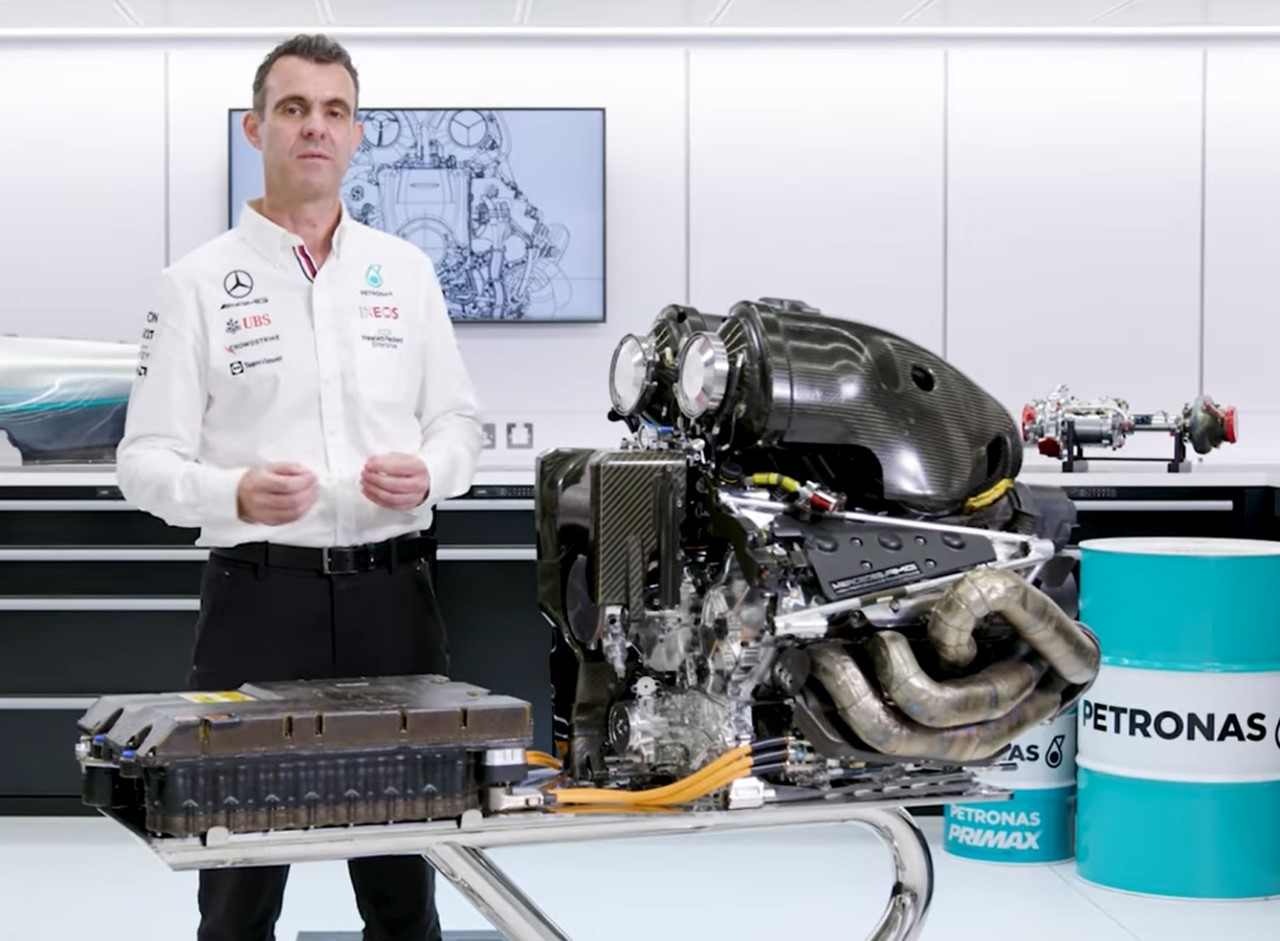
Formula 1 engines (power units) are masterpieces of engineering, combining a 1.6-liter turbocharged V6 internal combustion engine (ICE) with hybrid systems. These are short-stroke, high-revving designs (typically revving to around 12,000-15,000 rpm under current rules, with similar characteristics expected for 2026), allowing high power density while maintaining reliability under extreme loads.
–by Mark Cipolloni–
The geometric compression ratio (CR) is defined as the ratio of the cylinder volume at bottom dead center (BDC) to the volume at top dead center (TDC) of the piston stroke:
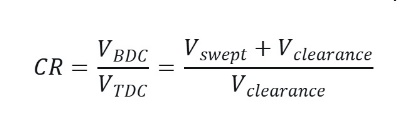
A higher CR improves thermal efficiency and power output from a given fuel volume, which is critical in fuel-flow-restricted F1 engines.
Thermal Effects on Compression Ratio
When an engine reaches operating temperature (typically 100-200°C rises in components), materials expand due to their coefficients of thermal expansion. In F1’s short-stroke designs, even small expansions (fractions of a millimeter) significantly affect the clearance volume at TDC.
– Connecting rods (often steel or titanium alloys) lengthen, pushing the piston higher at TDC.
– Pistons (aluminum alloys with higher expansion rates) grow in height and diameter.
– The net effect in most designs raises the piston crown closer to the cylinder head when hot, reducing Vclearance and increasing the effective (hot) CR.
This phenomenon is well-known in engine design. Builders set cold clearances to achieve the target hot geometry without interference. In high-performance applications, including F1, differential expansion can be engineered to deliberately increase hot CR for performance gains.
FIA Regulations and Materials
The 2026 F1 Power Unit regulations (Article C5.4.3) cap the geometric CR at 16.0:1, reduced from 18:1 in prior eras to aid new entrants and align with sustainable fuel changes. Crucially, measurement is static and at ambient temperature.
There are no blanket bans on exotic materials like titanium, magnesium, or carbon fiber for engine block, heads, pistons, or connecting rods. However, Article 15 imposes strict restrictions on power unit components:
– Prohibited: Magnesium alloys, metal matrix composites (>2% ceramics), intermetallics, high-platinum/rhenium alloys, beryllium (>0.25%), tungsten alloys, ceramics (except specific applications), nanomaterials, etc.
– Permitted materials must be commercially available and approved by the FIA on a non-exclusive basis.
– Coatings and inserts are limited in thickness and composition.
Designers have freedom within these bounds to select alloys with tailored thermal expansion properties, enabling precise control over hot geometry.
The 2026 Rumor and Controversy
Rumors indicate Mercedes (and possibly Red Bull Powertrains-Ford) have designed 2026 engines that measure exactly 16:1 cold but achieve a higher effective CR—potentially approaching 18:1—when hot through optimized material selection and differential expansion.
This exploits the regulation’s cold-measurement requirement, delivering better efficiency and power on-track. Rivals (Ferrari, Honda, Audi) protested, arguing cars must comply “at all times,” but the FIA has upheld the ambient-temperature procedure, acknowledging thermal effects occur naturally.
Estimated Performance Impact
The 2026 ICE is projected at ~530-550 hp (400 kW), with total power unit output over 1,000 hp including enhanced hybrid (350 kW MGU-K).
If the rumors hold and hot CR reaches near 18:1:
– Simulations suggest a gain of 10-15 horsepower (10-11 kW) from the ICE alone.
– This translates to 0.3-0.4 seconds per lap on power-sensitive circuits, plus improved fuel efficiency under energy-flow limits.
Such an edge could be decisive early in the homologated 2026 cycle, where major changes are restricted. However, overall performance also depends on chassis performance, aero performance, electric motor and battery performance, and the new exotic e-Fuels being used starting in 2026.
In summary, thermal expansion does allow higher effective compression in hot-running F1 engines, and the 2026 ruleset has sparked debate over whether Mercedes and Red Bull-Ford have masterfully leveraged this for a potential advantage. The specified 16:1 limit remains the cold, legal benchmark, but on-track reality favors those who optimize for heat.
A word about Formula 1 engine RPM
Formula 1 engines have historically revved much higher, up to 18,000-20,000 RPM in the pre-hybrid V8 and V10 eras (e.g., 2006-2013). However, not today.
Historical Context
– Pre-2014 (V8/V10 Eras): No strict RPM limit initially, with engines pushing toward 20,000+ RPM for maximum power. The FIA introduced a cap at 19,000 RPM in 2007, reduced to 18,000 RPM from 2009-2013 to control costs and speeds.
– This is likely where your recollection of 18,000 RPM comes from—those engines were naturally aspirated, short-stroke designs optimized for high revs, producing a signature scream.
Current Regulations (2014-2025 Hybrid Era)
– 2014-2021: The shift to 1.6-liter turbocharged V6 hybrids included a strict RPM limit of 15,000 RPM to emphasize efficiency and hybrid tech over raw revs.
– 2022-2025: The RPM limit was removed from the technical regulations—no maximum is specified. Teams define their own “final rev limit,” but it must stay within a 750 RPM band across conditions (e.g., for safety or protection modes).
– In Practice: Engines rarely exceed 12,000-13,000 RPM due to fuel flow restrictions (capped at 100 kg/hour above 10,500 RPM). Revving higher yields no power gain, as the fuel limit prevents it. Some sources still reference “15,000 RPM” as a legacy figure or practical max, but it’s not enforced.
2026 Regulations
– The 2026 power unit rules retain the 1.6-liter turbocharged V6 hybrid setup but drop the MGU-H, boost MGU-K electric power (to ~350 kW/470 hp), and mandate sustainable fuels.
– RPM Limit: No specific maximum is defined, mirroring the 2022-2025 approach. The regs reference a “final rev limit” (team-defined) with the same 750 RPM band constraint.
– Expected Characteristics: Similar to today—short-stroke, high-revving designs, but practical RPM around 12,000-15,000 due to efficiency focus and reduced ICE power (down to ~400 kW/536 hp). No return to 18,000+ RPM is planned, as the emphasis is on sustainability over outright revs.
In short, while F1 engines could theoretically rev higher without a cap, physics and rules (like fuel flow) keep them in the 12,000-15,000 RPM range today and for 2026. If you’re thinking of the iconic high-rev sounds from the 2000s, those days are gone with the hybrid shift!