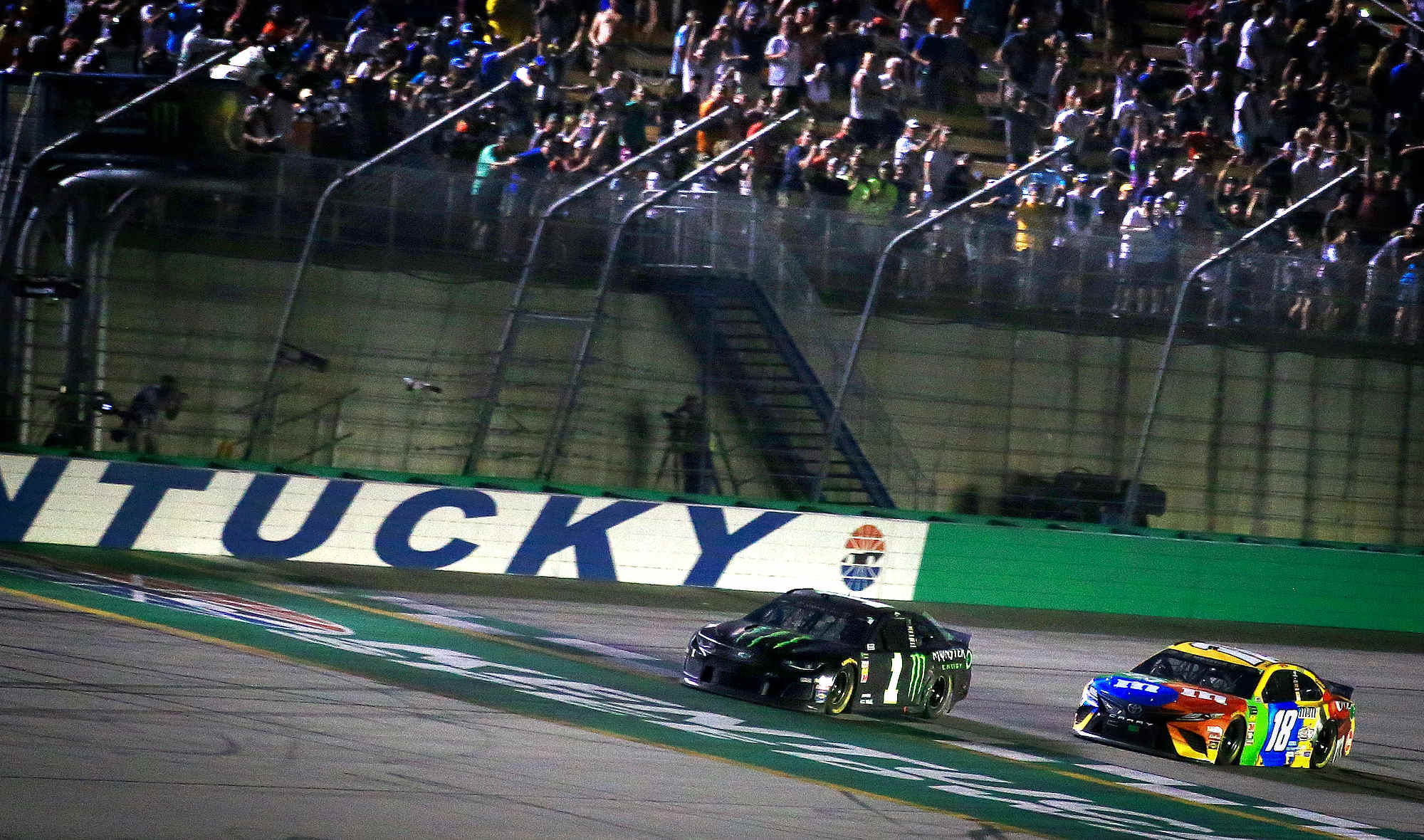
Track News: Is Kentucky Speedway Doomed – Rumor? (Update)

This rumor is upgraded to ‘strong’ today. Less than two weeks after a pivotal zoning hearing raised alarms about the potential demise of Kentucky Speedway, Gallatin County officials are actively pushing forward with plans to rezone the dormant 1.5-mile oval for industrial, manufacturing, and possibly residential uses—signaling that a return to major NASCAR racing appears increasingly unlikely.
–by Mark Cipolloni–
The 1,000-acre facility, owned by Speedway Motorsports (SMI) since 2008, has not hosted a NASCAR Cup Series event since 2020 and was notably absent from the 2026 schedule. While earlier rumors in early January 2026 suggested a zoning shift to Heavy Industrial (I-2) to broaden appeal for buyers—without banning racing outright—recent public meetings have clarified the county’s vision: transforming the site into an economic engine through job-creating development.
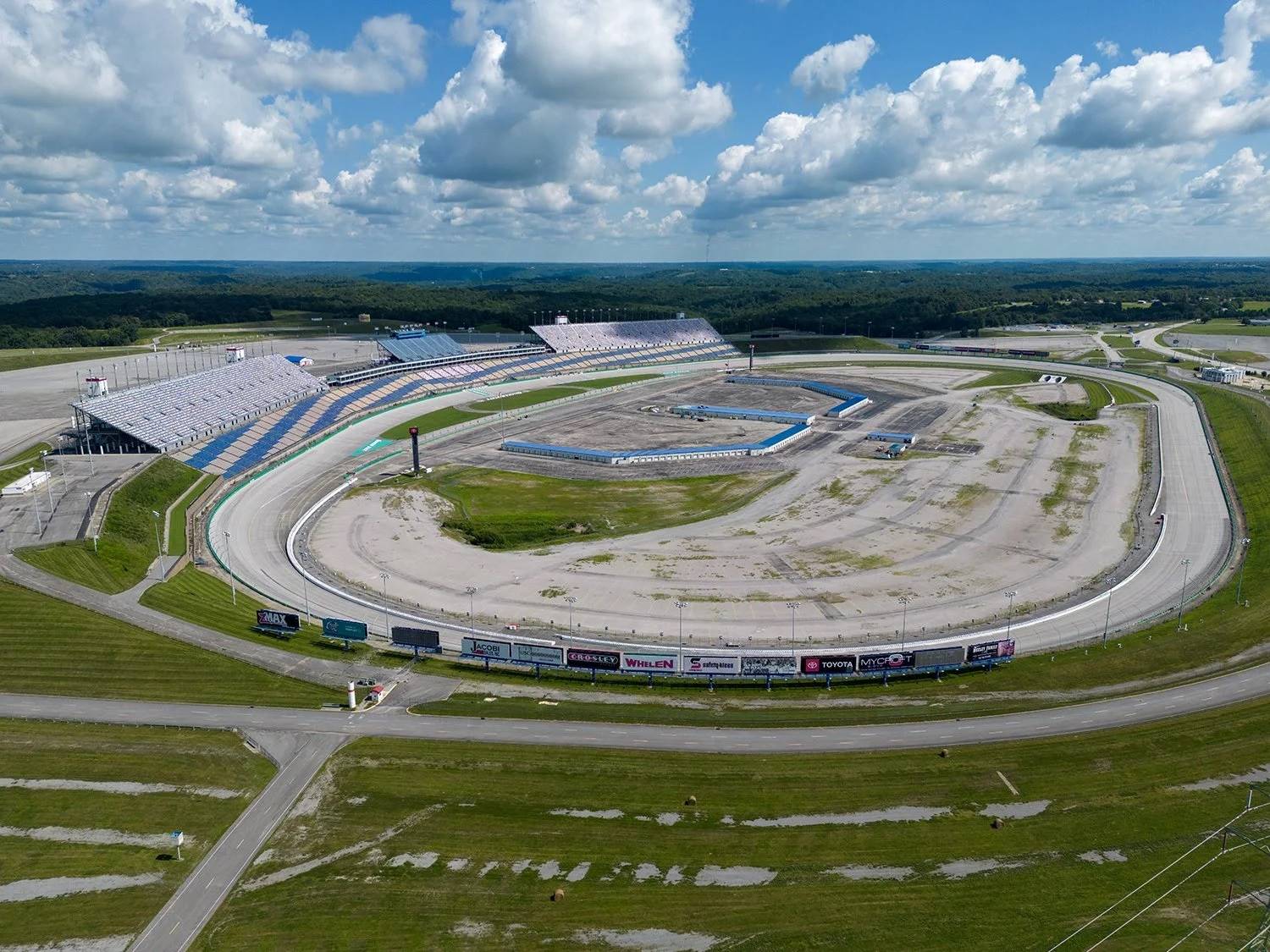
Photograph by Travis Estell | Flickr
At a packed Northern Kentucky Area Development District meeting on January 13, 2026, in Warsaw, residents shared input on a community “wish list,” with many favoring small-scale industrial operations like trucking companies or manufacturing to boost local employment. Gallatin County Judge-Executive Ryan Morris emphasized the urgency, stating, “We’ve got one chance to get it right.” He highlighted the property’s existing infrastructure as a key selling point for quick “speed to market” for potential developers.
Morris added that county leaders are proactively marketing the site to put “Gallatin County on the map,” noting that SMI may be open to selling. No specific buyers or tenants have emerged yet, and rezoning discussions continue at monthly Gallatin County Planning and Zoning Commission meetings.
While some residents expressed hope for a racing revival—one local, Mike Warren, suggested the track could return with investment—the focus remains on alternative uses. The property has seen limited activity in recent years, including vehicle storage during the 2021 microchip shortage and occasional small events like NASCAR Racing Experience dates scheduled for 2026.
With SMI prioritizing upgrades at other venues and no indications of a Cup Series return, the rezoning push—aiming for light industrial, commercial, or mixed development—could mark the end of Kentucky Speedway’s era as a premier motorsports facility. Updates are expected as monthly meetings progress.
“We’ve got one chance to get it right,” said Ryan Morris, judge-executive of Gallatin County.
The county wants to rezone it, possibly for small businesses, manufacturing jobs, housing or a combination of it all.
Gallatin County officials say the Speedway owners could be interested in selling the land. But a buyer still needs to be identified.
On Tuesday, Northern Kentucky Area Development District held a meeting asking for input.
“Small industrial, maybe even a trucking company or something, you know. Create jobs,” said Mike Warren, who lives near Kentucky Speedway.
At one point, it was a successful NASCAR track, but when the racing stopped, the lots were used to store Ford trucks during a microchip shortage in 2021. Then last summer, more than 30 people were charged after breaking onto the property and posting videos online.
WLWT asked Morris about the urgency to redevelop the Speedway.
“I think reaching on the phone and getting Gallatin County on the map, and making sure that they know, we have a 1,000-acre property with a lot of infrastructure ready to go,” said Morris.
“I was hoping they’d bring back the Speedway, myself. I think they work on it, they probably could,” Warren said.
County officials say early updates on the Speedway would come at future Gallatin County Planning and Zoning Commission meetings. Those happen the first Tuesday of every month.
January 1, 2026
In the rolling hills of Sparta, Kentucky, a once-thriving hub of high-octane excitement now sits largely silent, its grandstands echoing with memories of roaring engines and checkered flags. Kentucky Speedway, a 1.5-mile tri-oval that burst onto the NASCAR scene in the early 2000s, has faced a steady decline since its last Cup Series race in 2020.
–by Mark Cipolloni–
Recent news of a proposed zoning change by the Gallatin County Planning Commission has reignited fears among fans that the track could be repurposed for industrial use, potentially sealing its fate as a racing venue. With a public hearing scheduled for January 6, 2026, to discuss reverting the property’s zoning from a specialized “Motor, Equine, Entertainment District” back to “Heavy Industrial,” the question looms: Is Kentucky Speedway doomed?
A Brief History of Glory and Gridlock
Opened in 2000, Kentucky Speedway quickly climbed the ranks of American motorsports. Located in the small city of Sparta—population around 250—the track was designed as a state-of-the-art intermediate oval, hosting its first NASCAR Cup Series event in 2011 after years of lobbying and infrastructure upgrades to handle massive crowds. For nearly a decade, it was home to the Quaker State 400, drawing tens of thousands of fans and injecting millions into the local economy. However, challenges mounted: notorious traffic jams on race days, declining attendance, and criticism of the track’s banking and surface, which limited overtaking and led to processional racing.
A 2016 repave and reconfiguration aimed to address these issues, but by 2020, NASCAR pulled the plug on the Cup Series event amid shifting priorities toward more short tracks, road courses, and urban venues. Owned by Speedway Motorsports Inc. (SMI) since 2008, the facility has hosted sporadic lower-tier events, music festivals like a 2022 EDM rave, and even served as overflow storage for Amazon trailers during the pandemic. Today, it’s classified as “inactive” for major racing, with Ford also leasing space for vehicle storage, helping offset maintenance costs estimated at around $1 million annually.
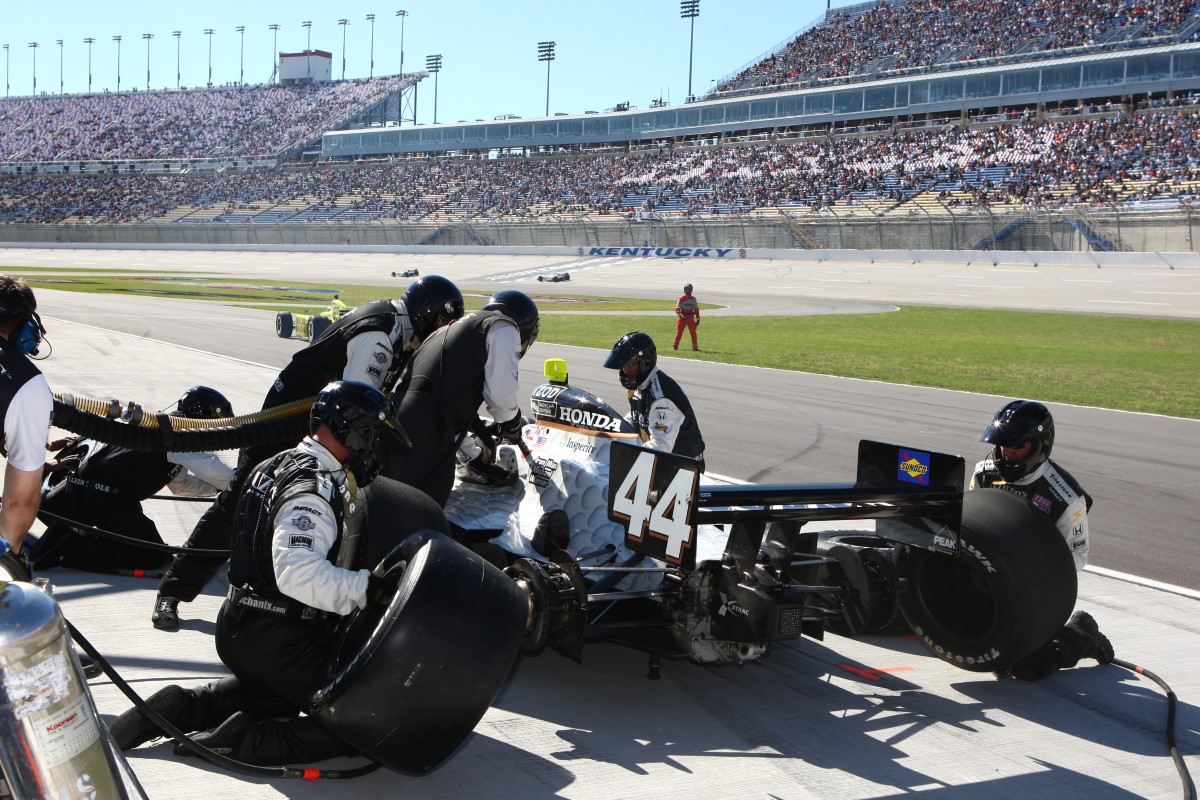
The Zoning Rewrite: A Red Flag for the Future?
The latest controversy stems from Gallatin County’s effort to streamline its comprehensive plan. In 2008, the speedway’s zoning was customized to “Motor, Equine, Entertainment District” to encourage diversified development, including potential horse racing or entertainment complexes that never fully materialized. Now, planners propose reverting to the original “Heavy Industrial (I-2)” designation—still permitting automobile racing but broadening appeal for industrial buyers like warehouses or data centers. Officials describe it as a procedural cleanup to make the property easier to market, insisting it doesn’t preclude racing.
However, this has sparked alarm. Social media buzzes with speculation that SMI might sell the 1,000-acre site, especially given its underutilization. Some reports and online posts erroneously claim the track was already “sold and repurposed” in 2022, but these appear to stem from misinformation; SMI remains the owner, and the facility isn’t officially on the market. Local leaders, including those at the nearby Capital City Airport Authority, emphasize the track’s ongoing viability for events, noting its modern infrastructure and economic potential amid regional growth.
Fan Fears and Expert Insights
NASCAR enthusiasts aren’t buying the optimism. On platforms like Reddit and Facebook, fans lament the zoning shift as a “death knell,” drawing parallels to defunct tracks like North Carolina Speedway or Chicagoland, which faced similar fates. “It’s just sitting there hoping somebody will bring it back to life,” one poster shared alongside sunset photos of the empty venue. Critics point to the track’s history of unfulfilled promises—early traffic woes alienated fans, and post-repave racing remained lackluster until the Next Gen car’s introduction elsewhere showed promise for intermediates.
Driver Denny Hamlin, in a 2024 interview, suggested Kentucky could thrive with upgrades under the current car package, but NASCAR’s 2026 Cup Series schedule tells a different story: No slot for Sparta. Instead, the calendar prioritizes short tracks like North Wilkesboro and road courses, with additions like Chicagoland’s return signaling a selective revival strategy. Speculative Reddit threads from 2025 floated a possible 2026 comeback, but those proved unfounded.
That said, the track isn’t entirely dormant. NASCAR Racing Experience programs are slated for June 20 and August 15, 2026, allowing fans to drive laps themselves. And while major races are absent, the facility’s role in logistics and occasional events keeps it operational.
Echoes of Other Tracks: Lessons from Revival and Ruin
Kentucky’s plight mirrors other ovals sidelined by NASCAR’s evolution. Rockingham Speedway, dormant for years, saw a revival in 2025 with Xfinity and Truck Series races before its sale to the IHRA, which plans to maintain racing. Chicagoland, once shuttered, reappears on the 2026 schedule, proving comebacks are possible with investment. Conversely, tracks like Nazareth or Pikes Peak faded into oblivion, repurposed for non-motorsports uses.
For Kentucky, the zoning hearing could be pivotal. If approved, it might signal SMI’s intent to divest, especially as industrial demand surges in the region near Cincinnati. Yet, officials stress the change doesn’t ban racing, and with no sale announced, the track’s infrastructure—valued at hundreds of millions—remains intact.
Verdict: On the Brink, But Not Buried Yet
Is Kentucky Speedway doomed? Not imminently, but its future as a premier racing destination hangs by a thread. Without a NASCAR return or significant reinvestment, the zoning shift could accelerate a pivot to industrial uses, fulfilling fans’ worst fears. As the January 6 hearing approaches, all eyes are on Sparta. For now, the engines may be quiet, but the checkered flag hasn’t waved just yet—though it might be fluttering in the wind.