Formula 1 News: Ferrari to test two 2026 car concepts as rethink begins (Update)
Ferrari is gearing up for the 2026 Formula 1 overhaul by planning to test two distinct car concepts in the early phases of pre-season running, signaling a comprehensive rethink after a challenging 2025 campaign. The Italian team aims to gather critical data on power unit integration, aerodynamics, and overall architecture to position itself strongly under the revamped rules, which include increased minimum engine weights, new fuel and boost limits, and updated energy management systems.
Split Testing Approach: Spec A and Spec B
As previously reported, Ferrari will divide its initial testing into two specifications:
– Spec A: This version will debut during closed tests at Barcelona at the end of January. The focus here is on power unit integration, electronics, and energy management systems. Reliability and data collection take precedence, allowing the team to validate core components without the full aerodynamic package.
– Spec B: Set for the official pre-season tests in Bahrain, this spec will incorporate the intended aerodynamic concept, suspension layout, and cooling architecture. It represents a step closer to the actual race car, enabling Ferrari to assess performance in a more representative setup.
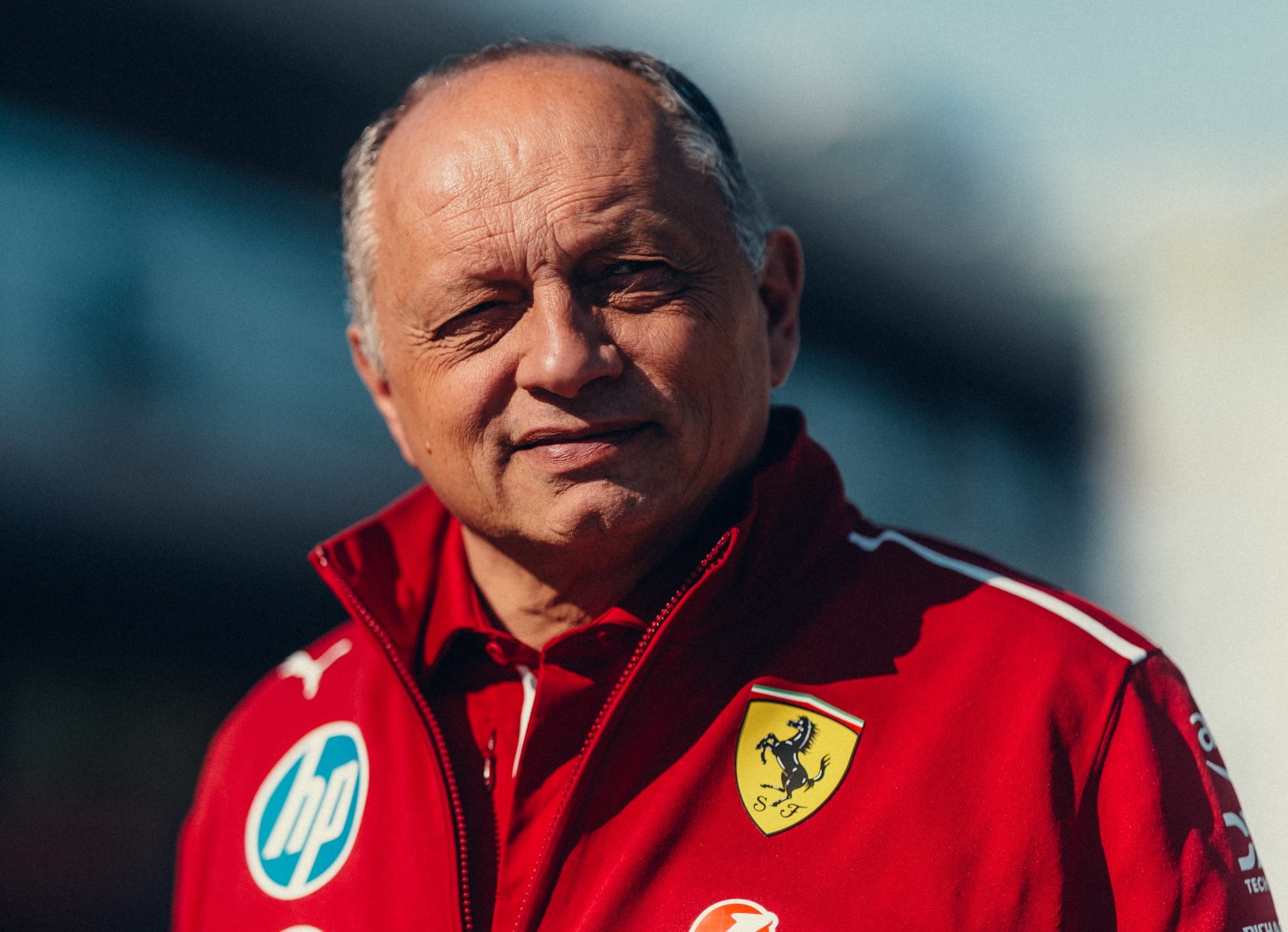
Team boss Fred Vasseur confirmed this bifurcated strategy, noting that it allows Ferrari to “gather as much data as possible in the opening weeks” before converging on a final direction. This methodical split is designed to mitigate risks associated with the regulatory reset.
Engine Innovations: Exploring New Materials
On the powertrain front, Ferrari is experimenting with a novel cylinder head design for its 2026 engine. Dyno testing has included both a conventional aluminum version and a heavier steel alloy alternative. The steel concept is tailored to handle higher pressures and temperatures permitted under the new fuel and boost regulations. With the increased minimum engine weight for 2026, Ferrari sees this as a viable path, expressing confidence in the material’s durability and performance potential.
Vasseur’s Development Strategy: Caution and Long-Term Focus
In fresh comments released on January 10, Vasseur elaborated on Ferrari’s overarching philosophy for 2026, stressing the need for prudent resource allocation to avoid squandering the development budget early in the season. “We have to be careful with the evaluation of the situation,” Vasseur said, warning against introducing “four or five updates in the first couple of races” or shipping parts to logistically challenging events like Japan or China, which could “eat half of the budget in one go.”
Vasseur advocated for a gradual build-up, contrasting Ferrari’s approach with more aggressive strategies from rivals like Red Bull, who are expected to roll out sophisticated packages from the outset. “The season will be played on the capacity to develop quickly,” he explained, adding that the initial classification in Australia—whether P1 or P10—won’t define the year. “It will be a long way until the end for everybody.”
Drawing lessons from past seasons, Vasseur referenced Ferrari’s 2022 hot start (two wins and a second place in the opening rounds) that fizzled due to rivals’ superior development and the team’s reliability woes. He also cited 2024’s mid-season updates that “derailed” progress, as well as flawed concepts from other teams like Mercedes (2022), Aston Martin (2023), and even Red Bull (2024). “We have to make sure that we have strong fundamentals in the factory in Maranello,” Vasseur emphasized, prioritizing simulation work and steady advancement over knee-jerk reactions.
While Vasseur kept specific engine development details under wraps—amid speculation about competitors like Mercedes—his comments underscore Ferrari’s intent to stay under the radar and focus on sustainable growth throughout the intense 2026 calendar.
Broader Context and Expectations
F1 CEO Stefano Domenicali has urged Ferrari to act decisively, stating: “It’s important for Ferrari to react in time and not pretend that fourth place is normal. We need a strong Ferrari, and the team deserves to be in a stronger position.” This comes as the sport braces for significant changes aimed at enhancing competition and sustainability.
With testing just weeks away, Ferrari’s dual-concept strategy and Vasseur’s cautious roadmap reflect a team determined to reclaim its front-running status. Stay tuned to AutoRacing1.com for more updates as the 2026 season approaches.
January 8, 2026
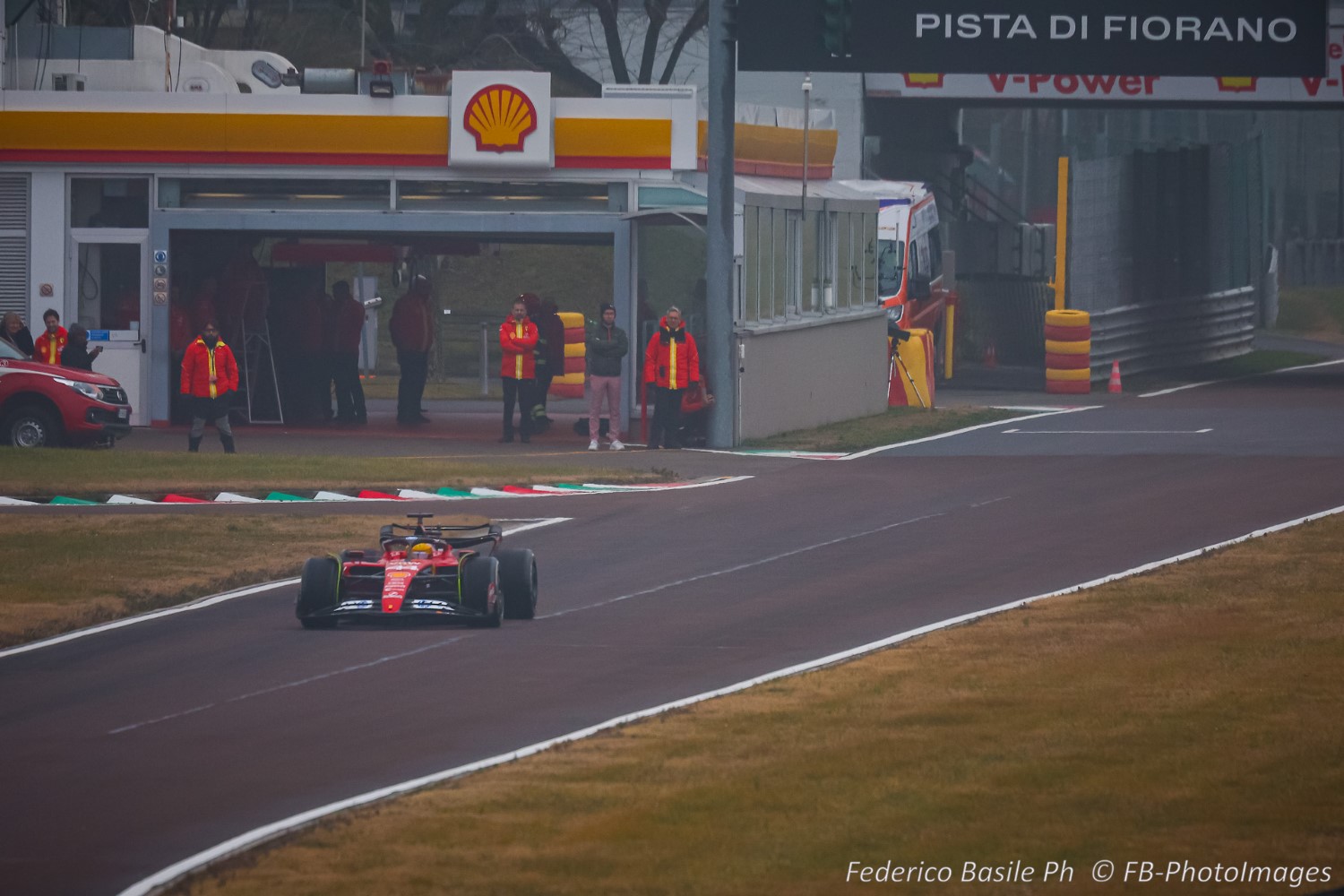
(GMM) Ferrari is planning an unusual split approach to the opening phase of its 2026 preparations, with two different car specifications set to be run before the season begins (pictured is Lewis Hamilton shaking down Ferrari in 2025 at Fiorano).
According to f1-insider.com, the Scuderia will deliberately separate its early testing program into two distinct concepts as it seeks a clean reset after a disappointing 2025 campaign.
Team boss Fred Vasseur has acknowledged that Ferrari will work with clearly divided specifications in the opening weeks, gathering data before committing to a final direction.
Reports from Italy suggest Ferrari will first run a so-called “Spec A” car during the closed Barcelona tests at the end of January. That version is expected to prioritize power unit integration, electronics, and the complex new energy management systems, with outright performance taking a back seat to reliability and data quality.
Only later, during the official Bahrain tests, are Lewis Hamilton and Charles Leclerc expected to drive the more representative “Spec B”, featuring the intended aerodynamic concept, suspension layout, and cooling architecture closer to the race car.
Engine development rumors are also swirling. Auto Motor und Sport reports that Ferrari is trialing a novel cylinder head design for its all-new 2026 power unit. Maranello engineers have apparently been running both conventional aluminum and a heavier steel alloy version on the dynos, with the latter allowing higher pressures and temperatures under the new fuel and boost limits.
The increased minimum engine weight for 2026 appears to have opened the door to that approach, with Ferrari said to be confident enough in durability to now focus fully on the steel concept.
Speaking on Sky Italia, F1 CEO Stefano Domenicali said: “It’s important for Ferrari to react in time and not pretend that fourth place is normal,” he said. “We need a strong Ferrari, and the team deserves to be in a stronger position.”
Former Ferrari driver Arturo Merzario, meanwhile, criticized Charles Leclerc in La Repubblica while defending Hamilton, arguing the Briton has not lost his talent but simply “gave up” during a difficult 2025 season.
As for Leclerc, Merzario said: “Leclerc is an excellent driver but not a phenomenon. Not a genius, like Hamilton.
“Enzo Ferrari would never even have considered allowing Leclerc to cross the threshold at Maranello.”
Editor’s Note: By all accounts Arturo Merzario was a true Formula 1 wanker who now is talking nonsensical. During his F1 career, which spanned from 1972 to 1979 and included driving for several different teams besides Ferrari, Merzario did not record any wins, podiums, or pole positions. His best F1 result was a fourth-place finish, which he achieved three times during his career (one of which was with the Iso Marlboro team). He was so bad Ferrari would never let him race one of their F1 cars.
Hamilton, who turned 41 this week, struck a reflective note on social media, writing: “I’m conscious that we’re entering the Year of the Horse and leaving behind the Year of the Snake.”
Former driver Ralf Schumacher also weighed in via f1-insider.com, suggesting Hamilton has changed under sustained pressure. “Formula 1 changes people,” he said. “Lewis is under a lot of pressure from all sides.
“There are a lot of external factors. That’s why, for a long time now, he wears a helmet when he can when he’s around the paddock. He’s just a different type. Charles Leclerc, for example, is very considerate. He’s open and friendly.
“Lewis just ignores me in the paddock,” Schumacher concluded.
—
Matt Bishop worked with Hamilton when he was chief communications officer at McLaren and is now a columnist for Motor Sport Magazine.
Bishop is ‘troubled’ by the possibility that Hamilton’s career might ‘peter out unimpressively’ in a repeat of Michael Schumacher’s F1 comeback with Mercedes.
Hamilton’s fellow seven-time world champion returned to the sport in 2010, having initially retired in 2006. He added another podium to his record and set the fastest lap in 2012 Monaco qualifying (before a gearbox penalty was applied), but was largely outperformed by younger teammate Nico Rosberg.
Now there are ‘many in F1’ who ‘quietly’ fear that Hamilton is ‘facing a similar fate’, particularly because Ferrari are still a ‘few seasons away’ from reaching a contending level.