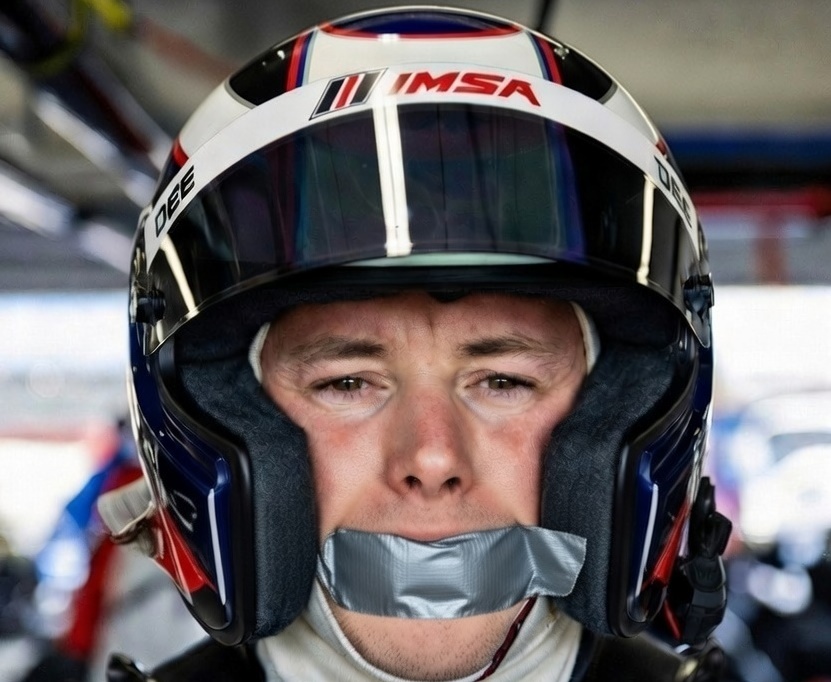
IMSA News: BoP adjustments set for Rolex 24, teams and drivers under ‘gag’ order
As the IMSA WeatherTech SportsCar Championship gears up for its season-opening Rolex 24 at Daytona later this month, series officials have finalized the Balance of Performance (BoP) parameters for the Roar Before the Rolex 24 test and the iconic endurance race itself.
–by Mark Cipolloni–
These adjustments aim to ensure competitive parity across the GTP prototype class and the combined GTD Pro/GTD GT3 categories, incorporating updates for new Evo models and the debut of the Aston Martin Valkyrie AMR-LMH. Notably, the 2026 BoP reflects data from a re-certified Windshear wind tunnel and extensive off-season testing, with narrower performance gaps than in previous years.
In a parallel development, IMSA has implemented stringent new rules prohibiting public commentary on the BoP process by teams, drivers, manufacturers, or related personnel—mirroring similar restrictions in the FIA World Endurance Championship (WEC). This “gag order” underscores the series’ intent to maintain focus on racing rather than debates over performance equalization.
GTP Class: Tighter Gaps and Manufacturer-Specific Tweaks
The top-tier GTP class, featuring LMDh hybrids from Acura, BMW, Cadillac, Porsche, and the newcomer Aston Martin, sees a refined BoP table that separates the five prototypes by just 11 kg in minimum weight—a slim margin designed to promote close racing at Daytona’s high-speed layout. Unlike direct comparisons to 2025 (due to Evo aero updates on several cars and the Valkyrie’s LMH-based design), the adjustments prioritize reliability and stint energy management alongside power and weight.
Key BoP parameters include:
– Minimum Weights:
– Aston Martin Valkyrie: 1030 kg (lightest, benefiting from its LMH roots)
– Cadillac V-Series.R: 1033 kg (a notable 27 kg reduction from 2025, addressing prior complaints of being overweighted)
– Porsche 963: 1035 kg (incorporating significant aero revisions for better high-speed stability)
– BMW M Hybrid V8: 1038 kg (despite major updates, positioned mid-pack to avoid dominance)
– Acura ARX-06: 1041 kg (heaviest, but with strong low-speed power compensation)
– Maximum Power Levels (two-stage system, with a 2.9% variance in the second stage above 240 km/h):
– First-stage (below 230 km/h): Acura ARX-06 and Cadillac V-Series.R at 520 kW (707 hp); Aston Martin Valkyrie at 514 kW (a 6 kW/8 hp deficit)
– Second-stage (above 240 km/h): Aston Martin Valkyrie at 520 kW (most powerful); Cadillac V-Series.R at 505 kW (least, emphasizing top-end adjustments)
– Power-to-Weight Ratios (analysis highlights IMSA’s leniency compared to WEC):
– Below 230 km/h: Cadillac leads at 1.987 kg/kW; Porsche trails at 2.029 kg/kW (gaps narrowed from 2025, where Cadillac exceeded 2.1 kg/kW)
– Above 240 km/h: Aston Martin at 1.981 kg/kW (favored for speed); Acura at 2.057 kg/kW (potential low-speed advantage)
– Other Parameters: Energy per stint varies (e.g., Aston Martin at 913 MJ), with refueling rates and boost ratios tailored to each hybrid system. No major fuel capacity changes noted, but aero kits are locked per manufacturer updates.
Compared to 2025, Cadillac receives the most relief (0.133 kg/kW improvement below 230 km/h), while BMW sees a slight penalty (0.042 kg/kW increase above 240 km/h) despite its revamped design—likely to prevent it from outpacing the field after strong testing showings. Porsche benefits in high-speed sections (0.085 kg/kW reduction), positioning it well for Daytona’s banking.
These tweaks follow off-season tests at Daytona in November 2025, where BMW and Cadillac showcased new aero packages to address 2025 shortcomings. The Valkyrie’s debut adds intrigue, with its BoP favoring outright power but requiring on-track validation during the Roar (January 17-19).
GTD Pro and GTD: Weight Focus for Evo Models
The GT classes, unified under GT3 regulations, incorporate Evo updates for Ferrari, Ford, and Porsche models, alongside the McLaren 720S GT3 Evo’s return after a year’s absence. BoP adjustments emphasize minimum weights, with a spread reflecting chassis and engine differences.
– Minimum Weights:
– Ford Mustang GT3 Evo: 1374 kg (heaviest, balancing its V8 power)
– Lamborghini Huracan GT3 Evo2: 1370 kg
– Lexus RC F GT3, Mercedes-AMG GT3 Evo, Porsche 911 GT3 R Evo: 1356 kg each
– McLaren 720S GT3 Evo: 1330 kg
– Ferrari 296 GT3 Evo: 1323 kg (lightest, compensating for mid-engine layout)
No detailed power, aero, or fuel specs are outlined in the release, but the weights account for 2026 Evo kits aimed at improving durability and performance consistency over 24 hours. Changes from 2025 are minimal for carryover models, focusing on integrating the new Evos without disrupting parity.
New Rule: Silencing the BoP Debate
In a move to curb public discourse, IMSA’s updated 2026 sporting regulations (Article 2.2.3.a) ban any comments on BoP processes, methodologies, data, or outcomes via media or social platforms. Violations, determined solely by IMSA, could result in penalties—regardless of intent. This rule, effective immediately, aims to shift emphasis back to competition and echoes WEC’s approach, where similar restrictions were introduced last year.
Team principals have privately expressed mixed reactions, with some viewing it as necessary to prevent lobbying, while others see it as limiting transparency in a series prided on close racing.
Implications for the 64th Rolex 24
With a capacity 60-car grid confirmed for the January 24-25 event—including new entries from McLaren and teams like Heart of Racing in GTP—these BoP changes set the stage for a highly competitive opener. Cadillac’s lightened load could revive its title aspirations after a winless 2025, while Aston Martin’s power edge might shine in qualifying. However, IMSA’s history of post-Roar tweaks (expected between the test and race) adds uncertainty—though now without public team input.
As always, factors like full-course yellows and strategy will play outsized roles in the outcome, potentially mitigating any BoP disparities. Stay tuned to AutoRacing1.com for live coverage from the Roar and the Rolex 24, where the true test of these adjustments unfolds.