Porsche’s Daytona Dynasty: A Legacy Forged in Speed and Endurance
As the engines fire up for the 2026 IMSA WeatherTech SportsCar Championship opener, all eyes turn once again to Daytona International Speedway. For Porsche, the famed 24-hour endurance classic isn’t just another race—it’s hallowed ground.
–by Mark Cipolloni–
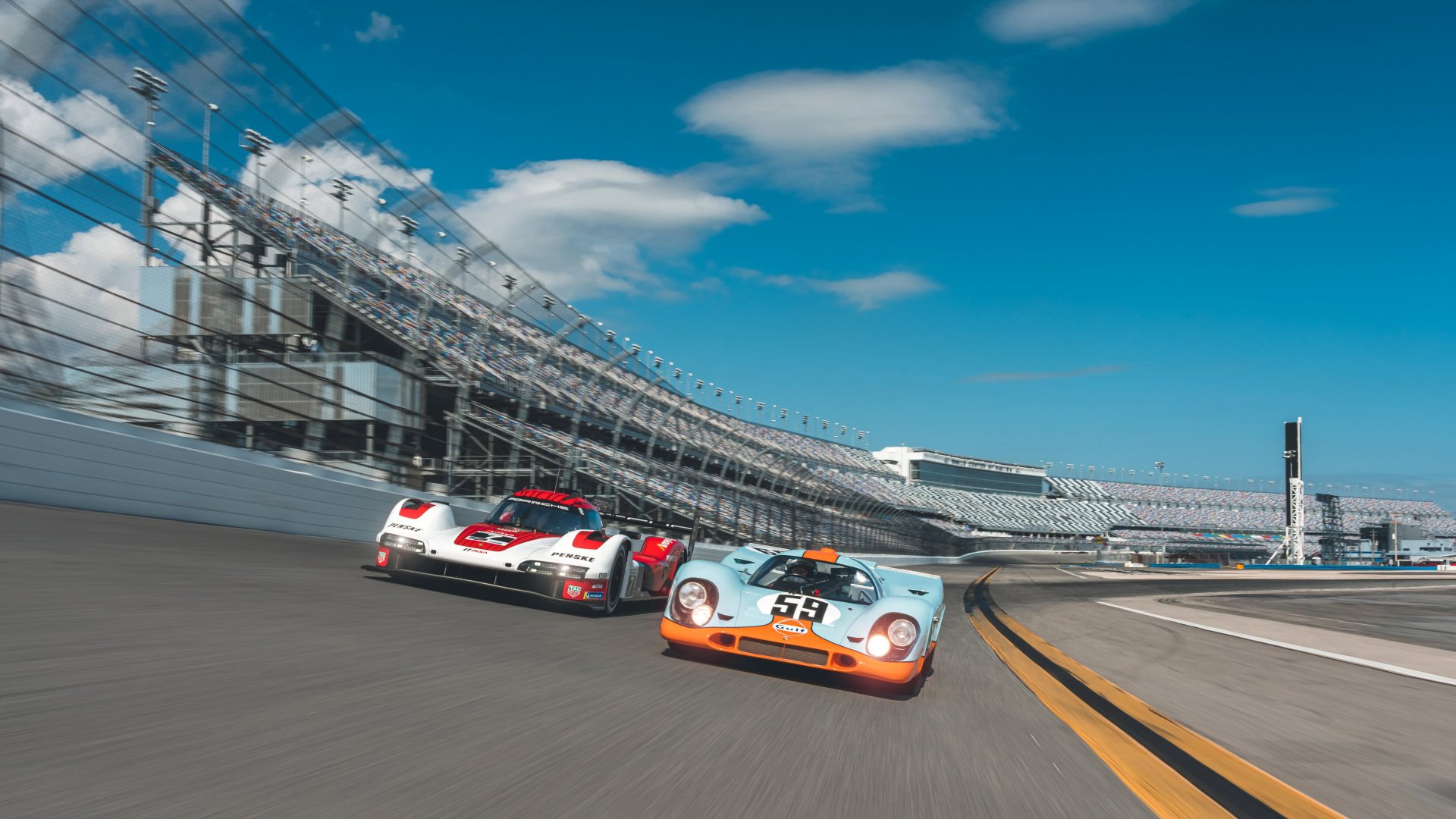
With 20 overall victories from its Weissach-built machines, four more as an engine supplier, and a forgotten triumph dating back to 1959, Porsche stands unchallenged as Daytona’s most successful manufacturer. Add more than 40 class wins to the tally, and the story becomes legend. On January 24, the Porsche Penske Motorsport factory team will roll out its hybrid Porsche 963, hungry to extend a success story that now spans nearly seven decades.
The tale begins not in the official record books, but on a sun-baked April afternoon in 1959. Just weeks after Daytona International Speedway threw open its gates, the first sports car race roared across its high-banked oval and twisting infield. The event, a six-hour sprint cut short by darkness, saw two Argentinians—Roberto Mieres and Antonio von Döry—storm to victory in a sleek Porsche 718 RSK. Another Porsche followed in second. Though sanctioned by a different body and absent from today’s IMSA statistics, that win planted the flag: Porsche had arrived in America.
Official glory came swiftly. The 24-hour format debuted in 1966, but Porsche’s breakthrough arrived two years later on February 4, 1968. Three long-tail 907 LH coupes swept the podium in a display of total dominance. Leading the charge were Vic Elford and Jochen Neerpasch, but in a gesture typical of the era’s camaraderie, Porsche race director Huschke von Hanstein ordered the other works drivers—Jo Siffert, Hans Herrmann, and Rolf Stommelen—to each take five laps in the winning car. Suddenly, six drivers shared the top step, with Siffert and Herrmann pulling double duty on the runner-up podium as well.
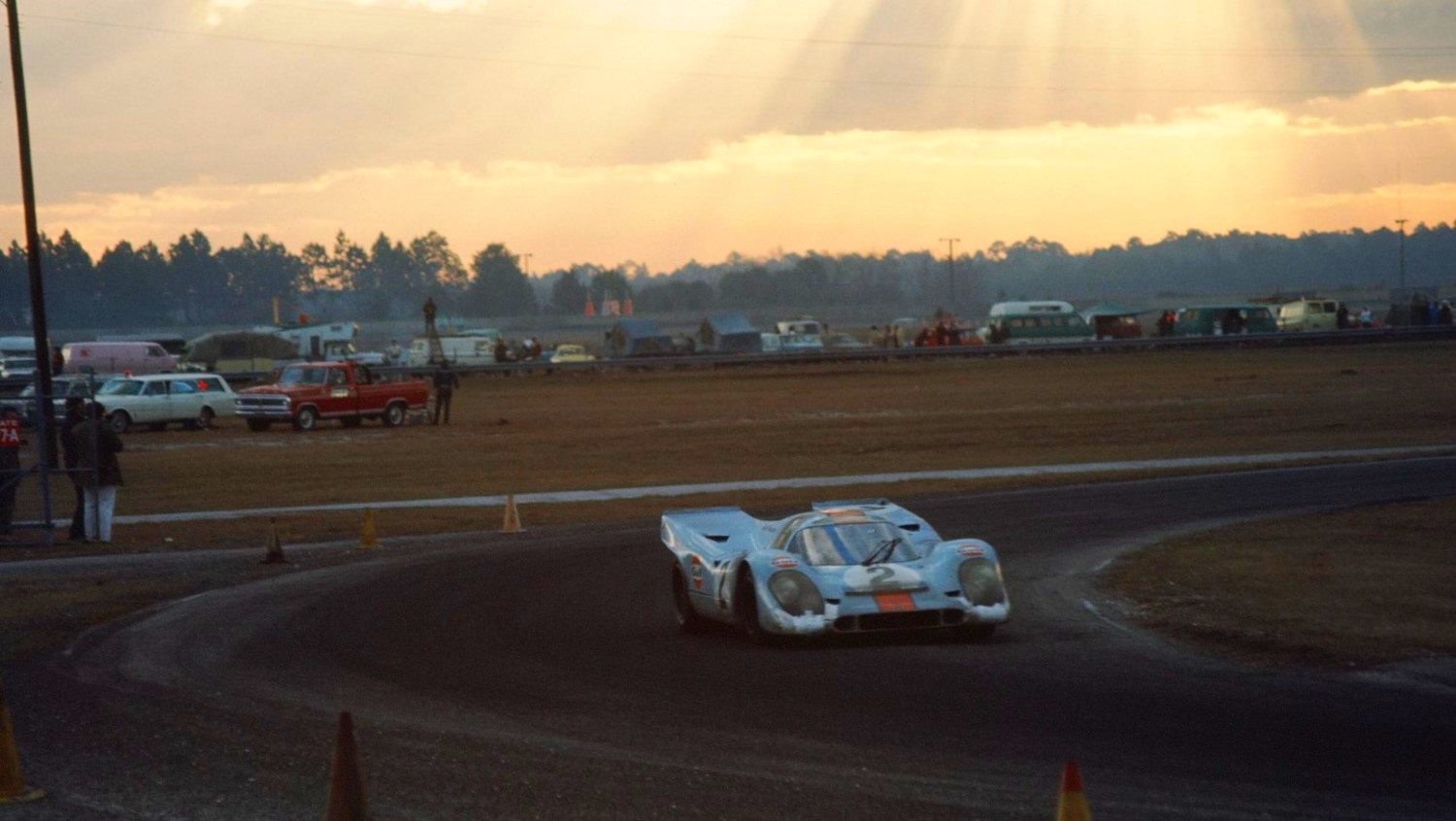
The 1970s brought raw power and iconic liveries. John Wyer’s Gulf-blue Porsche 917 KH monsters outdueled Ferrari to claim back-to-back overall wins in 1970 and 1971. Then came the rear-engined revolution: Hurley Haywood and Peter Gregg, driving for the legendary Brumos Porsche team, delivered a shock 1973 victory in a 911 Carrera RSR. More RSR triumphs followed in 1975 and 1977, launching an extraordinary streak that ran almost uninterrupted through 1987—first with turbocharged 935 derivatives, then the mighty 962. Only a single March victory in 1984, powered by a Porsche engine, broke the spell.
“The Porsche engineers always had an innovative answer to every challenge back then,” recalls five-time Daytona winner Hurley Haywood. He points to the 962 as the perfect example: banned in its original 956 form because IMSA rules forbade footwells ahead of the front axle, Porsche simply redesigned the cockpit, stretched the wheelbase, and created one of the most dominant race cars in history.
The 1980s and early 1990s belonged to evolved 962s and even a Kremer K8 running Porsche power. But few moments in Daytona’s long history shine brighter than 2003, when a humble GT car stunned the prototypes. Against the faster, purpose-built Daytona Prototypes, The Racer’s Group Porsche 911 GT3 RS—driven by Kevin Buckler, Michael Schrom, Timo Bernhard, and Jörg Bergmeister—took a sensational overall victory.
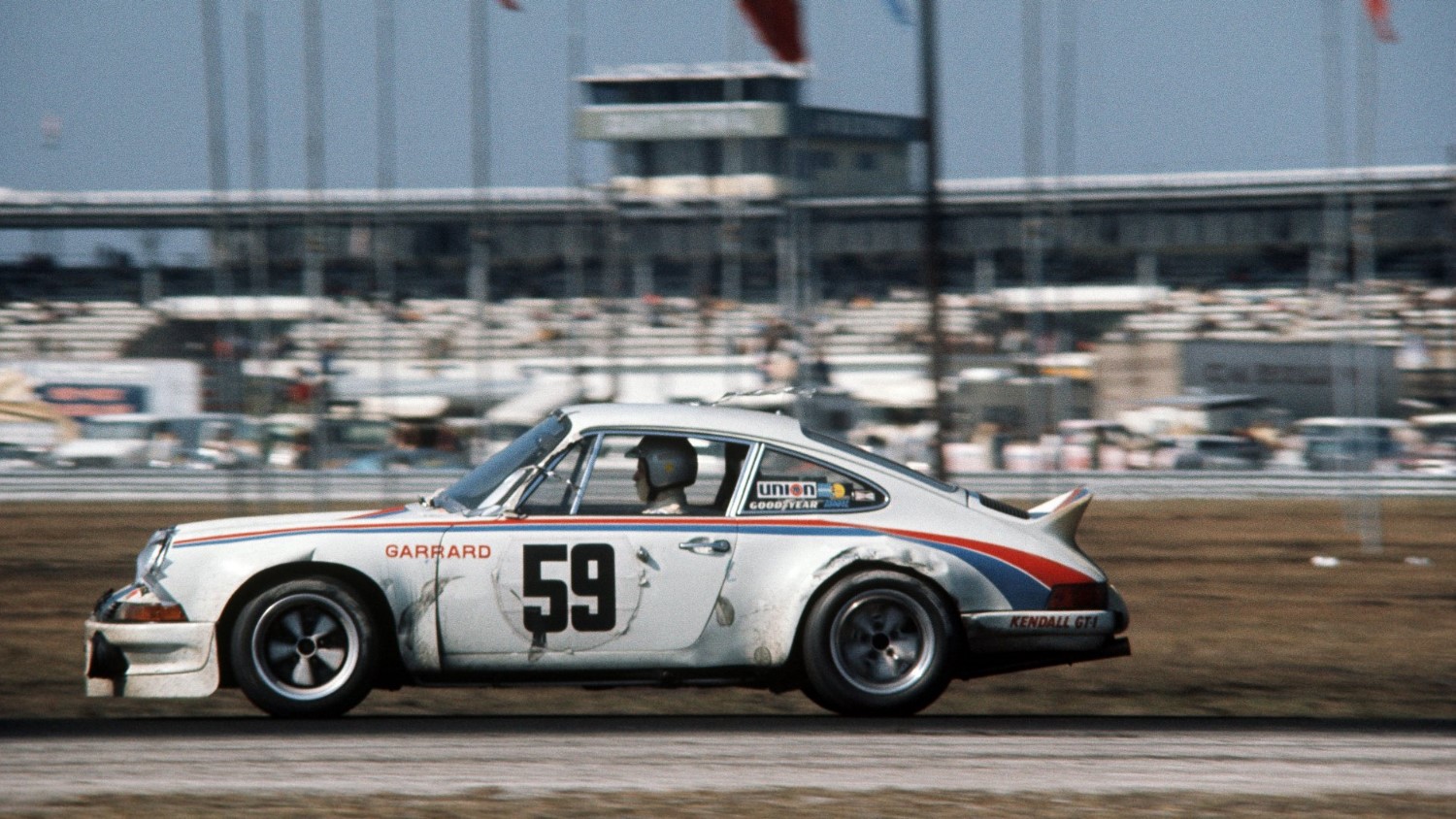
Overall victory 1973: Porsche 911 Carrera RSR 2.8, Hurley Haywood (USA), Peter Gregg (USA)
“We had built a lead early on, but it was never comfortable,” Bergmeister remembers. “A GT car winning outright? It seemed impossible. Then sometime in the night, we looked at each other and thought, ‘This could actually happen.’ Disbelief turned into determination—and it worked.”
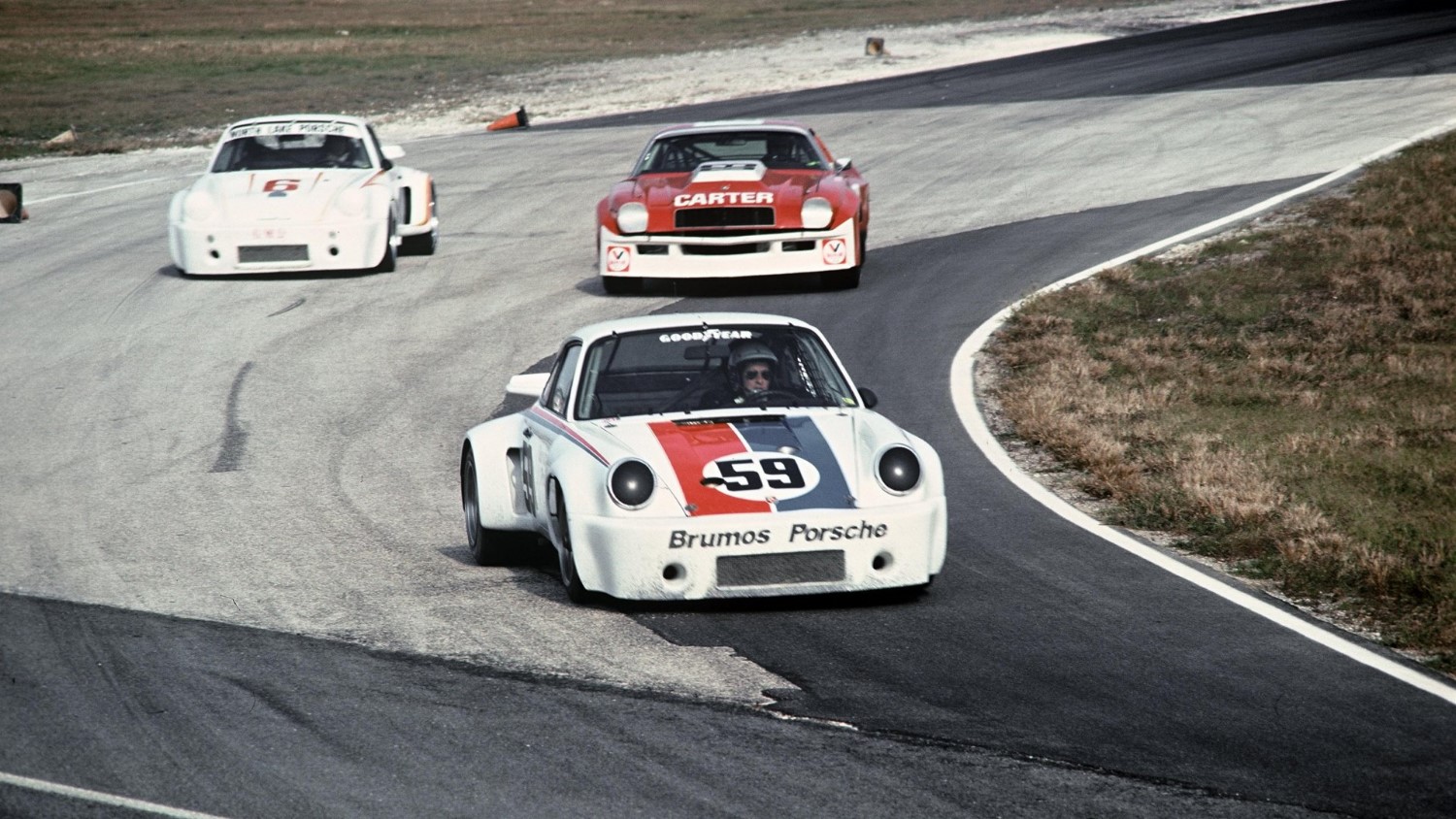
Overall victory 1975: Porsche 911 Carrera RSR, Hurley Haywood (USA), Peter Gregg (USA)
In the prototype era that followed, Porsche twice more etched its name on the trophy as an engine partner. Then came convergence: a shared regulation with the FIA World Endurance Championship opened the door for the new hybrid era. Porsche answered with the 963, campaigned by Porsche Penske Motorsport. The results have been stunning—back-to-back Daytona victories in 2024 and 2025, paired with every GTP championship title along the way.
Now, in Porsche Motorsport’s 75th anniversary year and on the 60th birthday of partner Team Penske, the ambition burns brighter than ever. “We want more,” says Thomas Laudenbach, Vice President Porsche Motorsport. “A third consecutive Daytona win with the 963, and another fight for the IMSA titles in 2026.”
From a forgotten six-hour race in 1959 to the cutting-edge hybrids of today, Porsche’s Daytona story is one of innovation, resilience, and unrelenting pursuit of victory. As the green flag drops later this month, the most successful name in the race’s history will once again chase the checkered flag—and another chapter in an already epic legacy.