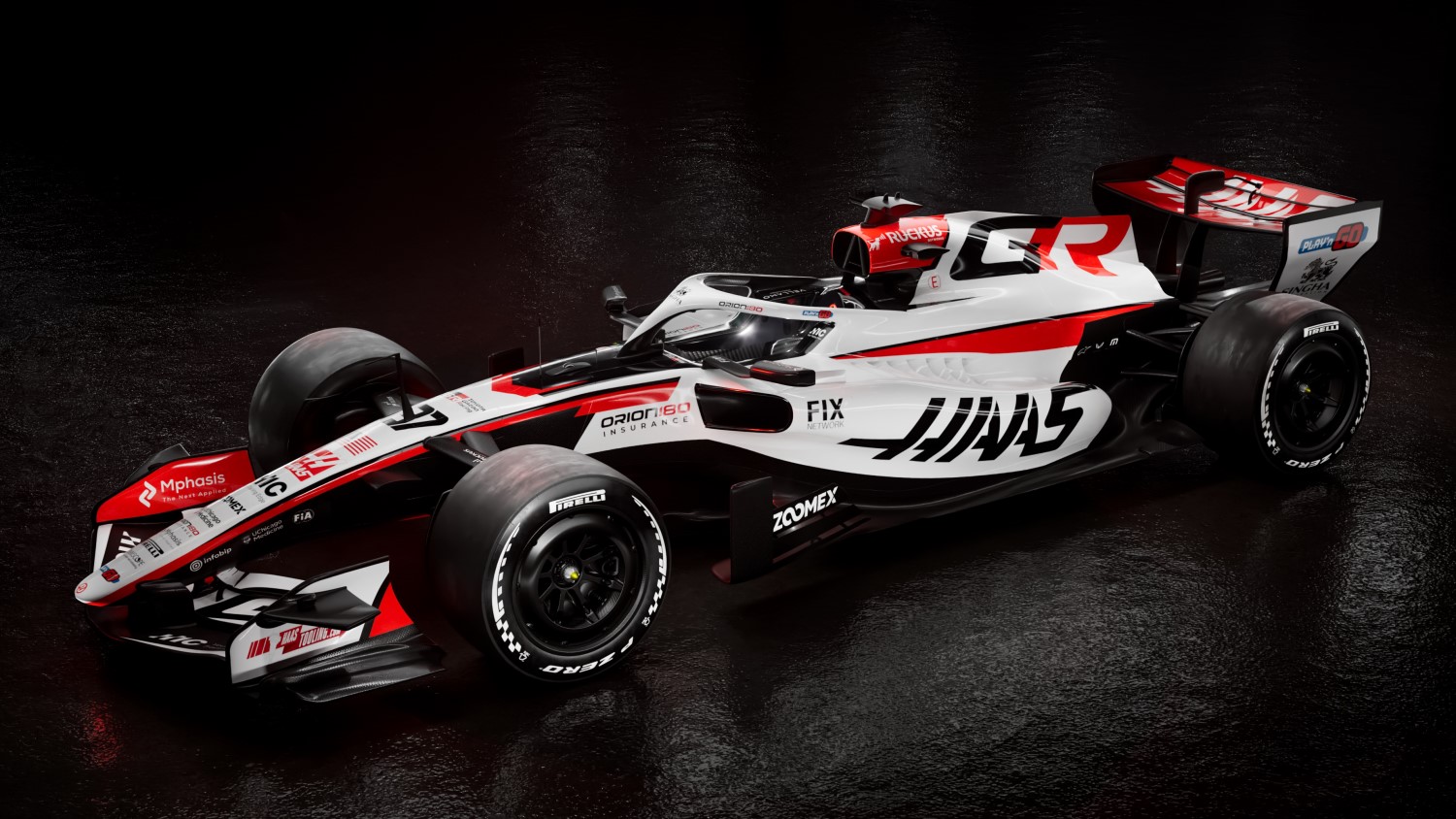
Formula 1 News: TGR Haas F1 Team Reveals VF-26 Design & Livery
In the fast-paced world of Formula 1, where innovation and speed collide, the TGR Haas F1 Team made a striking entrance into the 2026 season by revealing the design and livery of their latest challenger, the VF-26. On a crisp January day in 2026, the American outfit—now in its 11th year on the grid—dropped a series of captivating digital renders across their social media channels, showcasing a sleek white base accented with vibrant red highlights.
–by Mark Cipolloni–
This wasn’t just a paint job; it was a symbol of evolution, tailored to the sport’s groundbreaking new regulations that promise smaller, lighter, and more nimble cars.
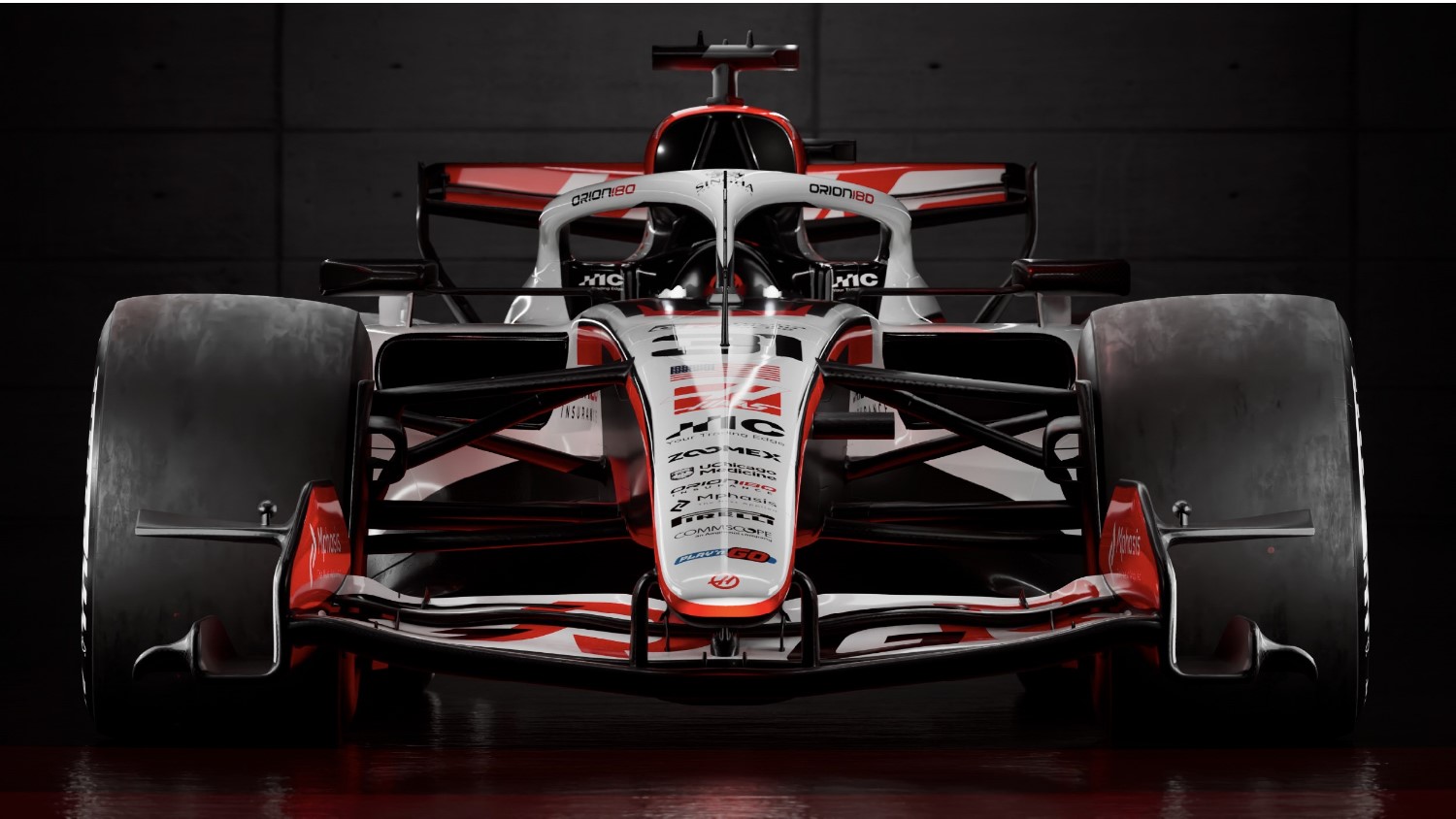
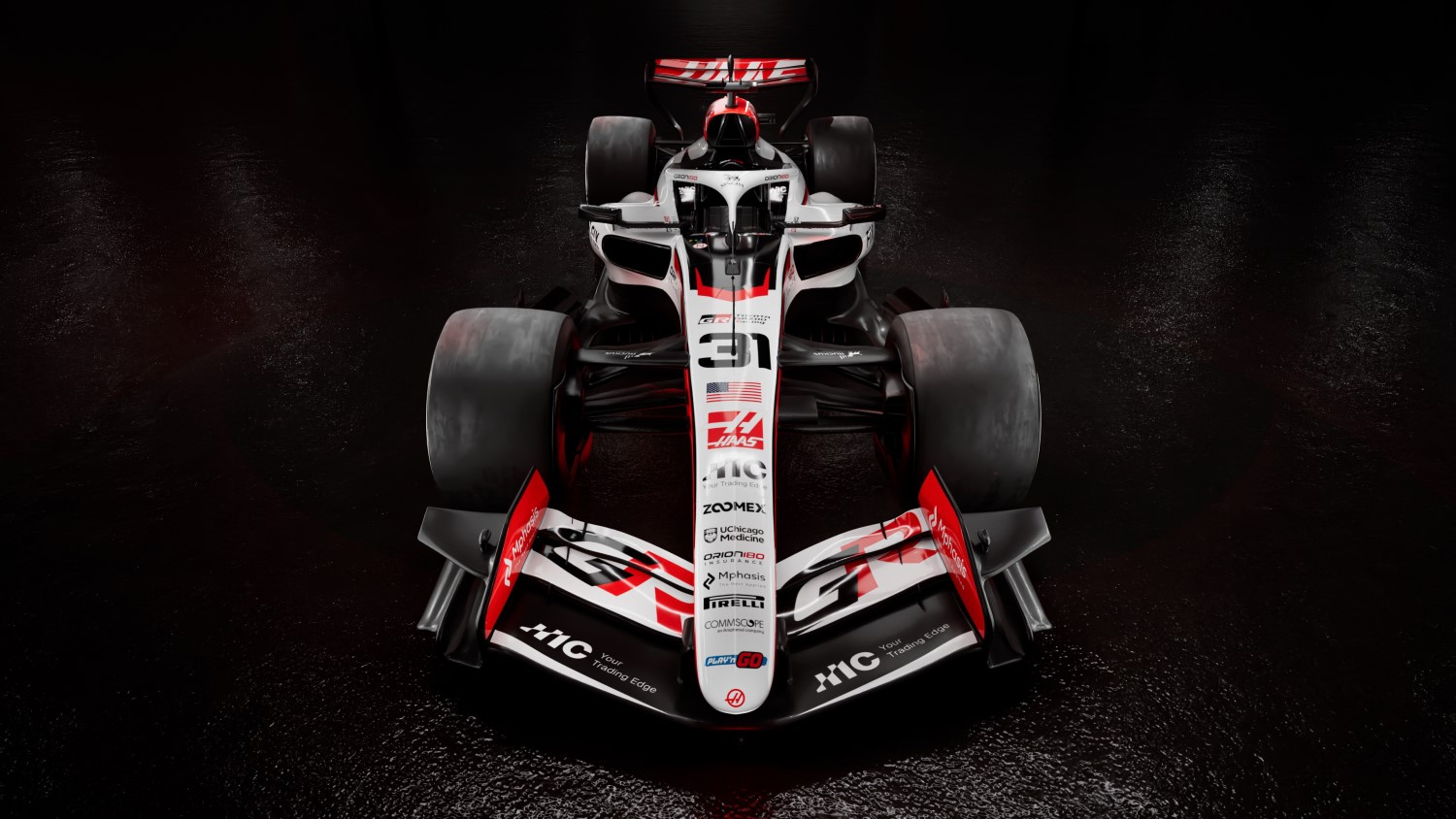
The VF-26 embodies the essence of F1’s latest technical overhaul: reduced dimensions for agility, narrower Pirelli tires to cut down on drag, and a Ferrari power unit that splits energy evenly between internal combustion and electric sources, all fueled by 100% sustainable materials.
As teams across the paddock grapple with these changes—shedding significant downforce while boosting efficiency—the Haas machine stands ready to tackle a grueling 24-race calendar, kicking off at the Australian Grand Prix from March 6-8. Behind the wheel will be the dynamic duo of Ollie Bearman and Esteban Ocon, bringing youthful energy and proven grit to the cockpit.
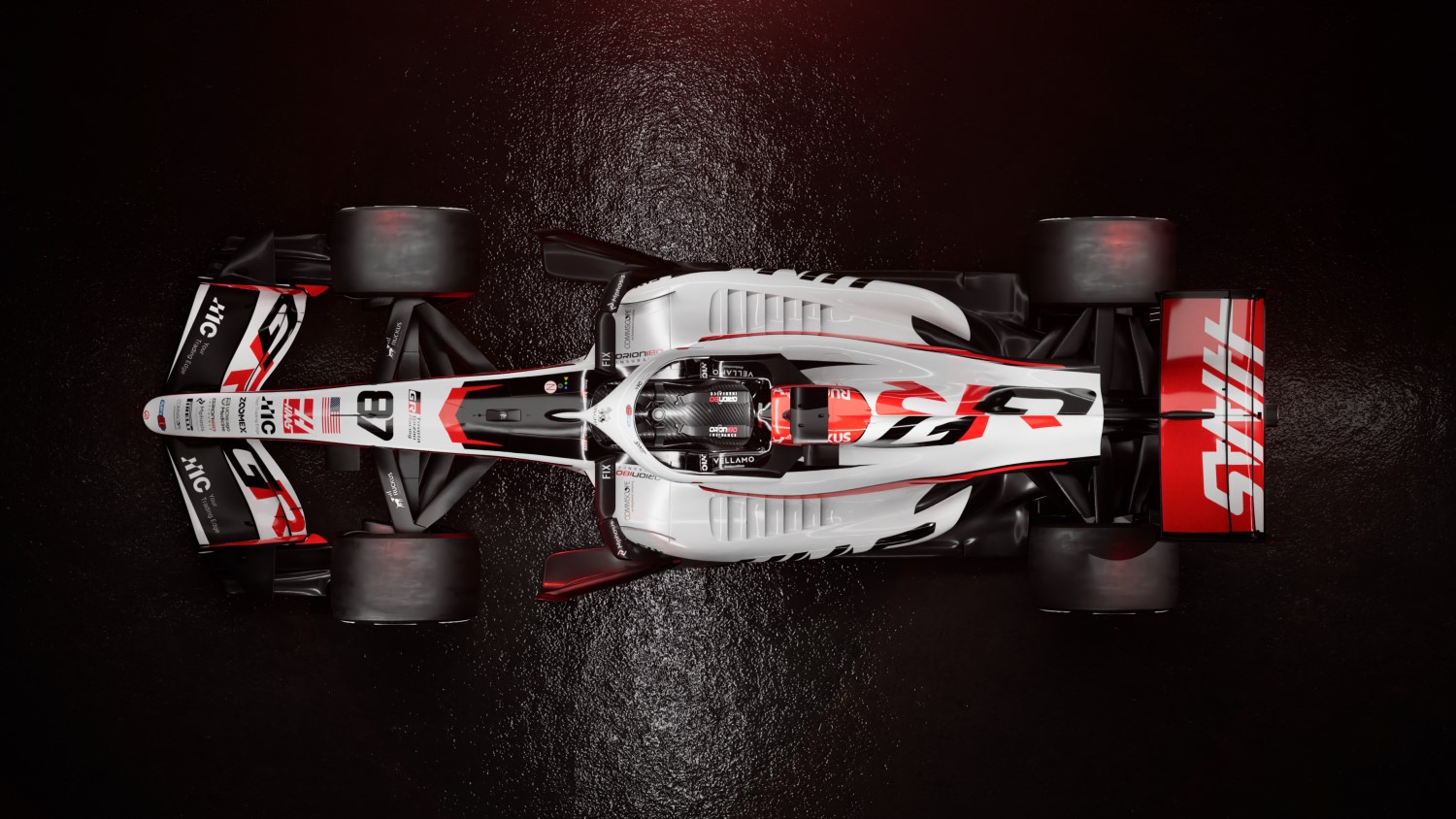
At the heart of this reveal is a fresh chapter in partnerships, with the livery proudly flaunting the branding of TOYOTA GAZOO Racing (TGR), the motorsport arm of Toyota Motor Corporation.
Announced in December 2025, this title sponsorship builds on a technical alliance forged back in October 2024, emphasizing “People, Product, Pipeline”—a mantra aimed at nurturing talent like drivers, engineers, and mechanics to foster a thriving motorsport ecosystem.
Even as Toyota restructures its branding, with GAZOO Racing and TOYOTA Racing taking on distinct roles, TGR’s imprint on the VF-26 signals a commitment to sustainability and performance that resonates through every curve of the car.
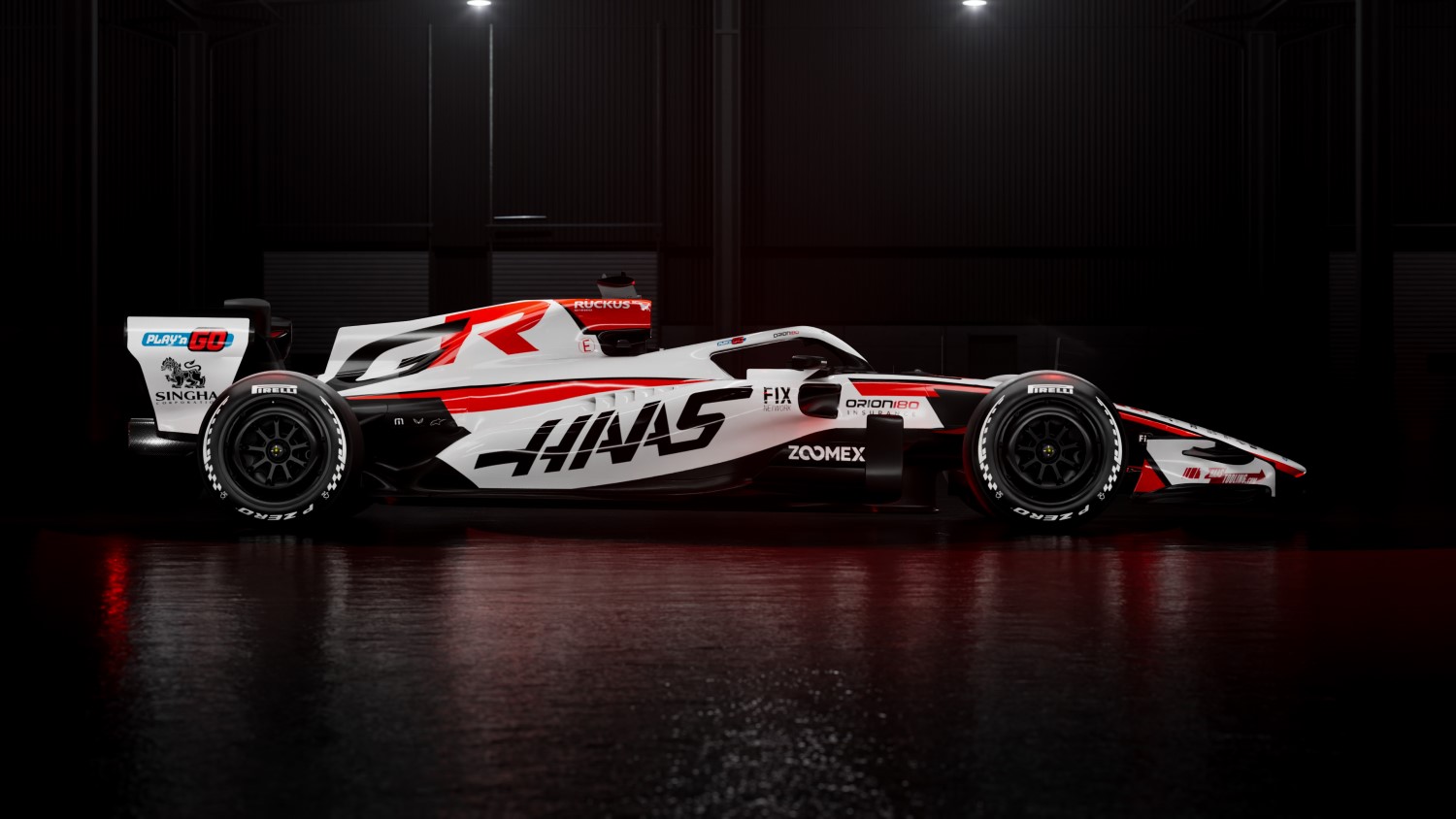
Gene Haas, the team’s founder and owner, reflected on the dual demands of the moment with his characteristic pragmatism. “Like all teams, we’ve faced the challenge of competing in 2025 while looking to design and now build these new-regulation entries for the 2026 season,” he said.
“The pre-season will be crucial to understand what these cars are capable of and how the drivers, engineers and teams in general adapt to them. We at least have continuity in terms of the drivers, with Ollie and Esteban, as well as in our design and engineering teams.
“Last season’s competition in the midfield was of an exceptionally high standard, it was tough, and we need to go out again and continue to develop—both on and off-track. Personally, I’m going to be very interested to see how the competition shakes out across the grid and what these new regulations bring in terms of performance.”
Team Principal Ayao Komatsu echoed that excitement, tinged with the reality of the grind ahead. “It feels almost a bit surreal to be unveiling a new car this early in the year but it’s not any less exciting venturing into a new F1 campaign—especially one with such a change in regulations,” he noted.
“We’re fully focused on being ready for Shakedown Week in Barcelona. It’s been a monumental effort from everyone on the team to work with such a tight turnaround time from the end of last season to putting cars on track in January.
“It goes without saying that after so much talk, we can’t wait to see how these cars will perform and what we’ll face as we then progress through our test programs ahead of Australia. Track time is going to be crucial through Spain and Bahrain and while we know there’s going to be challenges along the way, we do this because we’re passionate about Formula 1.”
As the digital dust settles on this reveal, the real action beckons. The TGR Haas F1 Team will hit the tarmac for the first time at Barcelona’s Circuit de Barcelona-Catalunya during Shakedown Week from January 26-30, where each team gets three precious days to shake down their machines.
Following that, official testing ramps up at Bahrain International Circuit on February 11-13 and 18-20, setting the stage for a season where adaptability could be the ultimate podium finisher. In a sport that’s always one lap ahead, the VF-26 isn’t just a car—it’s Haas’s statement of intent, blending American ingenuity with Japanese precision in the pursuit of glory.
Q& A with Ayao Komatsu, Team Principal – TGR Haas F1 Team
As we gear up for the 2026 season, were you able to make the most of the break at the end of last year?
“The break was good because we got the Christmas shutdown, which is great because especially for a pre-season like this, if we didn’t have a shutdown, everybody would still be working. For me, I went to Japan with my two sons who are 10 and 12, and it was the first time they really experienced Japanese New Year, so we went to a traditional Japanese temple for New Year’s Eve celebrations so they could take in experiencing that side of the culture. So, that was a really nice time to spend in Tokyo.”
What’s exciting you about 2026 – both on and off track for TGR Haas F1 Team?
“On track we have this huge regulation change, both on the PU and aerodynamics side, the biggest in 22 or 23 years of me being in Formula 1, I don’t remember a change this big. It’s hugely exciting, but at the same time it’s very, very nerve-wracking.
“Away from track, look at what we’ve achieved over the last couple of years – we’ve grown as a team. Not just in numbers, but in terms of mentality, mindset, and how we go racing. I feel like we’re progressing our journey very, very well. It’s different to have something already established and, let’s say, adjusting it to new regulations.
“We’re growing as a team in a pretty aggressive way, and at the same time, we’re tackling these brand new regulations. It’s a huge challenge, but we’ve already shown from what happened in Melbourne last year how we recovered from that, and we’ve haven’t stopped improving since.”
Preparations for the 2026 season started months ago but has this been the toughest pre-season for the team to manage in its history?
“I would say so, especially for our size. The new regulations mean it’s financially challenging and regarding resources, everyone knows we’re still the smallest team. It’s a huge challenge, and as Team Principal, the responsibility is bigger, ensuring that this team is equipped to tackle this massive regulation change. I don’t think any team, even the biggest, is going to say they’re fully equipped to tackle this, however for us, the challenge is bigger.
“We need to focus on what we’ve got, what we’re good at, recognize our weaknesses but play to our strengths, and continue learning. We’ve got to learn pretty fast with these new regulations. There will be surprises once everyone is up and running, for sure, and it’s going to be about sticking together, reacting, and adapting as quickly as possible.”
Given the timing of the Barcelona shakedown are the launch cars less mature compared to normal shakedown specifications and are you where you want to be in terms of progress at this point?
“The car everyone will see in Barcelona won’t be the car that races in Australia, and I think that will be across the board, because it’s simply too early. It’s different perhaps having one test two weeks before the first race, but with over a month before the first race, teams won’t stop wind tunnel development. Hence, the cars testing in Barcelona, and even the first week of testing in Bahrain will be less mature compared to what’s built in Australia for the first race.”
How much development do you expect across the tests and before Australia? More than usual, given we’ve effectively got an additional test and rapid learning?
“Between Barcelona shakedown week and the final Bahrain test, you will see very different cars across the grid focused on their aero package, because on the PU side of things, the hardware is pretty much set. How we’re going to use that PU, that’s the biggest thing. In Barcelona, everybody is going to be focused on how best to optimize energy usage, and that needs to develop very quickly for everyone.”
What’s the driver feedback been like so far from Ollie and Esteban with their experiences in the simulator?
“It’s early days, but we held a simulator session before Christmas, and we’re conducting another, more in-depth one this week. What the question will be for everyone is what’s possible for drivers to manage around a single lap and for a racing scenario over multiple laps, how precisely can you control various things – so that’s going to be a lot of what we’re doing in Barcelona. We’re definitely in the homework phase of prepping all these scenarios – and there are so many permutations – and that will be included in the sim sessions.”
What does progress look like in the early races for TGR Haas F1 Team?
“Firstly, before we go racing, and even testing, we need to get on top of energy management, that’s the huge one. I don’t know if we all understand the full extent of the challenge because we don’t know what we don’t know. Then with aero development, we’re reasonably happy with what we’ve done so far, but as with all new regulations, the question will be, is the target we’ve set good enough? When we get testing, I’m sure we’re going to see different concepts, and if we’ve missed something, we need to get on it very quickly.
“For the first few races, rather than setting a sporting target, it’s more a target for us. First and foremost, get on top of PU management, then aerodynamic development. If we have to change direction or look at different concepts, again, we’ve got to do that promptly. To be able to implement certain things quickly, you’ve got to work as a team and have clarity on communication. These are things we’ve been doing the last couple of years, and that’s going to be tested even more, but I feel like we’re prepared.”
With 22 cars in the grid this season, can you have any expectations necessarily, and how long into the season do you think it’ll be until we see a pecking order established?
“There’s going to be huge variation between teams because of two elements. First is the PU, with the teams using the same provider presumably bunched up, so Mercedes providing four teams, Ferrari providing three, Red Bull two, Audi and Honda providing one. Then on the aerodynamic side, it’s completely open, and development will happen fast. A pecking order may get established in the first four races pretty quickly, but I think it’s going to be a very dynamic season. What you see in race one and race two, I expect will be totally different when we come to the final races of the year.”