Formula 1 News: FIA’s Tombazis vows imminent engine decision as row intensifies
(GMM) The FIA has promised to resolve Formula 1’s rapidly escalating 2026 engine compression dispute before the season-opening Australian GP, as political pressure mounts around Mercedes’ controversial interpretation of the new power unit rules.
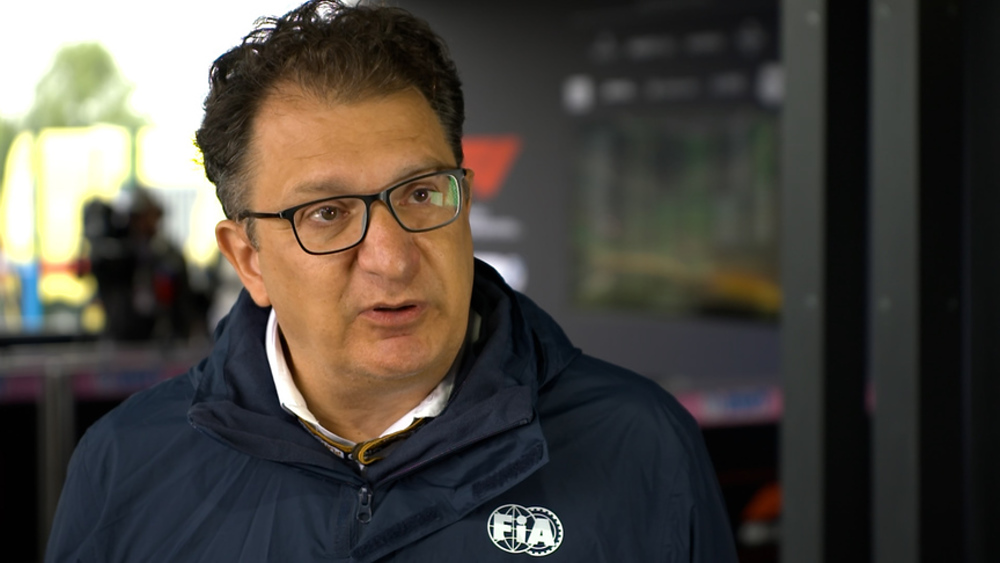
In an official FIA interview, single-seater director Nikolas Tombazis (pictured) confirmed the governing body is actively working on a solution and wants the matter settled before racing begins in Melbourne.
“My intention is that we find a solution before the start in Melbourne,” Tombazis said. “We don’t want a fight. We want the competition to be fought on the track, not in a court of law or the stewards’ room.”
The controversy centers on the newly introduced 16:1 compression ratio limit for 2026, which replaced the previous 18:1 threshold. Rival manufacturers believe Mercedes has identified a way to remain compliant during static, cold measurements while achieving a higher effective compression ratio once the engine is running at operating temperatures.
Related Article: Formula 1 News: FIA defers 2026 engine clampdown after key meeting
Although Tombazis did not name Mercedes directly, he acknowledged the issue.
“Some have apparently found ways to increase compression when the engine heats up under load,” he said, confirming that the FIA only recently became aware of the potential loophole.
Tombazis defended the rationale behind the new restriction, stressing that the 16:1 cap was introduced to ensure competitive fairness under the cost cap.
“We wanted the new manufacturers to be able to compete on a fair level,” he explained. “Otherwise, there would have been a risk that they would have started at a disadvantage, and with the budget cap it would have been very difficult to make up for that deficit.”
While critics argue the dispute exposes a regulatory failure, Tombazis rejected that framing.
“Of course, it is always our goal that everything is clearly regulated,” he said. “But when the rules change so drastically, there are always many points that cannot be foreseen.”
Pointing to the imbalance in manpower between the FIA and the teams, he added: “They have several thousand engineers. It’s inevitable that sometimes they find something nobody here has thought of.”
Still, Tombazis was clear about the FIA’s intent. “We are determined to make this a championship of competition between the best drivers, the best engineers and the best teams – not a championship of rule interpretation.”
Audi, Ferrari, Honda and Red Bull reportedly now form a united bloc pushing for clarification, giving them a potential supermajority to force a procedural change – provided Formula 1 and the FIA agree. One option under discussion is altering the compression measurement method, potentially testing engines in heated conditions.
Any late change would have major consequences for Mercedes and its customer teams McLaren, Williams and Alpine, who could be forced into costly revisions just weeks before homologation.
McLaren CEO Zak Brown downplayed the drama because his team uses Mercedes engines. “That’s just typical Formula 1 politics,” he said. “The engine is fully compliant with the regulations. This sport has always been about pushing the boundaries.”
Honda-powered F1 veteran Fernando Alonso, meanwhile, struck a conciliatory tone. “I trust the FIA to control and monitor it,” the Aston Martin driver said. “You have to accept the final decision.”