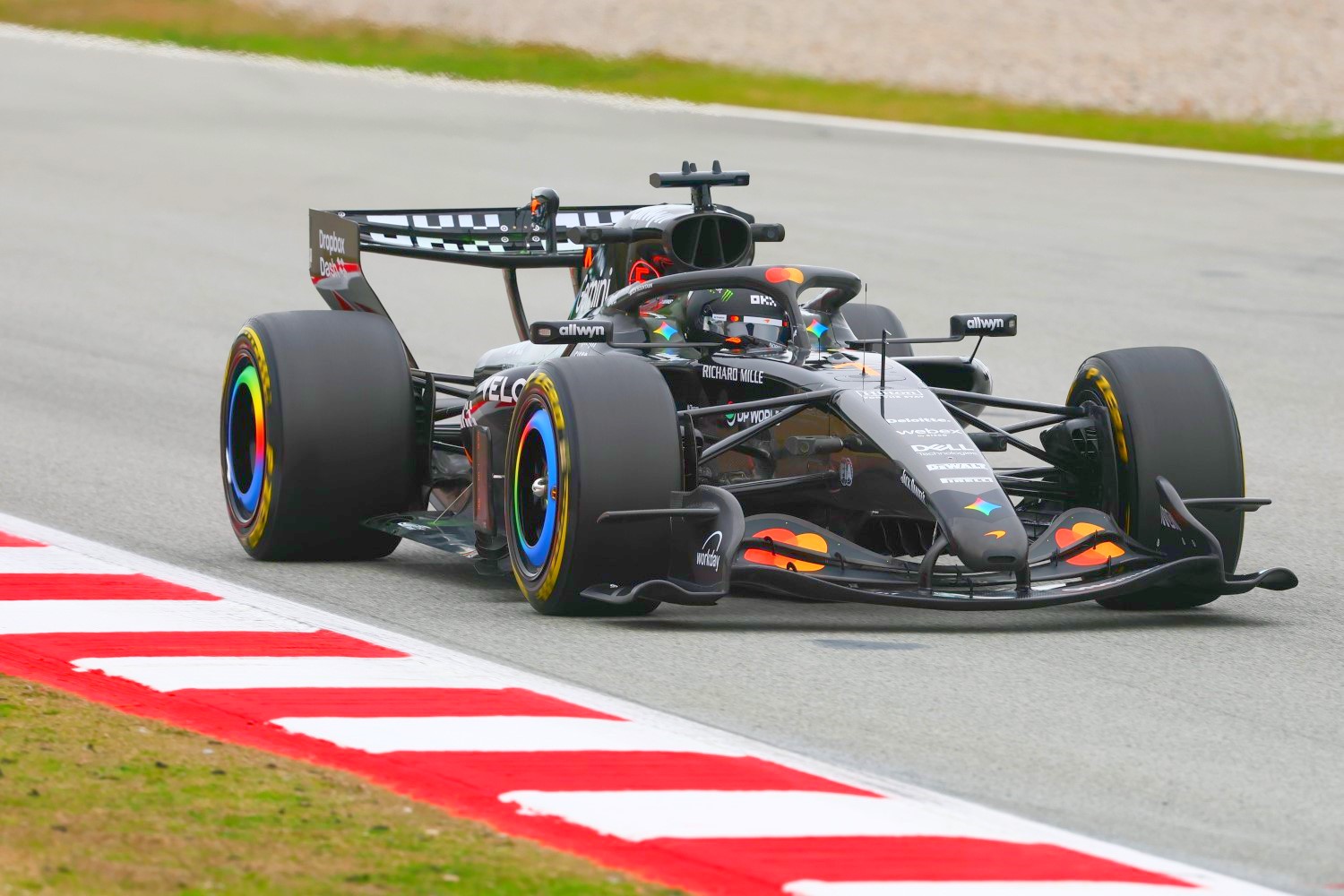
Formula 1 News: FIA confirms downforce has been cut 25% on 2026 cars
(GMM) Lando Norris has likened F1’s new 2026 cars to Formula 2, as the FIA confirms a dramatic reduction in aerodynamic load under the sport’s sweeping new regulations.
After the Barcelona shakedown, McLaren’s world champion Norris said: “It certainly feels like an F2 car in some aspects, because of the way you have to drive it.”
The comment quickly reached Fernando Alonso, who is preparing to race Adrian Newey’s first Aston Martin design of the new era.
“Well, he’s taken a bigger step (back) than we have,” he quipped, prompting laughter among reporters.
“Let’s say he’s lost 100 or 120 points of downforce. We’ve lost much less, so I think our adaptation will be much easier,” the Spaniard added wryly.
Behind the banter lies a major technical reset. FIA technical director Jan Monchaux has confirmed the new cars are running significantly less aerodynamic load than in 2025.

“Less, in a simple world – the cars are running less downforce. It’s a conscious decision that was made,” Monchaux said.
Pressed for a figure, he added: “Uh yeah, 20-25 percent.”
The cut is part of a broader philosophical shift for 2026, with lighter, narrower cars and a stronger emphasis on agility and driver input.
“The cars have added weight constantly over the last 20 years or so and it has become a source of criticism from the drivers because it makes the car less agile, less nice to drive for them as the best drivers in the world,” Monchaux explained.
“One of the clear targets was with this new set of regulations to get a system to reduce the weight of the cars,” he continued. “The target we set two years ago were ambitious but the numbers were the result of many iterations with the teams – what they thought was challenging but possible and we went all in on that bet.”
FIA single-seater director Nikolas Tombazis says drivers are already noticing the difference.
“This is the first step, but even this first step the initial comments from drivers is that they feel it,” he said. “They do feel the cars to be more nimble. It’s not just words. They do actually feel it in their body.”
Tombazis stressed that the weight reset has not come at the expense of safety.
“Safety will never be compromised,” he insisted. “A big part of this weight increase over the last 20 years has been because of safety – the halo, stronger nose, stronger sides, everything on the car is much more robust and that’s why we have drivers feeling a lot safer.”
With less aero load, the cars will also be harder to master.
“Driving a car with less aero load is trickier and you are more prone to lock tires in braking,” Monchaux noted. “Some parts that previously were flat – almost straight because they were flat out – now become corners where skill is important.”
Related Article: F1 News: Norris fears F1 becoming ‘too fake’ with 2026 Frankenstein cars