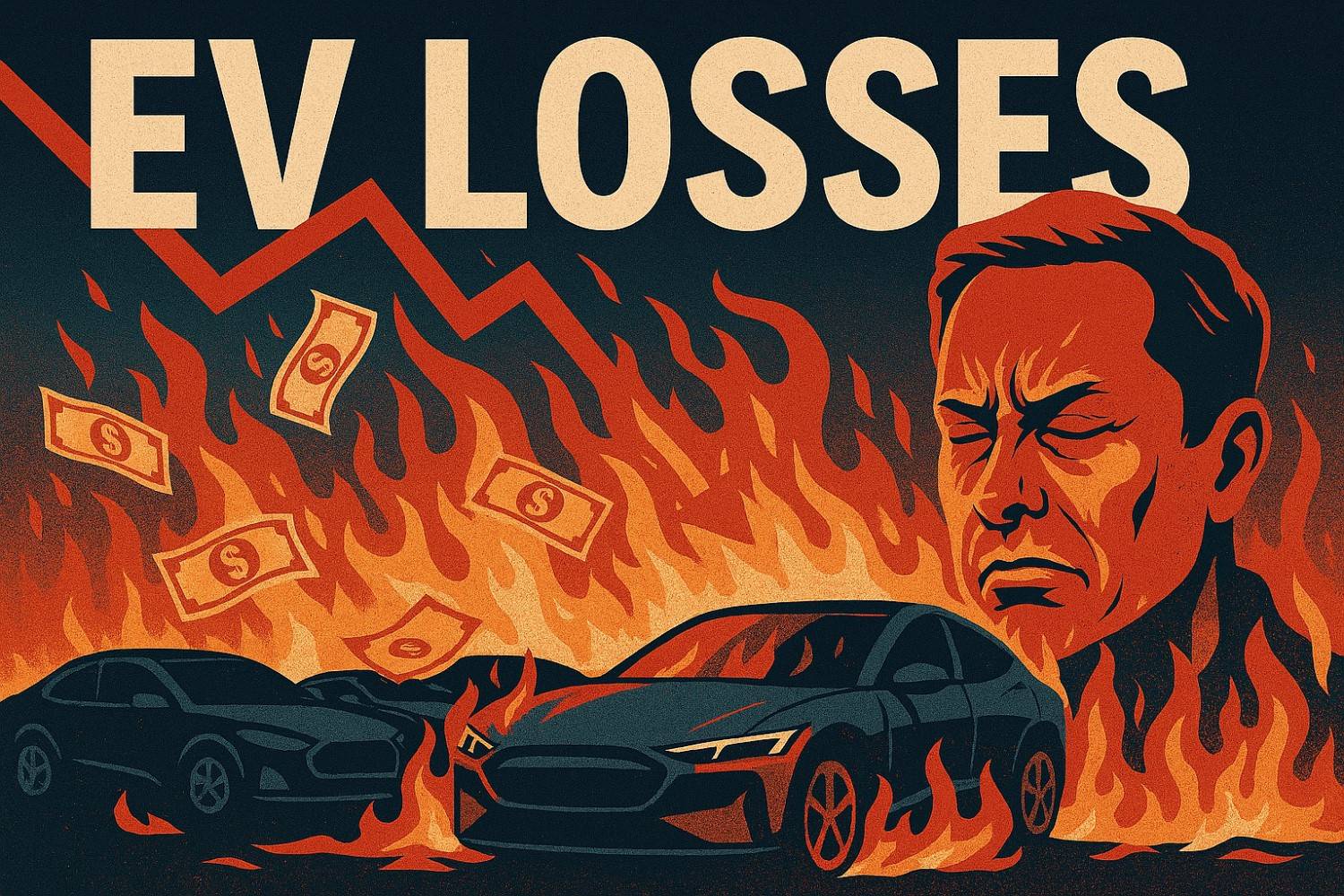
The Great EV Reckoning: Why Major Automakers Are Losing Billions on Electric Vehicles
In the span of just a few months, the automotive world has witnessed a stunning reversal. What was once hailed as the inevitable, unstoppable march toward an all-electric future has turned into a multibillion-dollar bloodbath for legacy automakers.
–by Mark Cipolloni–
Honda and Ford are the latest to sound the alarm, with fresh reports revealing staggering losses that are forcing dramatic strategy resets. But they’re far from alone. Across the industry, write-downs tied to overly optimistic EV bets are piling up into the tens of billions—and the pain isn’t over yet.
Related Article: Automotive News: EVs Fiery Crash – A Tale of Face-Burning Losses
Honda’s EV Gamble Unravels
Honda, long known for its reliable hybrids and efficient gas engines, went all-in on EVs with ambitious targets. As recently as 2024, the Japanese giant aimed to sell 2 million EVs annually by 2030. Reality has been far harsher.
In its fiscal third quarter (ending December 2025), Honda reported its fourth consecutive quarter of operating losses. EV-related write-offs and expenses hit $1.71 billion for the first nine months of the fiscal year, with the full-year hit projected to reach a painful $4.48 billion. That’s on top of a $1.07 billion operating loss for the automotive business through December.
The culprits? Sluggish sales of its early EV efforts, including the Acura ZDX and Honda Prologue—both built on General Motors’ Ultium platform. Honda overestimated how quickly consumers would embrace pure battery-electric vehicles, a miscalculation worsened by shifting U.S. policies under the current administration, which has dialed back EV incentives and imposed tariffs.
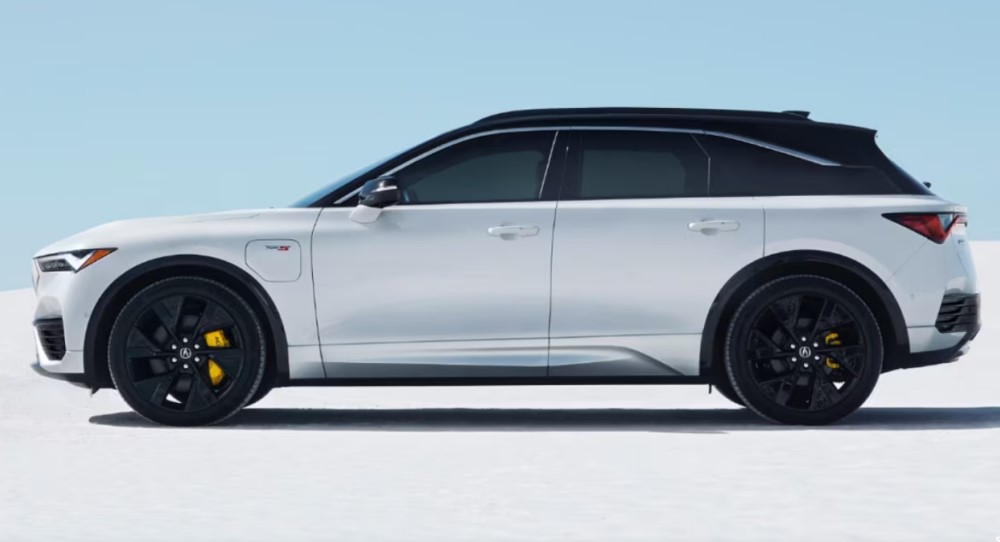
In response, Honda is hitting the reset button hard. It’s shelving several upcoming EV models, ending its deep EV partnership with GM (and compensating the Detroit automaker for reduced purchases), and pivoting aggressively back to hybrids. The company now plans to “significantly revise our future EV strategy” and will unveil an updated roadmap soon, with a renewed focus on doubling hybrid sales.
Executive Vice President Noriya Kaihara put it bluntly: the firm needs “to conduct a fundamental review of our strategies to rebuild our competitive strength.”
The Honda Prologue, one of the company’s early EV entries, saw sales crater amid broader market slowdowns.
Ford’s Historic Losses: Worse Than the Great Recession
If Honda’s numbers sting, Ford’s are catastrophic. The Blue Oval reported an $8.2 billion net loss for the full year 2025—the company’s biggest since the 2008 financial crisis. Revenues came in at $187.3 billion, but that was cold comfort.
The Model e (Ford’s dedicated EV division) posted a $4.8 billion EBIT loss for the year, with another $4–4.5 billion expected in 2026. Special charges alone totaled over $15 billion, including $10.7 billion for Model e asset impairments and program cancellations, plus hits from scrapping three-row EVs and exiting the BlueOval SK battery joint venture.
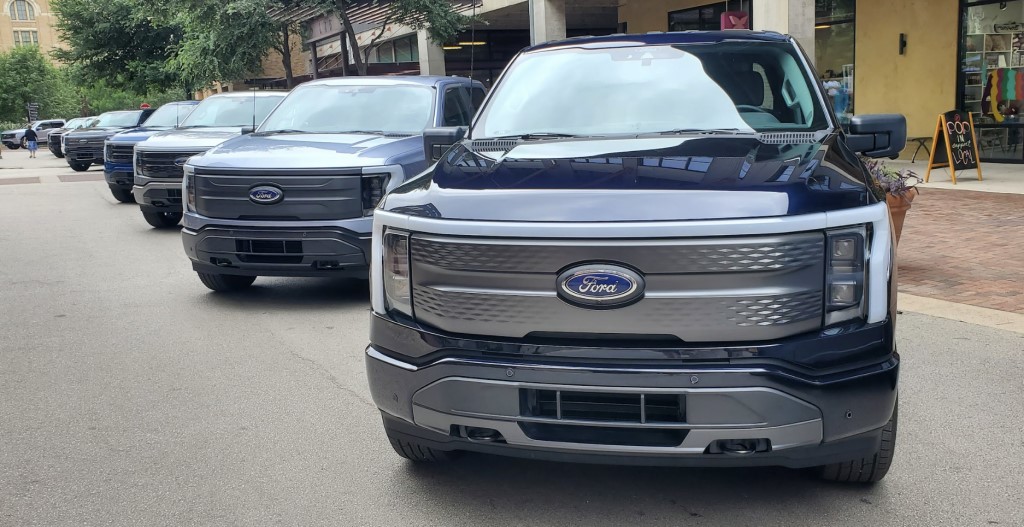
Ford has killed more EV programs than it initially admitted, most notably the fully electric F-150 Lightning successor. The company is now leaning into hybrids and extended-range EVs while still “charging ahead” with select battery models—but the financial damage is done.
CEO Jim Farley tried to spin a positive: “Ford delivered a strong 2025 in a dynamic and often volatile environment. We… made difficult but critical strategic decisions that set us up for a stronger future.” Adjusted EBIT for 2026 is projected at $8–10 billion, but the EV drag remains heavy.
The Industry-Wide Bloodbath
Honda and Ford aren’t outliers—they’re part of a brutal trend. In recent months:
– Stellantis (Jeep, Dodge, Chrysler, etc.) took a massive $26.2 billion write-down in late 2025, the largest single hit yet, as it scales back EV plans amid weak U.S. demand.
– General Motors booked $7.6 billion in EV-related charges, including for canceled contracts and unused equipment.
– Others, including Volkswagen/Porsche, have delayed or canceled models, adding to a collective tally of roughly $55 billion (and some estimates put it over $100 billion when including indirect costs) in EV impairments across major players.
U.S. EV sales growth, which had been roaring, essentially flatlined in 2025 at around 1%. Global demand remains strong in places like China, but Western markets—hit by high prices, range anxiety, charging infrastructure gaps, and policy whiplash—have cooled dramatically.
What Went Wrong?
The reasons are a toxic mix of hubris, external shocks, and market realities:
1. Overestimation of Demand: Automakers bet big on rapid EV adoption, assuming subsidies, regulations, and consumer enthusiasm would align perfectly. They didn’t.
2. Policy Shifts: The rollback of federal EV tax credits and new tariffs under the Trump administration accelerated the pullback, making imports costlier and domestic incentives scarcer.
3. High Costs and Low Margins: EVs remain expensive to produce at scale, especially with battery tech and raw materials. Many models lost money hand over fist—Ford reportedly lost $40,000 per Lightning in some periods.
4. Consumer Preferences: Hybrids are surging as a “Goldilocks” solution—better efficiency without the full EV commitment. Buyers want options, not mandates.
5. Competition: Chinese EV makers like BYD are flooding global markets with affordable models, while U.S. and European brands struggle with higher costs.
The Pivot to Pragmatism
The good news? This isn’t the end of EVs—it’s a much-needed reality check. Automakers are refocusing on what sells:
– Hybrids and Plug-in Hybrids: Honda, Ford, Toyota, and others are ramping these up. They bridge the gap and generate profits.
– Selective EVs: High-volume, profitable models (think affordable crossovers) will survive; niche or money-losing ones won’t.
– Tech and Efficiency Gains: Lessons from the losses will drive better battery tech, software, and manufacturing.
For the industry, the stakes are existential. Billions in sunk costs mean delayed investments, potential plant idlings, and job shifts. But the reset could make legacy automakers leaner and more competitive long-term.
EVs aren’t dead. Global sales continue to grow, led by China and Europe. But the transition will be slower, messier, and more market-driven than the hype suggested. For Honda, Ford, and the rest, the era of “EV or bust” is over. The new mantra: Build what buyers actually want—and make money doing it.