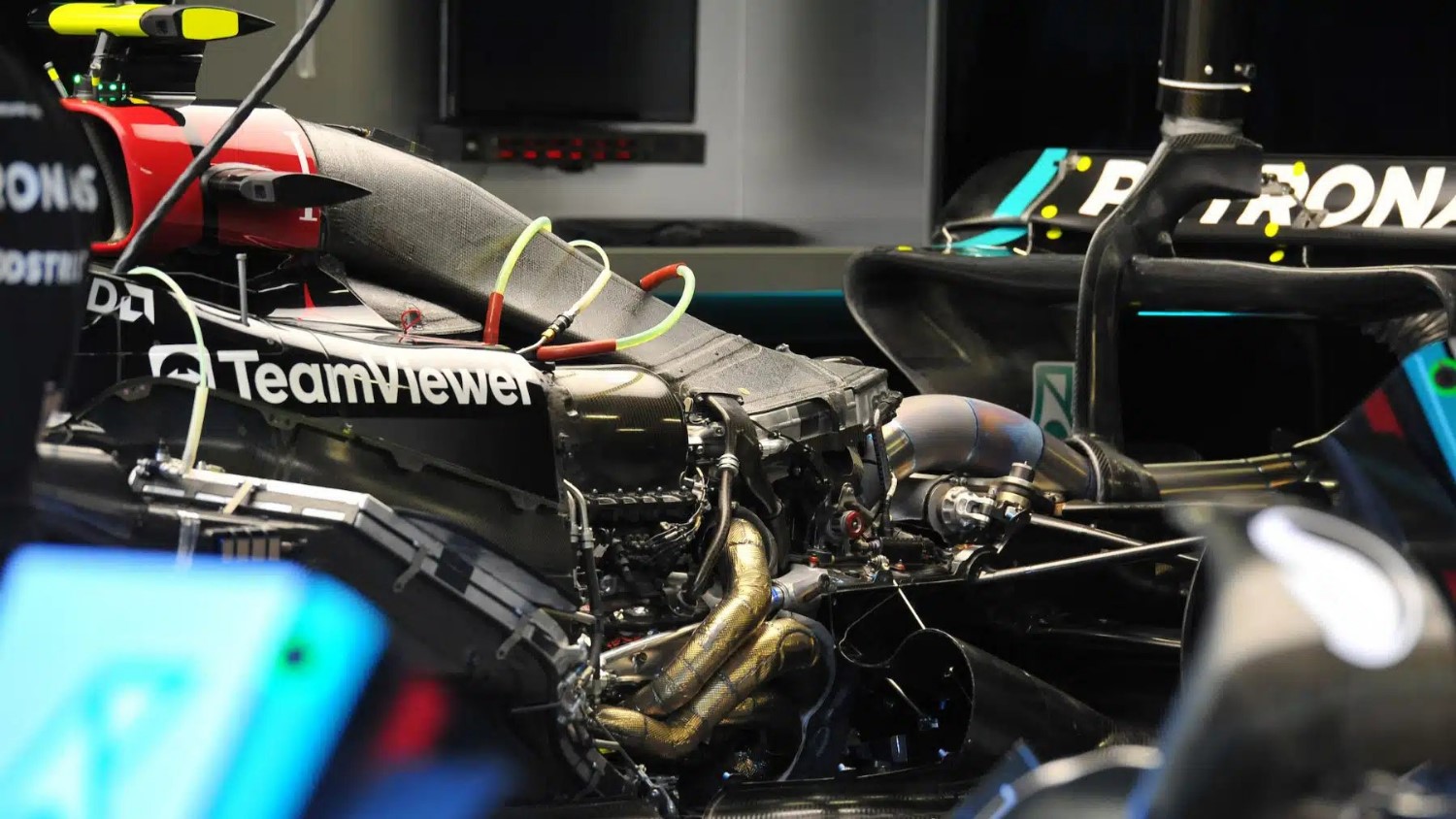
Formula 1 Rumor: Compression Ratio rule change brought forward to June (2nd Update)

This rumor was already made ‘fact’ earlier. Since then, the FIA issued the following statement:
Amendments to the 2026 FIA Formula 1 Regulations have been approved unanimously by e-vote by the World Motor Sport Council. Some aspects of the amendments were concurrently approved unanimously by the Formula One Power Unit Manufacturers.
The modifications to the Technical Regulations follow the pre-season tests in Barcelona and Bahrain and extensive feedback received from drivers and teams.
A significant effort has been invested in finding a solution to the topic of the compression ratio. This parameter, which was one of the key fundamental targets of these regulations in order to attract newcomers to the sport, is limited in the regulations to 16:1, measured in cold conditions.
The FIA has worked to find a compromise solution which determines that the compression ratio will be controlled in both hot and cold conditions from 1 June 2026, and subsequently only in the operating conditions (130deg C) from 2027 onwards.
The regulations introduced for 2026 represent one of the biggest changes in recent memory. All parties acknowledge that with the introduction of such significant regulatory changes, there are collective learnings to be taken from pre-season testing and the initial rounds of the 2026 championship.
Further evaluation and technical checks on energy management matters are ongoing.
Additional amendments to Sporting and Financial Regulations were approved. The revised regulatory documents have been published here.
Article C5.4.3 of the latest technical regulations now reads: No cylinder, as referred to by C5.1.3, of the Engine may have a geometric compression ratio higher than 16.0, measured in the following conditions:
• Until 31 May 2026: when the Engine is at ambient temperature
• From 1 June 2026 to 31 December 2026: when the Engine is at ambient temperature as well as when the Engine is at 130degC. Any component, assembly, mechanism, or integrated arrangement of components that is designed or functions to increase the compression ratio in operating conditions beyond 16.0 is prohibited.
The procedure that will be used to assess compliance with this article must be defined by each PU Manufacturer according to the instructions detailed in the document FIA-F1-DOC-042. This procedure must be approved by the FIA Technical Department and included in the PU Manufacturer homologation dossier.
[Note: The FIA-F1-DOC-042 will be revised in accordance with the requirements coming into force on 1 June 2026. Consequently, the PU Manufacturer’s procedure shall be updated, and the PU Homologation dossier amended accordingly.]
Whereas the original 1 August deadline came at the beginning of the summer break, the revised 1 June deadline falls between the Canadian and Monaco rounds.
Insisting that it will continue to evaluate data throughout the opening rounds of the season, the FIA, in acknowledgment of ongoing concerns over energy harvesting, added that “the regulations introduced for 2026 represent one of the biggest changes in recent memory. All parties acknowledge that with the introduction of such significant regulatory changes, there are collective learnings to be taken from pre-season testing and the initial rounds of the 2026 championship.
Further evaluation and technical checks on energy management matters are ongoing.
February 28, 2026
This rumor is upgraded to ‘fact’ today. In a move to address ongoing concerns over potential exploitation of engine regulations, the FIA has confirmed a revision to how compression ratios are measured in Formula 1 power units, effective from June 1, 2026.
–by Mark Cipolloni–
The adjustment comes after months of debate among teams and manufacturers, particularly regarding the new 2026 rules that lowered the maximum compression ratio from 18:1 to 16:1 to facilitate entry for new engine suppliers like Audi and Red Bull Powertrains.
The core issue stems from the original stipulation that compression ratios be measured only at ambient (cold) temperatures. Rivals, including Ferrari and Honda, alleged that certain manufacturers—widely believed to be Mercedes—were leveraging thermal expansion properties of engine materials to achieve effective ratios exceeding 16:1 when the engine reaches operating temperatures. This could provide a performance edge, as higher compression ratios typically enhance efficiency and power output.
Following a unanimous vote by the five current power unit manufacturers (Mercedes, Ferrari, Renault, Honda, and Red Bull Powertrains) in the Power Unit Advisory Committee, the FIA introduced a “compromise solution.” From June 1, 2026—falling between the Canadian Grand Prix (round seven) and the Monaco Grand Prix (round eight)—compliance will be checked both at ambient temperature and when the engine is heated to 130°C, simulating operating conditions. This dual-testing approach will apply through the end of 2026. Starting in 2027, measurements will shift exclusively to the hot (130°C) condition, allowing for designs that may exceed 16:1 when cold but comply when running.
In an official statement, the FIA explained: “The FIA has worked to find a compromise solution which determines that the compression ratio will be controlled in both hot and cold conditions from 1 June 2026, and subsequently only in the operating conditions (130deg C) from 2027 onwards.” The updated technical regulations explicitly prohibit “any component, assembly, mechanism, or integrated arrangement of components that is designed or functions to increase the compression ratio in operating conditions beyond 16.0.”
The change was fast-tracked from an initially proposed August 1 implementation, potentially resetting competitive balances mid-season if any teams need to adjust their designs. Mercedes has denied gaining an unfair advantage, with team principal Toto Wolff previously dismissing the accusations as “baseless” during pre-season testing in Bahrain. However, the resolution aims to ensure parity as F1 enters a new era with sustainable fuels and increased electrical power in the hybrid systems.
This development has sparked discussions across social media and forums, with fans and analysts debating its impact on the 2026 championship. As the season opener in Australia approaches next weekend, teams are now focused on final preparations under the clarified rules.
February 27, 2026
(GMM) Formula 1’s controversial compression ratio clarification may be fast-tracked from August to June, according to fresh rumors in Germany.
Motorsport-magazin.com claims engine manufacturers have reached a compromise that could see revised inspection procedures introduced as early as June 1, rather than mid-season.
The FIA had initially proposed measuring compression ratios in two modes – at room temperature and at operating temperature – from August 1, following mounting pressure from Ferrari, Honda, Audi and Red Bull for tighter oversight.
The row erupted after rivals alleged that Mercedes had exploited gray areas in the 16:1 compression ratio limit. While some paddock speculation suggested radical figures as high as 18:1, those claims have been widely dismissed. Competitors are believed to estimate a potential advantage of around 20-25 horsepower, while Mercedes boss Toto Wolff insists any gain is only marginal.
Related Article: Formula 1 News: FIA launches vote on Mercedes compression saga
According to the new reports, a two-stage compromise is now under discussion. Under the reported plan, dual measurements – cold and hot – would apply from June 1 through the end of 2026. From 2027 onward, testing would reportedly switch to hot-condition checks only.
The change would still require a supermajority vote among stakeholders.