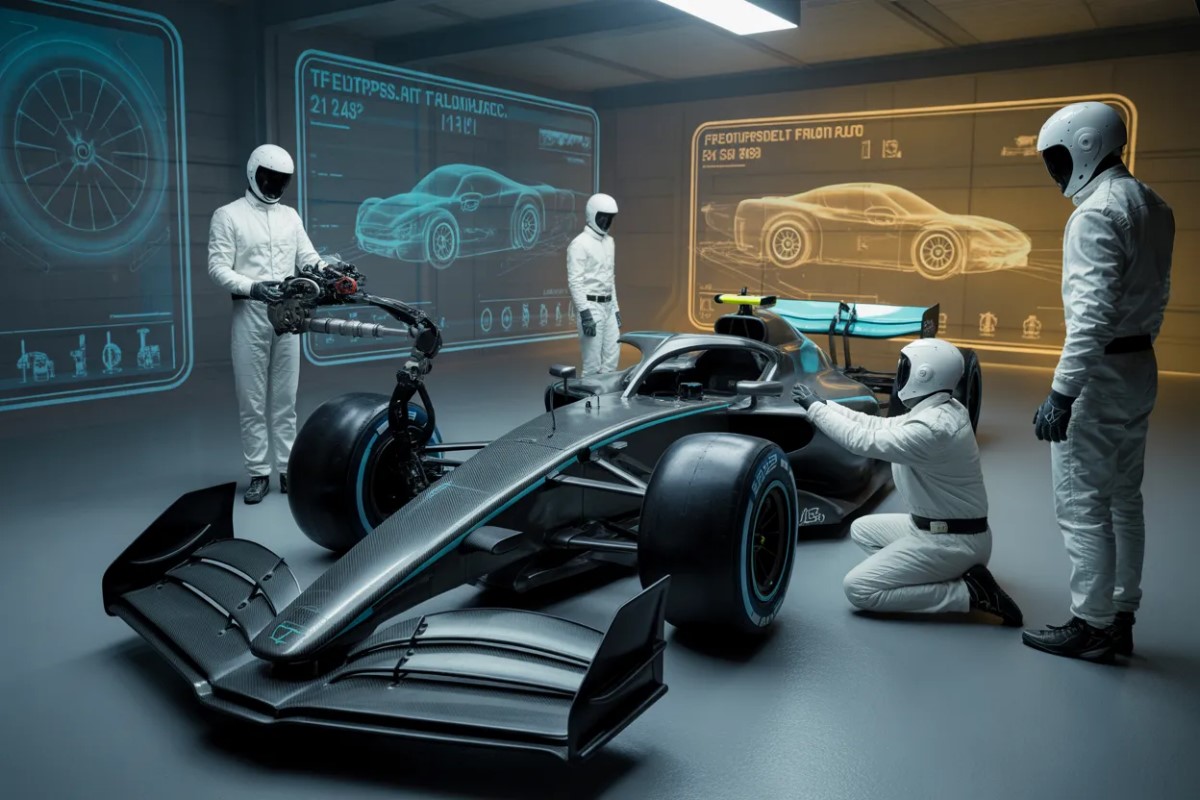
Behind the Scenes: How AR and VR Simulations Train Drivers and Teams
Look, we all know racing is more than just horsepower and bravery. It’s reflexes, split-second decisions, team cohesion, and a deep understanding of tracks you may never have physically seen. In the old days, seat time was the only way to truly learn a circuit — day after day on the tarmac, memorizing every kink and bump by feel. But the modern era? It’s increasingly digital.
You’ve probably heard the buzz about AR and VR. And no, they’re not just for video games and futuristic demos. Teams from grassroots paddocks to pro outfits are using these tools right now to prepare drivers and crews for the real heat of competition. (If you want a head start, check out the best vetted via DesingRush lists of AR and VR companies in the U.S. — that list points to firms building serious simulation platforms and immersive systems used for driver training, engineering, and team coordination.)
So, what’s really going on behind the scenes with AR/VR in motorsport? It’s one thing to strap on a headset and look cool. It’s another thing entirely to use that setup as a tactical advantage.
VR: Virtual Reality Isn’t a Toy — It’s the Training Ground
Put simply, VR drops you inside a racing world. Not a cartoonish arcade version — we’re talking detailed, physics-driven environments that behave like the real deal.
For drivers, the benefits start almost immediately.
Track Familiarity Without the Tires: Not every team can spend endless laps on every circuit. VR lets drivers learn a track in granular detail before a single physical test run. Apex points, braking zones, unseen camber shifts — it all gets burned into their brains.
Pressure Simulation: In real life, danger is a motivator. In VR, it’s a tool. Drivers can rehearse racing scenarios — wheel-to-wheel battles, last-lap passes, sudden weather changes — without risking bodywork or careers. It builds instincts.
Scenario Drills: Need to work starts? Rain at turn seven? A stalled car on the inside line? VR does that. Teams can script endless “what ifs,” and drivers can run them until their reaction becomes automatic.
Data-Driven Feedback: Modern VR rigs don’t just immerse — they analyze. Telemetry, reaction times, steering input, throttle modulation — everything is logged. Coaches and drivers can dissect a session like it was a live event.
And unlike a physical test, where conditions are variable and costly, VR allows repeated, controlled practice that’s both efficient and measurable.
AR: Augmented Reality — Enhancing the Real World
If VR builds a virtual environment, AR enhances the real one — overlaying digital information onto what’s actually in front of you.
Here’s how teams are using it.
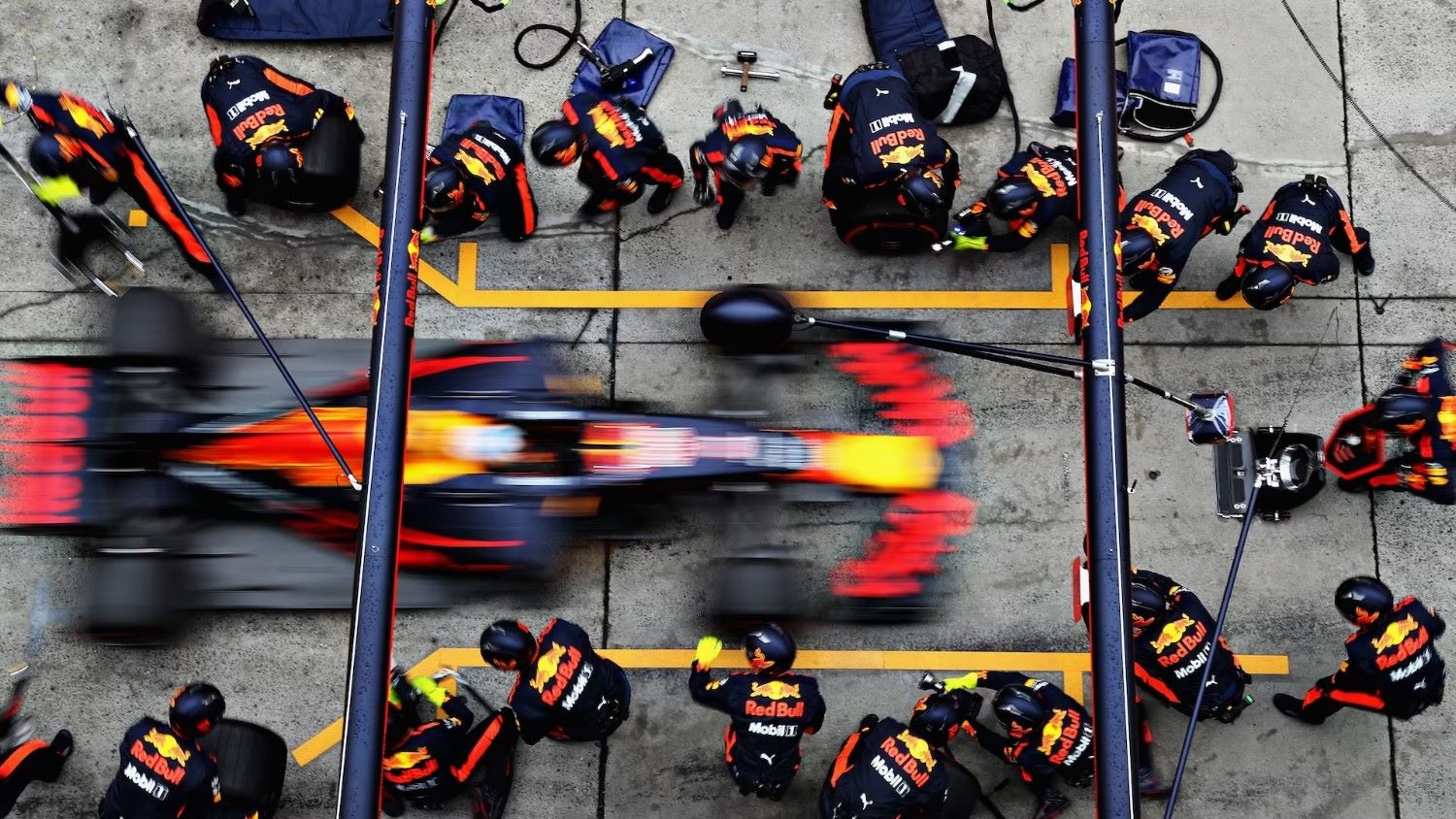
Pit Lane Precision: Pit stops are choreography. A tenth lost here, a fumbled wheel nut there — and you’re tumbling down the order. With AR glasses, crew members can see real-time visual cues, instructions, or alignment guides overlaid on the real pit setup. That’s less guesswork, fewer mistakes.
Engineers’ Edge: Engineers have to deal with a lot of data on race weekends, like tire temperatures, fuel use, lap times, and track changes. AR lets them see that data along with live video of the car, the track, or the driver. It’s like having a HUD for planning in real life.
Driver Assistance Tools: Some setups project ideal racing lines or braking markers directly into a driver’s visor during simulator runs. These aren’t distractions — they’re training aids that speed up learning curves.
AR doesn’t replace reality. It annotates it. And in a sport where information is as valuable as speed, that annotation can be a game changer.
How Simulation Training Actually Works
Let’s walk through what a driver or team might actually do with AR/VR on a typical prep day:
Step 1: Define the Goal
Are we prepping for a new circuit? Sharpening race starts? Focusing on wet conditions? The objective guides the simulation setup.
Step 2: Load the Content
For example, in VR, that could mean a digital version of Silverstone or Suzuka that includes realistic changes in elevation and braking zones. That could mean a set of engineering data feeds in AR that are ready to be added to pit visuals.
Step 3: Run the Sessions
Drivers go into VR for several runs. Every lap is a chance to improve your lines, find the best places to brake, or practice passing. Engineers and crew use AR to plan their work, go over procedures, and practice making decisions during a race.
Step 4: Analyze and Adjust
Post-session, performance data gets reviewed. Where is the driver losing time? What patterns emerge? Coaches use this to refine future simulations.
Step 5: Real-World Transfer
The final — and most critical — step is taking that digital muscle memory to the physical track. And here’s the kicker: drivers who’ve already ‘lived’ a circuit in VR almost always adapt quicker when they hit real asphalt.
Why It Matters More Now Than Ever
There’s a reason AR and VR aren’t just a buzz phrase in racing circles anymore. Budget caps, limited testing days, and tighter travel restrictions mean teams need smarter ways to prepare without burning cash or tires. Simulation levels the prep field—it gives drivers and crews experience without the traditional costs of experience.
It doesn’t replace real track time, of course. Nothing ever will. But as a complement — a way to reduce risk, sharpen instincts, and build strategy muscle memory—AR and VR are proving indispensable.