Formula 1 News: 2026 Australian GP Preview
The 2026 FIA Formula 1 World Championship kicks off with Round 1, the Australian Grand Prix, at Melbourne’s iconic Albert Park Street Circuit. This marks the 24th time Australia has opened the F1 season, tying the record for a 24-race calendar, just like in 2024 and 2025. The circuit celebrates its 30th anniversary this year, having debuted on the F1 calendar in 1996.
–by Mark Cipolloni–
The 2025 Australian GP shattered records with a four-day attendance of 465,498, eclipsing the previous year’s total. For 2026, expectations are even higher, fueled by local hero Oscar Piastri’s dedicated grandstand, which sold out rapidly upon ticket release.
Circuit Overview
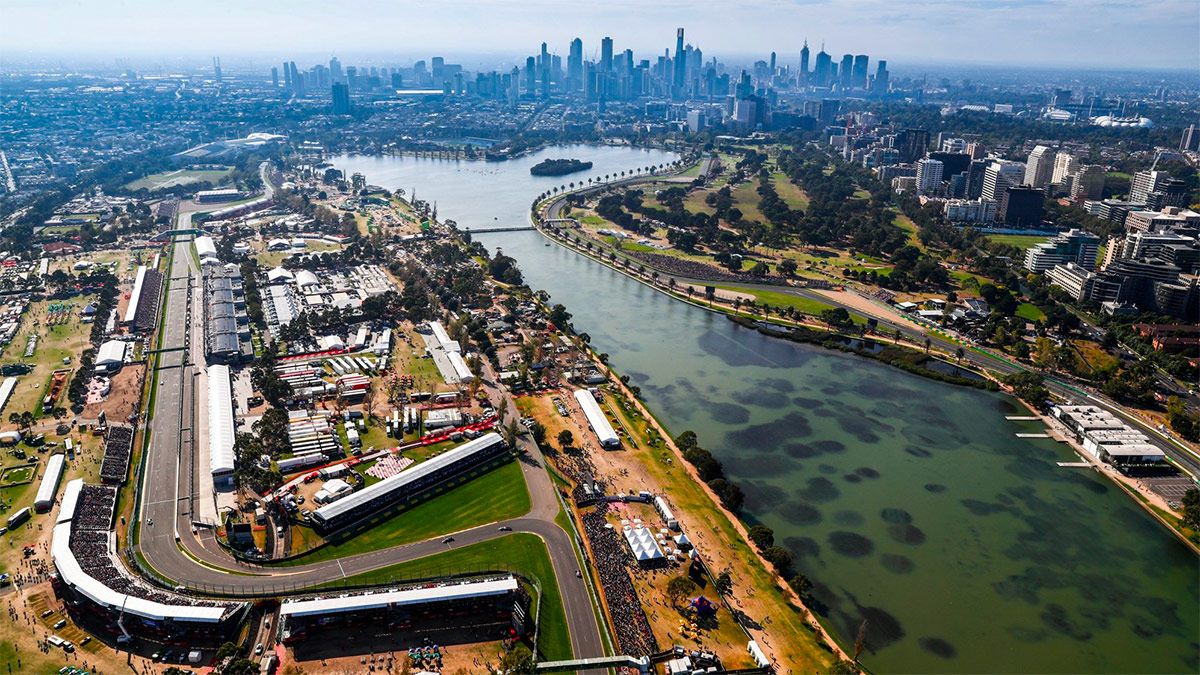
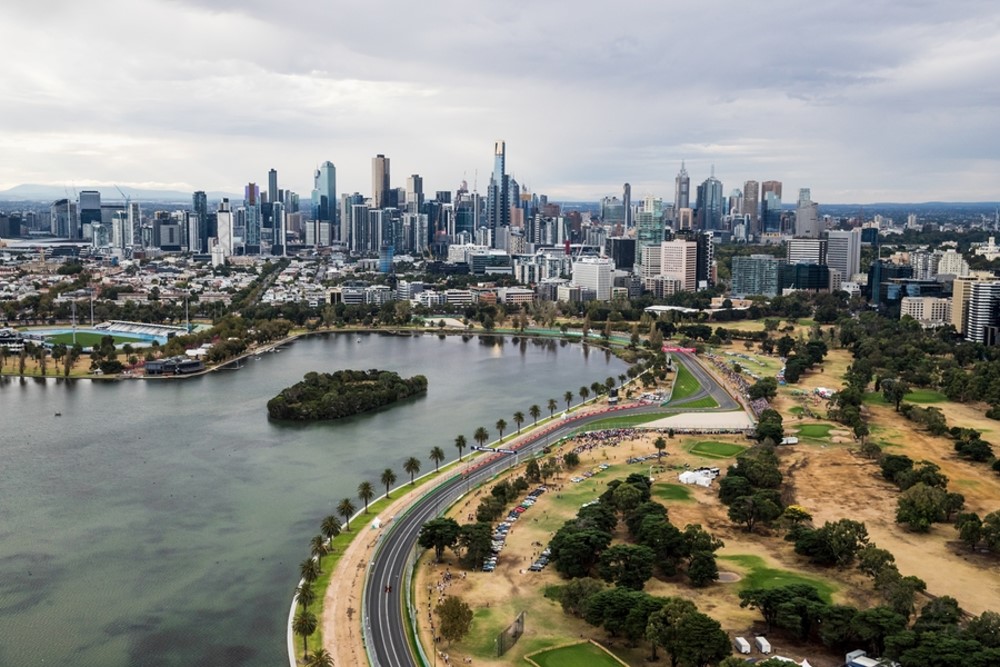
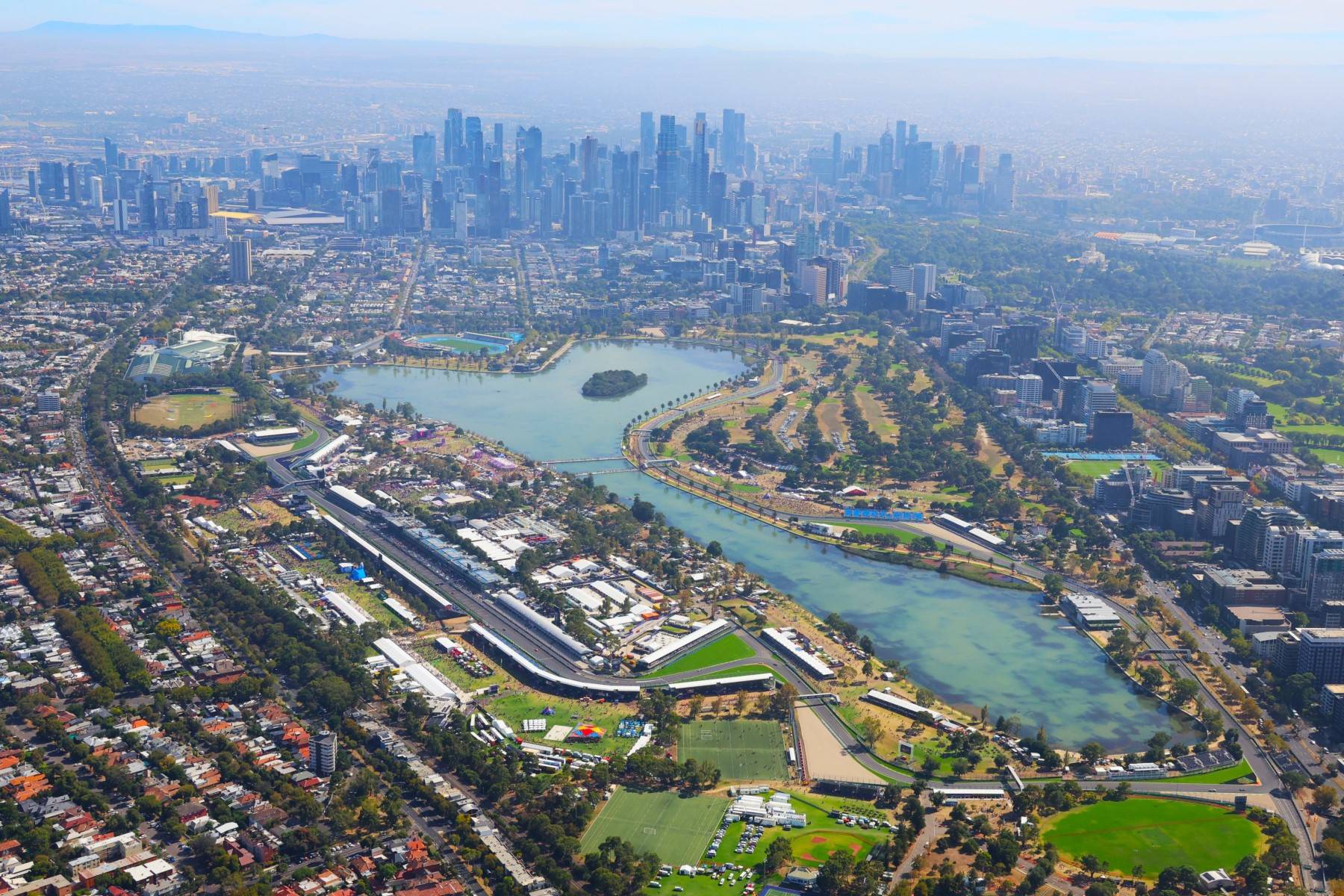
Nestled in a leafy parkland just minutes from downtown Melbourne, the semi-permanent Albert Park Circuit blends high-speed sweeps with heavy braking zones, where gravel traps and walls hug the track edges. Its temporary setup leads to significant track evolution over the weekend, often resulting in Safety Car deployments or red flags.
The circuit isn’t overly demanding on tires, with degradation more about wear than heat. Early autumn weather in Australia can bring surprises, including temperature fluctuations and rain, as seen in past events.
A robust support program runs from Thursday, featuring Formula 2, Formula 3, Porsche Carrera Cup, and Australian Supercars, laying down rubber that boosts grip levels.
Australia joined the F1 calendar in 1985, hosting its 37th edition this weekend. From 1985 to 1995, it was at Adelaide’s street circuit before shifting to Melbourne in 1996 (except for cancellations in 2020 and 2021 due to COVID-19).
Michael Schumacher holds the record with four wins, all in Melbourne for Ferrari. Ferrari has 10 victories, trailing McLaren’s 12. McLaren leads in poles (11), while Lewis Hamilton has eight poles and 10 podiums—the most for any driver. Ferrari and McLaren tie for podiums at 26. Red Bull has just two Melbourne wins: Sebastian Vettel in 2011 and Max Verstappen in 2023.
2025 Race Recap
In 2025, pole-sitter Lando Norris masterfully navigated a chaotic, rain-affected race at Albert Park in his dominant McLaren. The track started wet, dried briefly, then rained again, triggering multiple crashes and Safety Cars.
Norris survived a gravel trap excursion and fended off Max Verstappen in a thrilling six-lap sprint to the finish, winning by just 0.895 seconds.
“It was amazing—a top race, especially with Max behind me,” said a relieved Norris. “Tricky conditions, but they’re the enjoyable ones. We learned from mistakes last year in similar weather at Silverstone and Canada. Thanks to McLaren for a brilliant car.”
Verstappen added: “It was difficult but fun at the end. Lando’s moment in Turn 6 got me close. This is 18 points more than last year—I’ll take that.”
George Russell finished third in his Mercedes, over eight seconds back after the leaders pulled away in the closing laps.
2026 Regulations: A New Era
The 2026 rules usher in one of F1’s most radical overhauls: smaller, lighter cars with reduced downforce, active aerodynamics replacing DRS, and a near 50-50 split between electrical and combustion power.
At Albert Park, these changes will unveil their competitive impact. The new Manual Override Mode provides an electrical boost for trailing cars, deployable anywhere on the lap, adding strategic depth.
Energy recovery limits per lap will force aggressive lift-and-coast tactics, especially at tracks like Melbourne with fewer heavy braking zones. Braking points may vary, and qualifying pace might not translate to race battles.
Max Verstappen has been vocal: “These cars are anti-racing. It’s all about energy management, not pure skill. Drivers should brake late without checking batteries or deployment maps. The regs reduce skill to just 5%—F1 ruined a great sport to appease tree-huggers by going ‘green.'”
Before 2026, laps were 72% full throttle. Now, with 50% electric power, it’ll drop below 50%, shifting focus from flat-out driving to conservation—perhaps better suited to efficiency experts than aggressive racers.
Surging Popularity and Infrastructure Upgrades
Six years ago, Australian motorsport attendance dipped into the 200,000s. Now, demand outstrips supply. The event boasts the highest global female attendance at 40%.
Piastri’s star power is poised to smash 2025’s 465,498 record. “We’re tracking to break it again,” said chief events officer Tom Mottram. “We’ve boosted Sunday capacity to 141,000, ensuring amenities, food, walkability, and transport meet demand.”
Key improvements include a new train station near Turn 6, easing pressure on main gates and trams from the CBD. The main overpass over the start-finish straight has tripled in capacity, with further investments in crowd flow. “We won’t sacrifice experience for records,” Mottram emphasized.
Melbourne’s vibrant atmosphere and stunning location make Albert Park a fan favorite.
Weather Forecast
Friday, March 6: FP1 & FP2
Sunshine and clouds mixed. High 72F. Winds SSW at 5 to 10 mph.
Humidity 68%
Saturday, March 7: FP3 & Qualifying
Mostly cloudy skies early will become partly cloudy later in the day. High 68F. Winds S at 10 to 15 mph. 11% chance of rain
Sunday, March 8: Race Day
Sunshine and some clouds. High 76F. Winds SSE at 5 to 10 mph. 5% chance of rain
Australian GP USA TV Times
All Times Eastern
| Thursday, March 5, 2026 | Location | TV Times | Network |
| F1 Weekend Warm-Up | Melbourne | 1:30am (Live Stream) | AppleTV |
| Formula 1 Australian Grand Prix Practice 1 | Melbourne | 8:10pm (Live Stream) | AppleTV |
| Friday, March 6, 2026 | Location | TV Times | Network |
| Formula 1 Australian Grand Prix Practice 2 | Melbourne | 12:00am (Live Stream) | AppleTV |
| Formula 1 Australian Grand Prix Practice 3 | Melbourne | 8:30pm (Live Stream) | AppleTV |
| Saturday, March 7, 2026 | Location | TV Times | Network |
| Formula 1 Australian Grand Prix Qualifying | Melbourne | 12:00am (Live Stream) | AppleTV |
| Formula 1 Australian Grand Prix | Melbourne | 11:00pm (Live Stream) | AppleTV |
Unlocking the Australian GP Lap
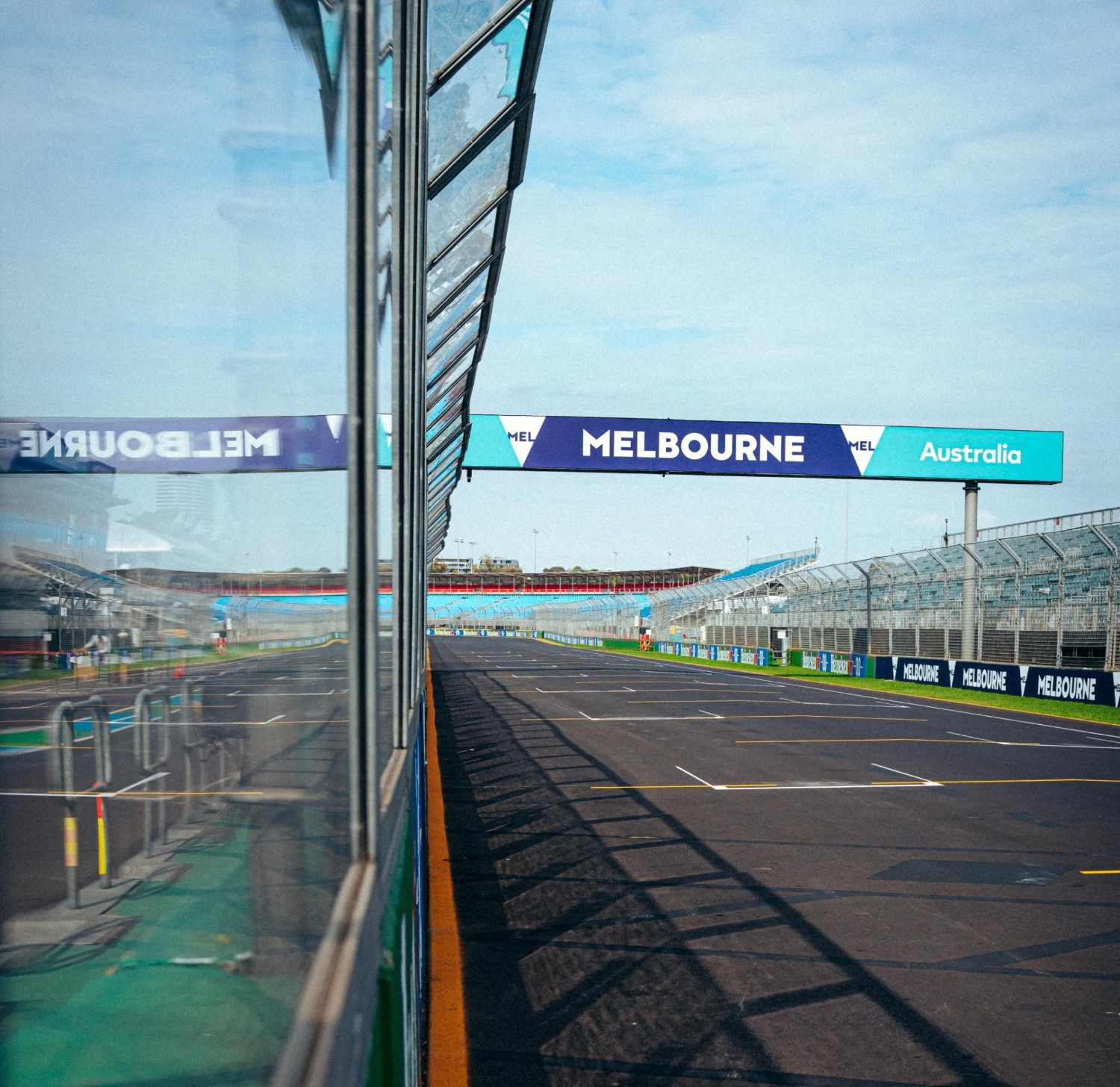
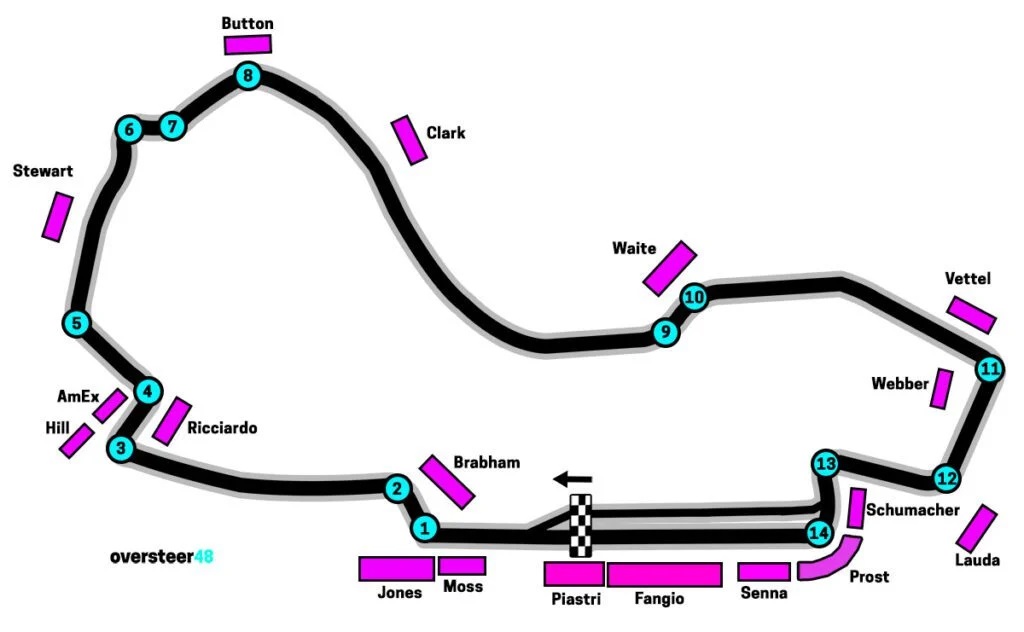
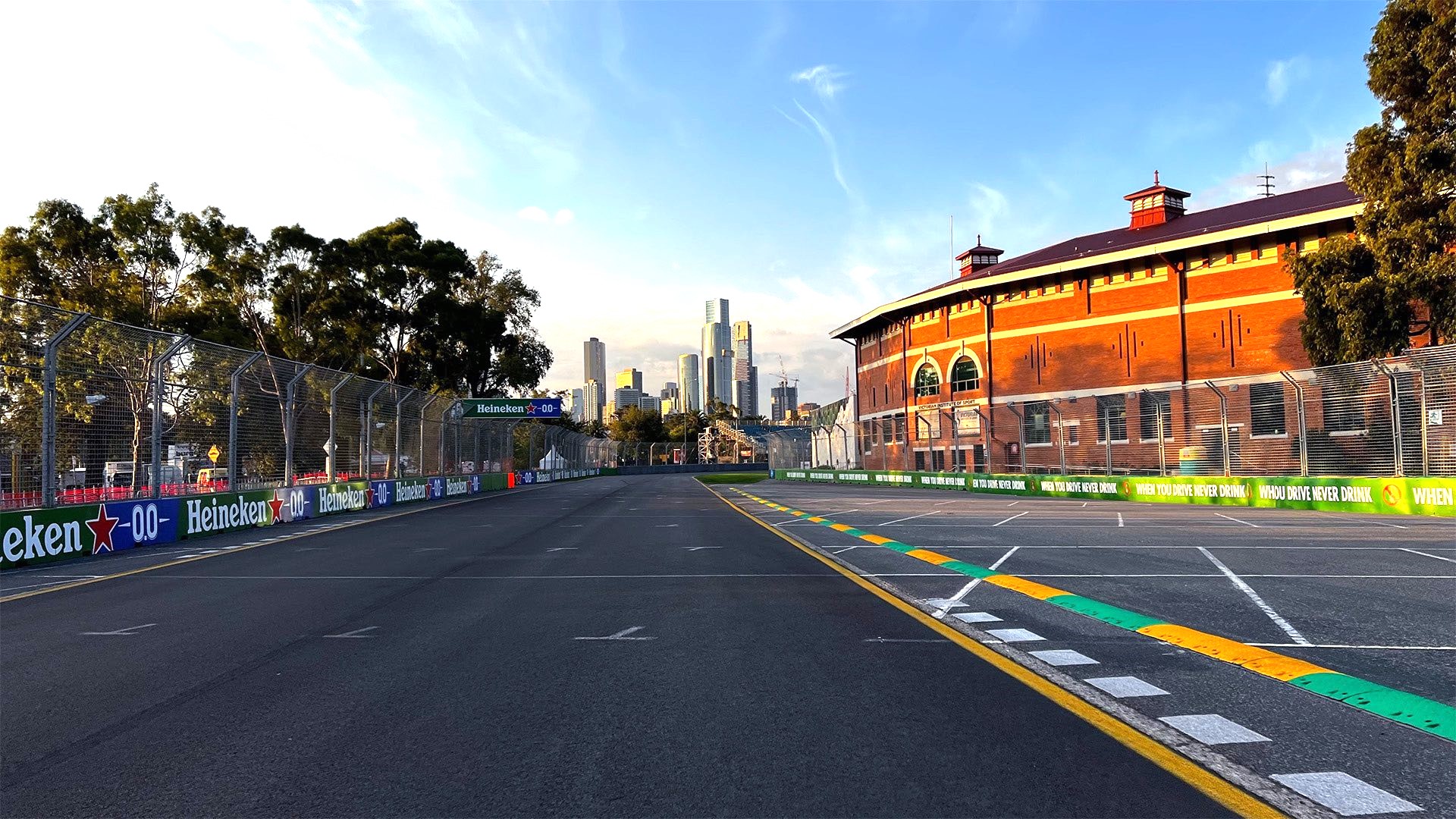
Turn 1 is a tight right-hander with apex speeds over 150 km/h, blind and leading straight into Turn 2, followed by a flat-out blast to Turn 3.
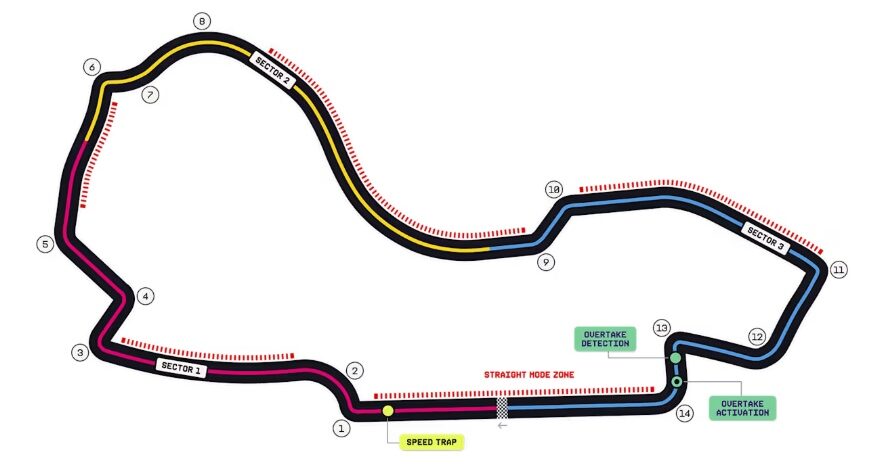
The revamped Turns 9 and 10 are now even more daunting high-speed sweepers.
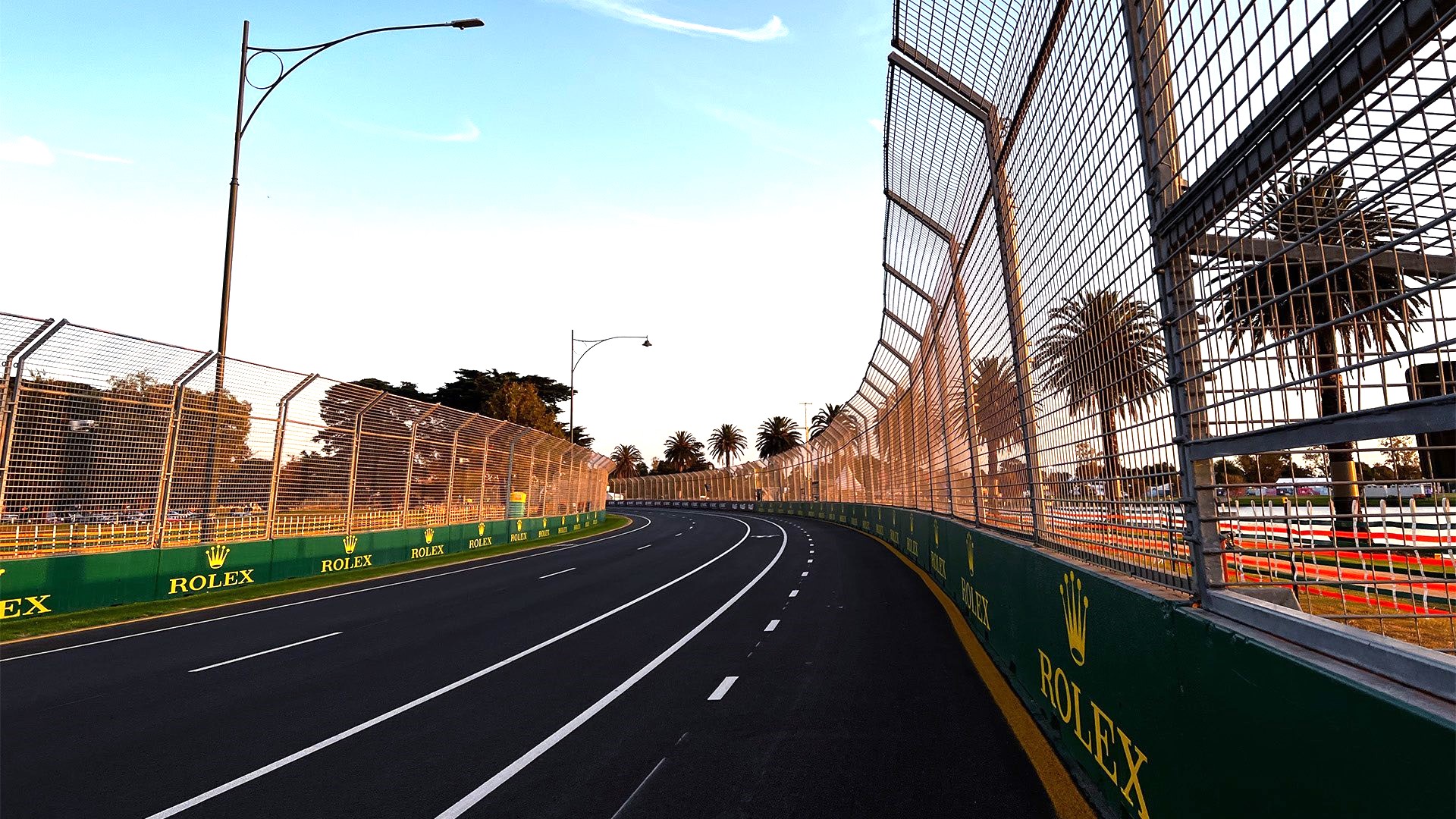
A light brake dab into Turn 9, another before Turn 10, then flat out to Turn 11.
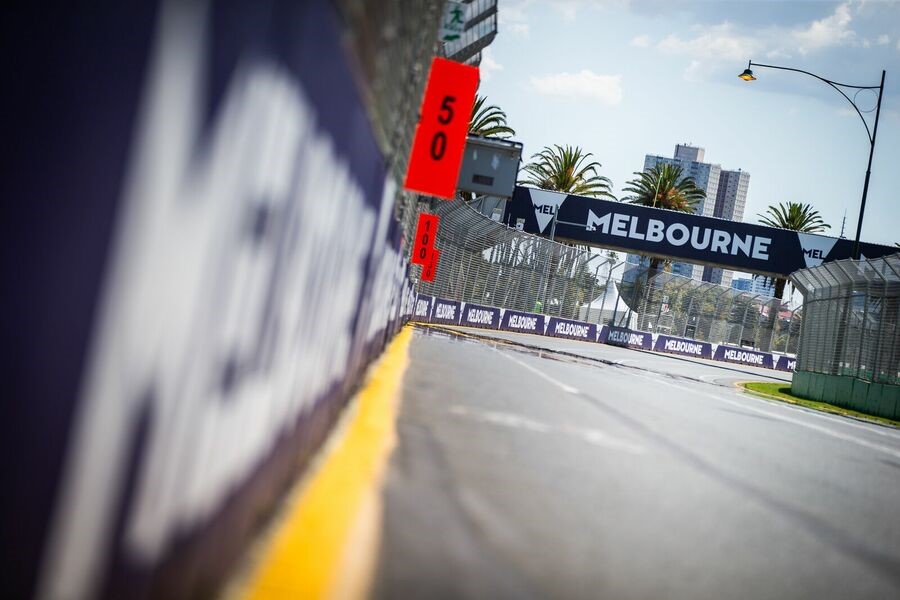
Fact File: Australian GP
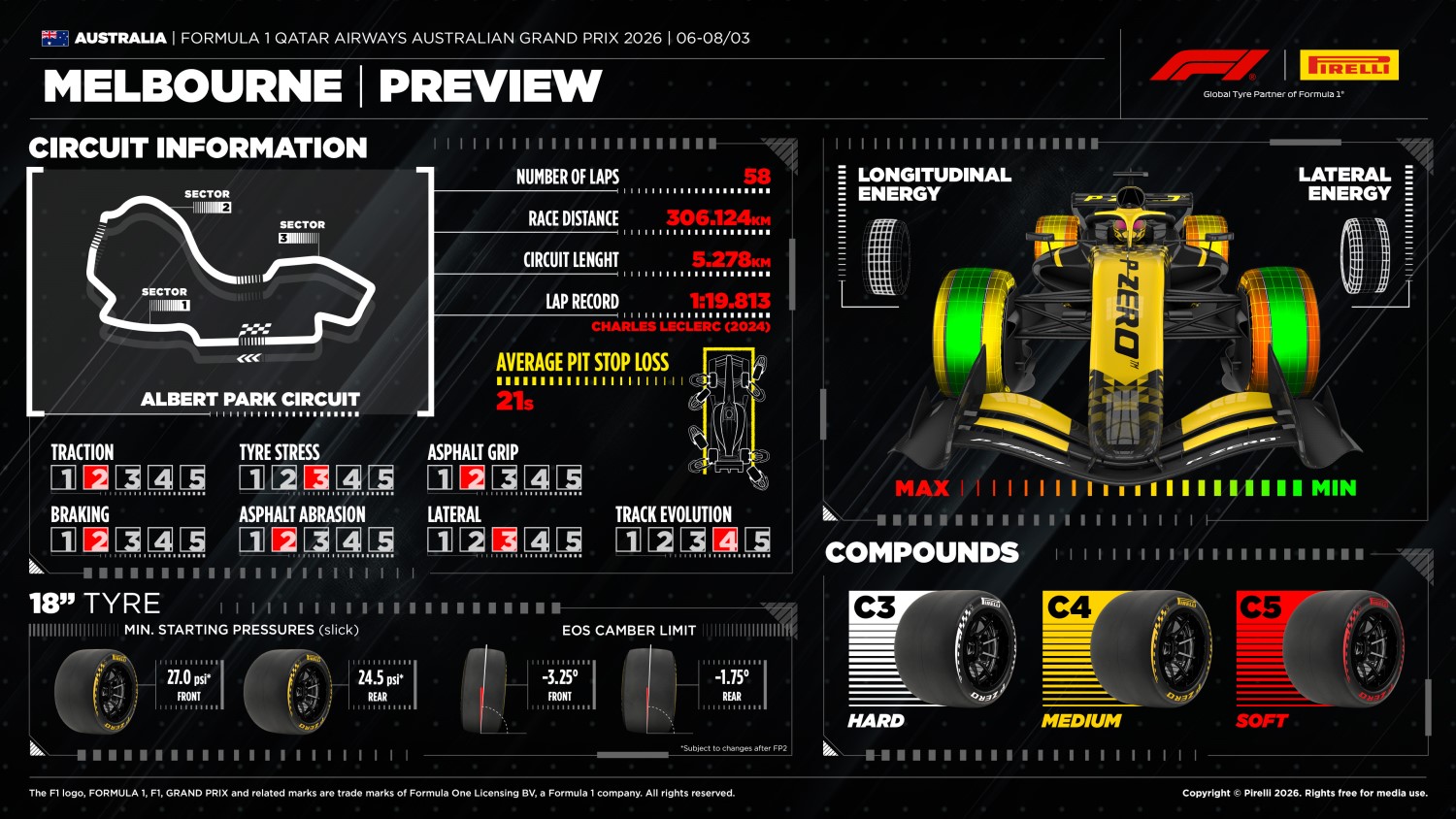
– The 5.278 km circuit, shortened in 2022, mixes public roads and permanent sections with fresh tarmac from that year.
– Shortest pit lane at 281 meters; cars spend ~17 seconds at pit speed.
– Only 35 gear changes per lap—second-lowest after Monza.
– 71% full throttle—also second to Monza.
– Highest lateral G at 5.1 in Turns 9-10.
– ‘Negative’ curb at Turn 6/7 exit reduces accident risk; profiled left barrier.
– Pit exit line extended for better merging.
– 23rd season-opener at Albert Park; first since 2019.
– Only GP to end one season (1995) and start the next (1996).
– Hybrid street/permanent track.
– Turns 9-10 critical for lap times.
Pirelli Tires for the Australian GP
Melbourne opens a season of uncertainties with revamped cars. Tires now have smaller contact patches and diameters but retain 18-inch rims. Five slicks (C1-C5) plus Intermediates and Full Wets.
Pirelli nominates the softest trio (C3, C4, C5), suiting the 5.278 km layout of fast straights and technical corners.
Low tire stress; degradation from wear, not heat. Smooth asphalt shows minimal graining.
Teams will probe performance in early sessions, balancing axle temperatures—possibly via differential blankets or prep laps.
Pit stops hinge on car loads (affecting soft compound viability) and overtaking difficulty. Overtake Mode may aid passes, but success often depends on energy management: the leader might falter if their battery depletes first.