Key Takeaways from the Australian GP: Teams, Drivers, and Storylines to Watch
It is official. The new era of Formula One finally has lift off. George Russell stormed to victory ahead of teammate Kimi Antonelli in the season opener in Australia. However, it was not all plain sailing for the Mercedes driver and title favourite. Russell was pushed extremely hard by the two Ferraris of Charles Leclerc and Sir Lewis Hamilton in the opening stages of the race.
In an engrossing battle with Leclerc, Russell and the Monegasque driver swapped positions almost at will, fully demonstrating the effect of the new racing elements such as active aero and the boost and overtake modes.
In the end though, a strategic gamble by Ferrari to give up track position in preference of fresher tyres towards the end of the race left them with too much work to do. Russell and Mercedes asserted their dominance Down Under to set the initial benchmark in the post-ground effect era.
However, there were skirmishes and close calls up and down the grid and plenty of takeaways from the opening race in Melbourne. After months of speculation over how the drivers would adapt to the new rules and regulations and how the racing would actually look on track, F1 fans were not disappointed and will look ahead to the Chinese Grand Prix next weekend with even more excitement. But what did we learn from the season opener?
Red Bull Mystery
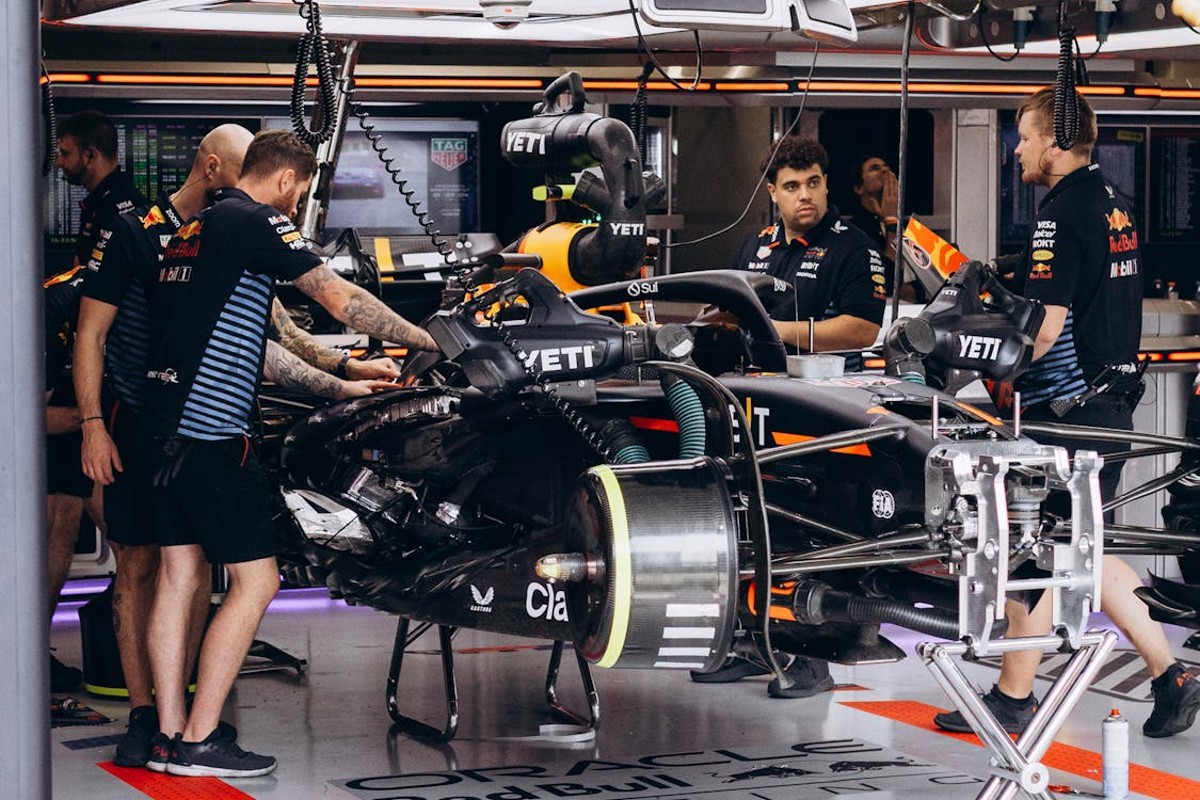
Unfortunately, race fans were robbed of a potential Max masterclass in Melbourne after an incident in qualifying that the four-time world champion had “never experienced in his life” left the Dutchman starting in 20th for the main event. As a result of Verstappen’s lowly starting position, coupled with Isack Hadjar’s debut in a Red Bull car only lasting eleven laps, F1 fans were left none the wiser as to the Milton Keynes outfit’s true pace.
Red Bull were given encouragement by Hadjar’s qualifying performance when the 21-year-old only trailed the two Mercedes on the Saturday running. However, joy turned to despair on Sunday when Hadjar’s power unit failed on the long straight between turns 10 and 11. Meanwhile, Verstappen made progress through the field, albeit passing cars the Red Bull is expected to make light work of.
One worrying aspect for Laurent Mekies and the Red Bull team though will be Verstappen’s failure to make an impression on McLaren’s Lando Norris, even on fresher tyres. Alongside evident graining issues on the front left that hampered Verstappen’s ability to fully push, many will be eagerly looking to the Chinese Grand Prix next weekend to see how the Red Bull matches up to the Mercedes and Ferrari, who have set the early pace this season.
New Formula 1 Rules, Same Issues at Ferrari
There was also reason for optimism on the Ferrari pit wall as the weekend unfolded. Despite Leclerc and Hamilton only qualifying 4th and 7th respectively, the overall pace over the practice sessions was certainly positive. The levels of optimism rose even further when the fast-starting Ferraris leapt off the line to challenge pole-sitter, George Russell, into the first corner. Leclerc emerged out of the first corner in the lead, confirming the suspicion that the Ferraris had a major advantage off the start line from their smaller turbo.
However, despite a two versus one scenario, with Hamilton joining the action quickly, a familiar uncertainty arose that potentially robbed Ferrari of a season-opening victory. At one stage of the race, F1 betting lines were seriously considering Leclerc or Hamilton for the race win. However, in a sport of incredibly fine margins, where split-second decisions can make or break a race, Ferrari’s Achilles heel reared itself once again.
With the Virtual Safety Car triggered by Isack Hadjar’s stricken Red Bull, the opportunity to pit and put on fresh tyres presented itself. But while the Mercedes pitted for fresh rubber, both Ferrari drivers stayed out, ultimately giving up track position in doing so. Hindsight is always a wonderful thing, but many, including Hamilton, were questioning why the team decided against splitting strategies. In the end, the pace of the Mercedes did not relent, even on a one-stop strategy.
Despite the missed opportunity, Ferrari fans will remain optimistic in the lead up to a Grand Prix where Hamilton took Sprint victory last season. The wheel-to-wheel combat with the Mercedes rocket ship will give the Tifosi hope that they can break their long run without a race win and challenge for a long-awaited constructors title this season.
Mercedes Setting the Formula 1 Benchmark
Away from the sharp end of the grid, there were promising signs for points-scoring Alpine, HAAS, Racing Bulls, and Audi in the battle to be “best of the rest.” Elsewhere, Williams, Cadillac, Aston Martin, and even McLaren, will be desperately looking for more lap time to achieve their respective goals.
The reigning world champions will perhaps be most disappointed by their showing, with Lando Norris driving a largely anonymous race to come home in 5th, while Oscar Piastri broke home fans before the lights even went out. Piastri’s uncharacteristic crash on the reconnaissance lap, when a spike of torque sent the Australian into the wall, robbed fans of a potential drive in anger and vengeance after last season’s misfortune in the rain.
While there was a clear element of “learning on the job,” represented by the topsy-turvy exchanges in the opening laps in Melbourne, Mercedes seem to be the team that have mastered the new rules and regulations best on the latest and only evidence. The searing pace in qualifying was translated into race pace on the Sunday as Mercedes sealed their first one-two finish that did not involve Sir Lewis Hamilton since Juan Manuel Fangio and Karl Kling paired up in 1954 at the French Grand Prix.
With Russell and Antonelli in the Silver Arrows cockpits, the initial signs could be ominous. However, there is still a lot of racing and development to unfold between now and Abu Dhabi in December. China will give us a few more hints as to how teams are adapting to the new era. But it is advantage Mercedes, for now.