Why Your Gas Station Car Charger is Killing Your Vibe (and Your Battery)
There’s a moment every driver knows too well: the map is open, music is playing, traffic is a mess—and the battery icon suddenly flashes red. You plug into that old gas-station charger rolling around in the console and watch, helplessly, as the percentage barely moves or even drops. At that point, the problem isn’t your phone. It’s your whole in‑car charging setup.
By 2026, phones like the iPhone 17 series and Galaxy S26 have become small power-hungry computers. Navigation, Bluetooth audio, live location sharing, high‑brightness displays—none of this was designed with a dusty, five‑watt cigarette lighter adapter in mind. Those bargain-bin chargers don’t just charge slowly; they run hot, stress your battery, and sometimes struggle to keep up with basic GPS use. Treating car charging as an afterthought made sense when phones were simpler. Now it’s a weak link in the whole experience.
Welcome to 2026: Qi2 changes the rules
A lot has changed in the charging world. Qi2 has brought MagSafe‑style magnetic alignment to a much wider range of devices, which is a big deal in a car. No more wrestling with spring clips that gouge your fingers, no more trying to line up the coil “by feel” while you’re supposed to be watching the road. You get a clean snap into place, the phone stays put, and charging starts immediately.
But the real story isn’t just magnets; it’s power. Modern phones can pull far more juice than before—up to the mid‑20‑watt range for wireless charging in some setups. When your screen is blasting away at full brightness, maps are constantly refreshing, and you’re streaming audio, a low‑power pad barely keeps the battery from sliding backward. A 7.5W or old 10W mount is fine for idling in a parking lot, but once you’re on the highway in the sun, it stops being enough. If the number on the charger doesn’t match the reality of how you actually use your phone, your battery icon tells the truth.
Heat: the quiet battery killer
More power sounds good on paper, but in a car environment it comes with a cost: heat. Picture what’s happening when you drive on a summer afternoon. The phone is pinned to the dash or stuck to the windshield, sitting in a pocket of warm air, pulling a heavy charge while the processor works hard on navigation and apps. That’s a recipe for the device to start cooking.
When a phone gets too hot, it protects itself by slowing the charging rate. That shiny “50W” label on a box doesn’t mean much if the internals are boiling. In practice, you may end up getting a trickle of power, even though you paid for something much faster. Over time, repeated heat cycles are also bad news for long‑term battery health.
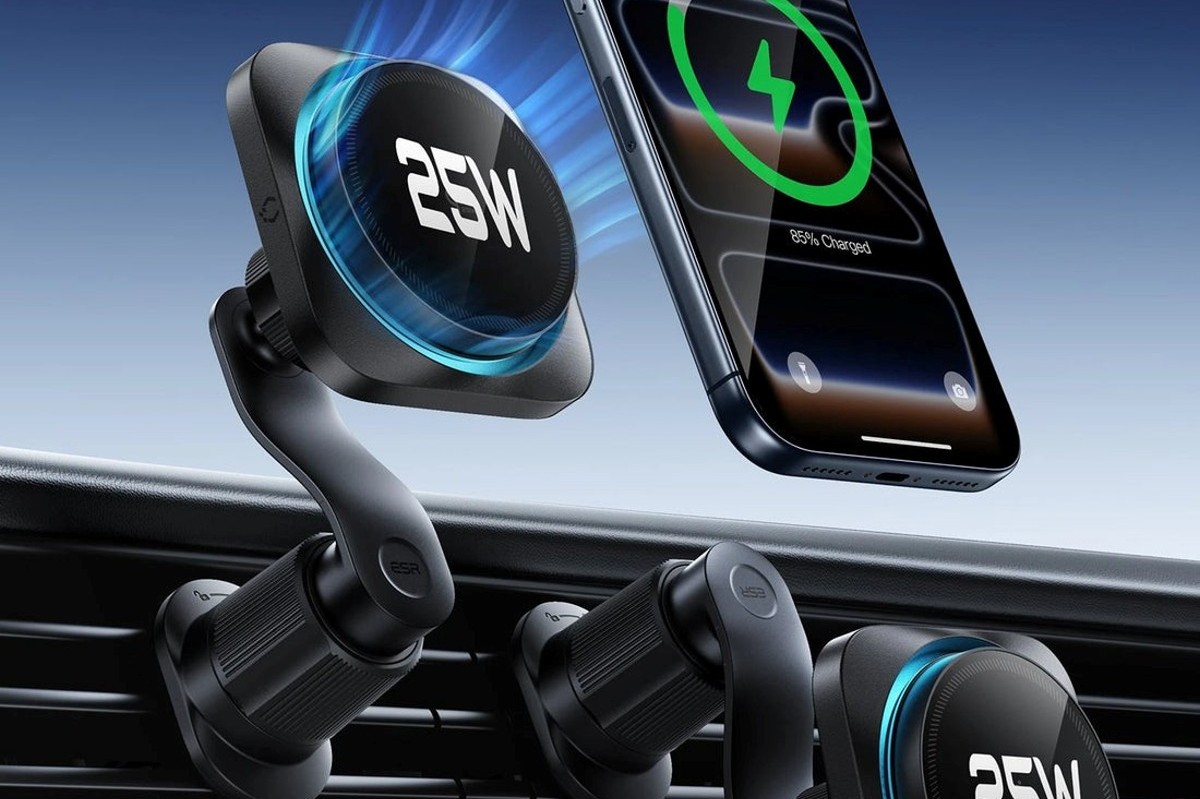
This is why cooling has gone from a nice extra to a must‑have for people who live on the road. Some of the latest mounts build active cooling directly into the charger. A small fan draws heat away from the back of the phone so it can keep charging at a high, stable rate instead of constantly throttling. For ride-share drivers, couriers, or anyone who spends hours at a time with navigation running, that difference is obvious: the phone stays cooler to the touch, and the battery percentage actually climbs instead of hovering in place.
Matching your setup to the way you drive
There isn’t one “best” car charger for everyone. The right choice depends on how much time you spend in the car and what you do while you’re there.
If you mainly commute 20–30 minutes at a time, convenience and clean installation matter more than extreme power. A well‑designed magnetic vent mount works especially well here. It keeps the screen at a natural height without blocking the windshield, and the airflow from the AC helps keep the phone cooler. A modern Qi2 vent charger in the 20–25W range gives you enough headroom to offset navigation and still top up. Strong magnets are non‑negotiable; they should shrug off potholes and speed bumps without the phone twisting or sliding.
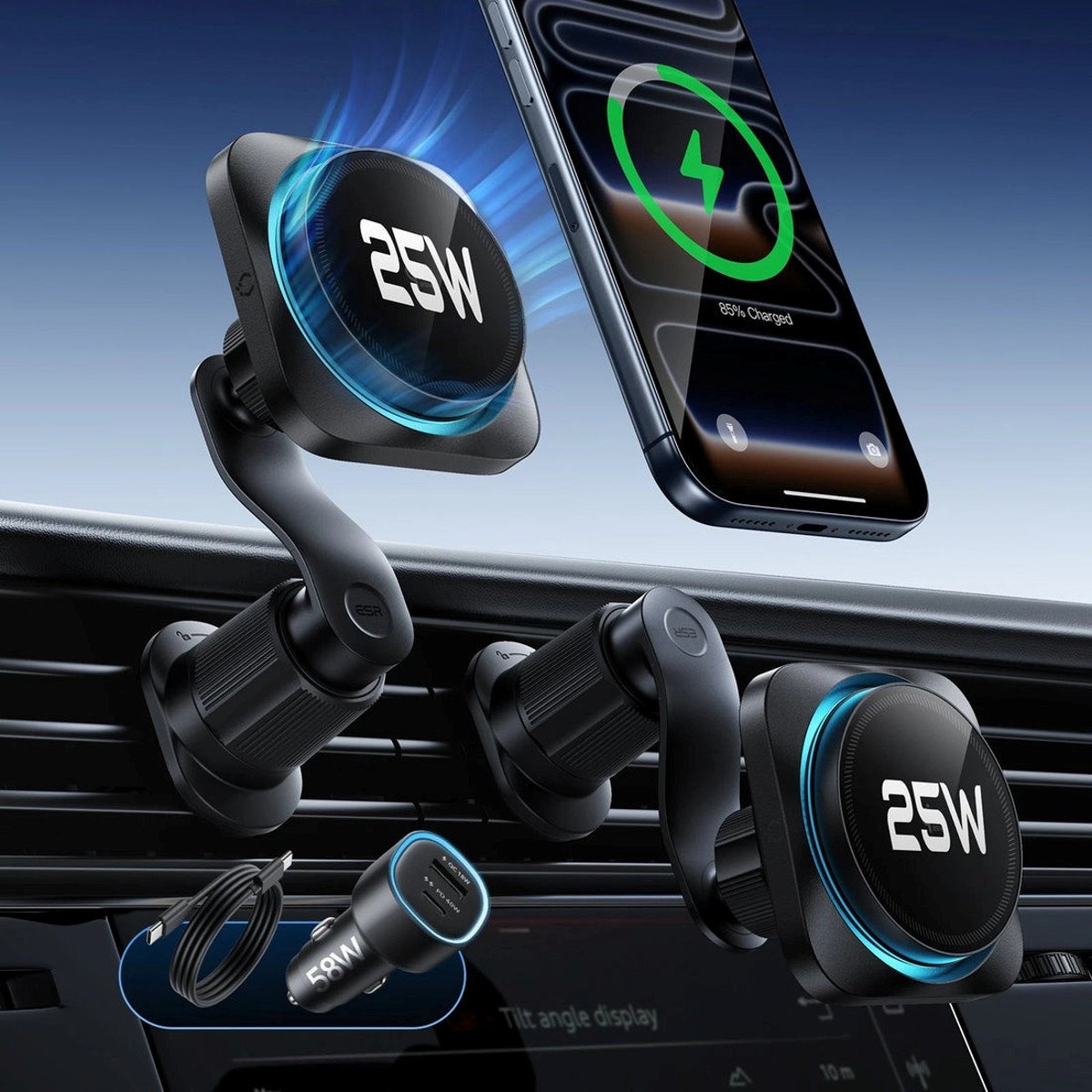
For people who work from their car—drivers for ride‑hailing apps, food delivery, field service—the priorities shift. Hours of continuous screen‑on time demand a charging setup that’s built like a work tool, not a toy. A dashboard or windshield mount with a solid arm and robust suction pad is worth the space it takes up. In this category, hardware that uses GaN (gallium nitride) for the charger electronics has a real advantage: it runs cooler and delivers power more efficiently than older silicon designs. When the charger itself stays cooler, it can provide a more stable output all day long.
Families on long trips need a different solution again. One wireless mount up front isn’t enough when the back seat is full of tablets and handhelds. In that case, a high‑wattage multi‑port adapter becomes the center of the whole setup. A good unit will offer at least one USB‑C Power Delivery port at 30W or more for tablets and laptops, alongside additional ports for phones and accessories. With that in place, the wireless mount can focus on the driver’s phone while cables feed everything else.
Don’t forget the safety side
Speed and magnets are only half the story. A decent modern charger is designed to protect both the car and the device it’s powering. Over‑voltage protection is there to guard against glitches in the car’s electrical system. Over‑current and short‑circuit safeguards step in if something goes wrong with a cable or port. Foreign object detection helps shut things down before keys, coins, or other metal objects cause trouble under the charging pad. And then there’s magnetic strength: if the holding force is weak, every speed bump becomes a risk.
None of this is particularly glamorous, but it’s the difference between a gadget that looks nice on day one and one that survives daily abuse without drama.
Time to retire the gas‑station special
Phones and cars keep getting smarter, but that old plastic plug in the cigarette lighter hasn’t changed in years. If your battery percentage doesn’t noticeably climb on a typical drive, that’s a sign your setup is stuck in the past. Upgrading to a modern Qi2 mount, choosing hardware with proper cooling, and making sure you have enough total wattage for everyone in the car turns charging from a frustration into something you don’t have to think about.
You already paid for a powerful phone and a capable vehicle. The charger that ties them together shouldn’t be the weakest part of the system.