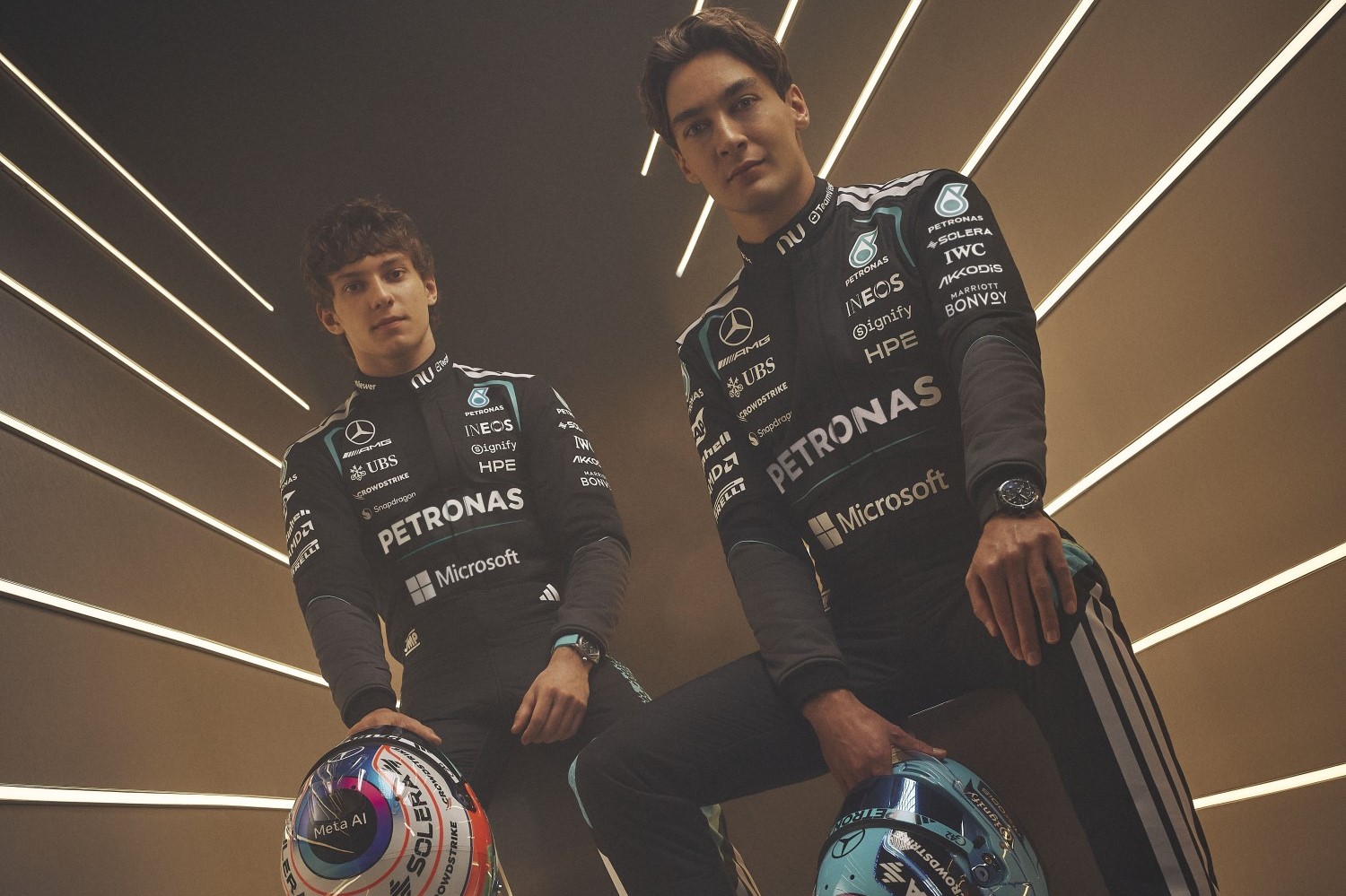
Russell vs Antonelli: Can Two Mercedes Drivers Race Each Other Without Tearing the Team Apart?
The 2026 Formula 1 season opener in Australia and the following round in China delivered a result that Toto Wolff likely dreamed about during his worst sleepless nights in 2024. Mercedes sits firmly at the top of the standings with two consecutive 1-2 finishes.
While the technical department deserves a standing ovation for mastering the 50/50 power split of the new engine regulations, the real story is unfolding inside the cockpit. George Russell and Kimi Antonelli are currently separated by just four points, and the polite smiles in the post-race press conferences are already starting to look a bit forced.
The Prodigy Meets the Heir Apparent
George Russell spent three long years playing the patient apprentice to Lewis Hamilton, waiting for the moment he would finally become the undisputed leader at Brackley. He probably didn’t expect his biggest threat to be a nineteen year old rookie who wasn’t even born when Fernando Alonso won his first world title.
Antonelli’s victory in Shanghai wasn’t just a lucky break; he beat Russell by a convincing 5.5 seconds after a clinical performance that silenced anyone questioning his jump from Formula 2. Watching these two navigate the high stakes of a championship battle is as unpredictable as looking for the best online pokies Australia for real money because one wrong move can bankrupted a team’s season-long ambitions.
The dynamic between them is fascinating because it lacks the traditional “mentor and student” buffer. Russell is 28 and in his prime, while Antonelli is the chosen one, fast-tracked by Wolff himself. There is no elder statesman to calm the waters here. The tension is built on several key factors that make this pairing a powder keg for the Silver Arrows:
- Russell’s desperation to prove he can lead a championship-winning team after years of midfield struggling.
- Antonelli’s lack of fear or “respect” for the established hierarchy, which he proved by taking pole in China.
- A Mercedes W17 car that is currently so much faster than the rest of the grid that the only person each driver has to beat is sitting in the same garage.
- The immense media hype surrounding Antonelli, which naturally puts Russell on the defensive during every interview.
Management on a Tightrope
Toto Wolff is no stranger to driver wars, having survived the toxic fallout of the Hamilton-Rosberg era in 2016. However, that was a battle between childhood friends turned enemies. This is different. This is an internal struggle for the very identity of the team. If Mercedes allows them to race freely, they risk a repeat of the double-retirement at Barcelona 2016. If they implement team orders this early in the season, they risk destroying the confidence of their future superstar or alienating the man who has been loyal to them for a decade.
The numbers from the first two rounds tell a story of extreme parity. Russell took the sprint win and the main race in Melbourne, but Antonelli’s response in China was a statement of intent. The team has already had to manage several close calls on track.
- In Melbourne, Russell and Antonelli swapped positions three times during the middle stint without contact.
- During the Shanghai sprint, Russell won but Antonelli set the fastest lap, trailing by less than a second at the flag.
- The qualifying gap between them across both sessions has averaged a microscopic 0.045 seconds.
When the Battery Runs Dry
The new 2026 regulations place a massive emphasis on energy management, and this is where the friction often starts. In China, Russell complained over the radio that he was being forced to defend against Antonelli while trying to save battery for a late-race charge. It was a classic “multi-21” moment in the making. When two drivers are that close in pace, every tactical decision by the pit wall looks like favoritism to the man who loses out.
Mercedes currently enjoys a luxury problem, but history shows that in Formula 1, luxury problems turn into PR disasters very quickly. The team has managed to keep the peace for 180 minutes of racing so far. Whether that peace survives the European leg of the season, where the pressure ramps up and the upgrades start flowing, is the biggest question in the paddock. For now, the fans get to watch the most expensive game of chicken in sports, and Toto Wolff gets to practice his “disappointed parent” face for the inevitable day they finally touch carbon fiber.