The Ayrton Senna Tragedy: Uncovering the May 1994 Mysteries
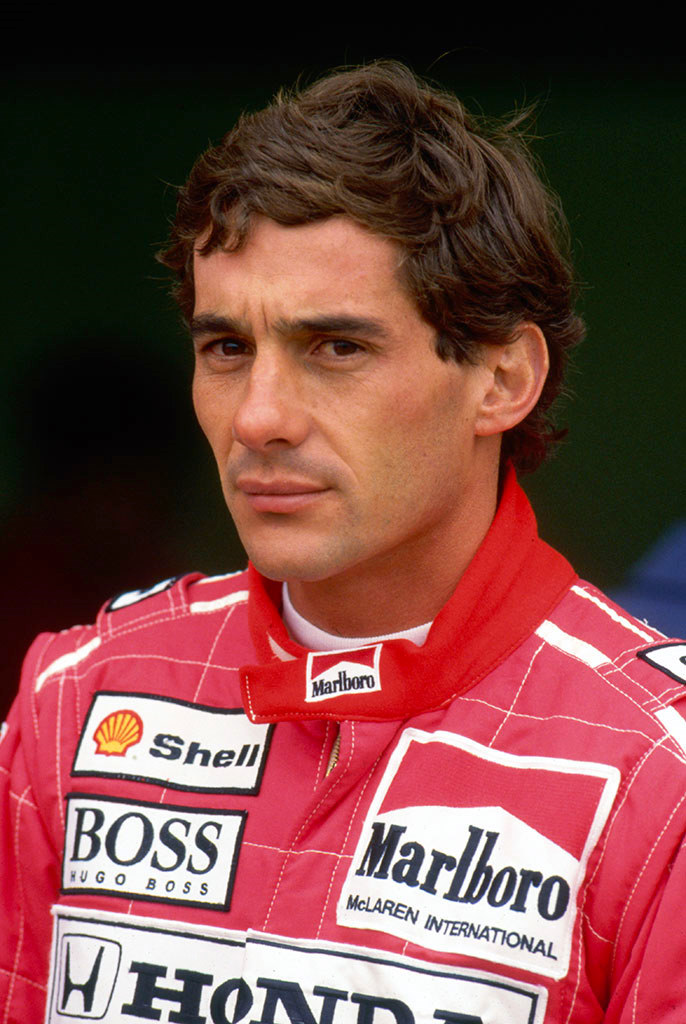
The spring of 1994 changed Formula 1 forever. Racing fans around the globe watched in disbelief as one of the sport’s brightest stars lost his life on live television. Ayrton Senna was a three-time world champion, a Brazilian icon, and a driver whose skill behind the wheel bordered on the supernatural.
But his fatal crash at the San Marino Grand Prix left behind far more questions than answers. Even decades later, people still argue over what exactly caused his Williams car to spear off the track at the Tamburello corner. Was it a mechanical failure, a driver error, or a hastily modified steering column?
We will explore the tense atmosphere leading up to that fateful race, the technical problems plaguing Senna’s car, and the lingering theories that still surround the crash today. You will get a clear look at the facts and the mysteries that continue to haunt motorsport fans.
A Dark Weekend at Imola
The entire 1994 San Marino Grand Prix weekend felt cursed from the very start. The racing community faced a series of shocking accidents that left everyone in the paddock deeply unsettled.
On Friday, young Brazilian driver Rubens Barrichello launched his car into the air and crashed heavily into the tire barriers. He suffered a broken nose and a concussion, but he survived. Senna visited his young friend in the medical center, visibly shaken by the violence of the impact. Saturday brought an even worse tragedy. Austrian rookie Roland Ratzenberger lost his life during qualifying when his front wing failed, sending him into a concrete wall at nearly 195 miles per hour. This marked the first death at a Formula 1 race weekend in twelve years.
Senna felt a deep sense of dread. He spoke with his close friends, his family, and former rival Alain Prost about his concerns regarding the safety of the cars. The Williams FW16 he drove was incredibly difficult to handle. Rule changes for the 1994 season had banned electronic driving aids like active suspension and traction control. The team struggled to adapt, and Senna complained constantly about the car’s unpredictable behavior.
If you want to understand the full timeline of that tragic weekend, you can learn more about the events of May 1st, 1994.
The Crash at Tamburello
Sunday arrived with a heavy atmosphere. Senna lined up in pole position, but his mind seemed far away. When the race started, an immediate crash on the starting grid brought out the safety car. In 1994, the safety car was a standard road car that drove quite slowly. This caused the tires on the Formula 1 cars to cool down and lose their grip.
When the race restarted on lap six, Senna pushed hard to keep Michael Schumacher behind him. As he entered the high-speed Tamburello corner on lap seven, his car refused to turn left. Instead, it continued straight, leaving the track at around 190 miles per hour. Senna managed to brake hard, reducing his speed to roughly 130 miles per hour before slamming into the unprotected concrete wall.
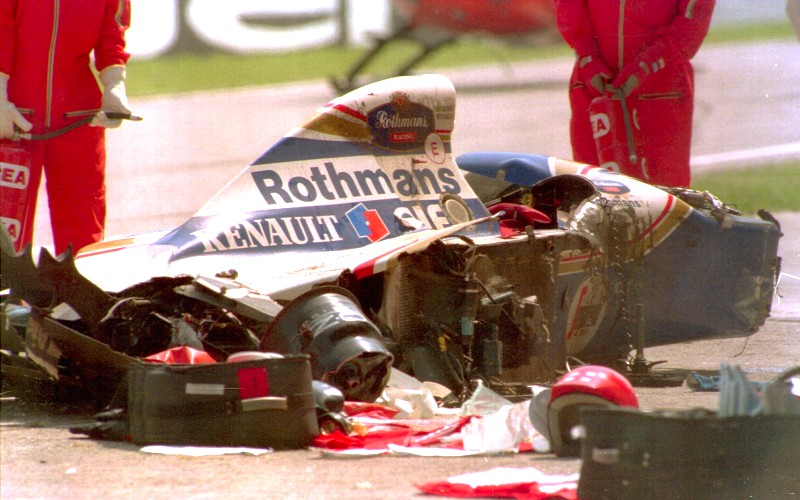
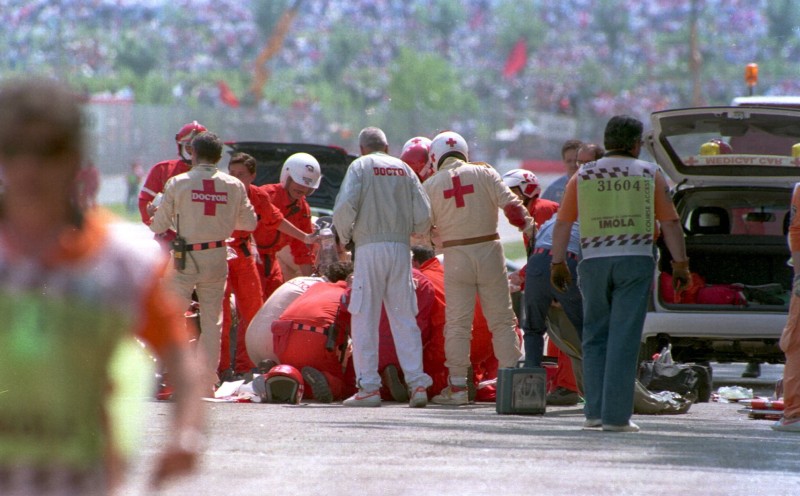
The impact caused catastrophic damage to the right side of the car. Track marshals and medical staff rushed to the scene. They found Senna unconscious, with serious head injuries. A helicopter transported him to Maggiore Hospital in Bologna, but the doctors could not save him.
Why Did the Steering Column Fail?
The most prominent theory and the focus of a lengthy Italian criminal trial centers on the steering column of the Williams FW16. Senna had complained that the steering wheel sat too close to his chest, making it uncomfortable for him to drive.
To fix this issue, the Williams mechanics made a quick modification. They cut the steering column and welded a thinner piece of metal into the middle to extend it. This decision became the focal point of the entire investigation.
Prosecutors argued that this modified steering column snapped under the intense pressure of the bumpy Imola circuit. If the steering column broke before the crash, Senna would have been completely unable to steer the car through the corner.
Several key factors point toward this failure:
- Onboard camera footage shows the steering wheel moving slightly up and down just moments before the crash, suggesting the column was bending or breaking.
- Investigators found the steering column broken near the weld site when they examined the wreckage.
- Telemetry data indicated that Senna applied the brakes heavily but did not apply any steering lock to negotiate the turn.
Modifications to the FW16
Williams technical director Patrick Head and chief designer Adrian Newey faced manslaughter charges in Italian court. The trial dragged on for years. The Italian Supreme Court eventually ruled that a badly designed and poorly executed modification to the steering column caused the crash. The court placed the blame on Patrick Head, but the statute of limitations had already expired. He served no penalty.
Many people within the racing community still debate this ruling. Some mechanics and engineers believe the steering column broke upon impact with the concrete wall, not before.
The Helmet and the Suspension Piece
Another major talking point involves the exact cause of Senna’s fatal injuries. When the car hit the wall, the front right wheel tore off its tethers. A piece of the suspension assembly attached to the wheel flew backward like a spear.
This metal piece struck Senna’s helmet just above the visor. The force of the blow pushed his head back against the headrest, causing fatal skull fractures and brain injuries. Medical experts agreed on a few heartbreaking facts about the impact:
- Senna’s body suffered almost no broken bones or serious injuries below the neck.
- If the flying suspension piece had missed his head by just two inches, he likely would have walked away from the crash with only minor bruising.
- The nature of the injury meant that no medical intervention could have saved his life, even if he had crashed right outside a hospital.
This freak accident aspect of the crash makes it even harder for fans to accept. It highlights the incredible danger drivers face, where a tiny change in angle or speed can mean the difference between life and death.
Black Boxes and Missing Footage
No story about Ayrton Senna’s death is complete without addressing the missing data and footage. These missing pieces fuel many of the conspiracy theories that still circulate online.
Every Formula 1 car carries a black box that records vital telemetry data, much like an airplane. However, the data box from Senna’s car mysteriously went missing in the hours immediately following the crash. When authorities finally recovered it weeks later, a significant portion of the data leading up to the crash was missing or corrupted. Then there is the issue of the onboard camera. Formula One Management broadcasted live footage from Senna’s car as he drove around the track. But the video feed inexplicably cuts to black exactly 1.5 seconds before the car hits the wall.
Broadcasters claim the director simply switched to a different camera angle to follow the race. Skeptics argue that someone intentionally destroyed or hid the final seconds of footage to cover up what really happened inside the cockpit. While no hard evidence supports a malicious cover-up, these gaps in the record leave plenty of room for doubt.
Bottoming Out and Cold Tires
During the race, a safety car period caused tire temperatures to drop significantly.
- In Formula One, tire temperature is extremely important because cold tires provide less grip and stability.
- When the race restarted, drivers quickly accelerated back to racing speed, but the tires may not have reached their ideal operating temperature. Because of this, cars had reduced traction, making them harder to control at very high speeds.
- The 1994 cars were also running very low ride heights to improve aerodynamics.
Low ride height increases the risk of bottoming out, which happens when the underside of the car touches the track surface. At high speeds, bottoming out can disturb the car’s balance and reduce downforce. Some analysts believe that the combination of cold tires and bottoming out may have contributed to the instability of the Williams FW16 driven by Ayrton Senna during the crash.
A Legacy of Safety
We may never agree completely on the exact mechanical failure that caused Ayrton Senna’s crash. The missing data and the massive destruction of the car make absolute certainty impossible.
However, his death forced an immediate and aggressive overhaul of Formula 1 safety standards. The sport introduced higher cockpit sides to protect drivers’ heads. They redesigned track barriers and increased run-off areas to slow cars down before they hit walls. Eventually, the sport mandated the HANS device to protect the neck and the Halo system to protect the driver’s head from flying debris.
Ayrton Senna left behind a legacy defined by pure speed and total dedication. While the mysteries of May 1994 will always linger, his tragic loss undeniably saved the lives of countless drivers who came after him.