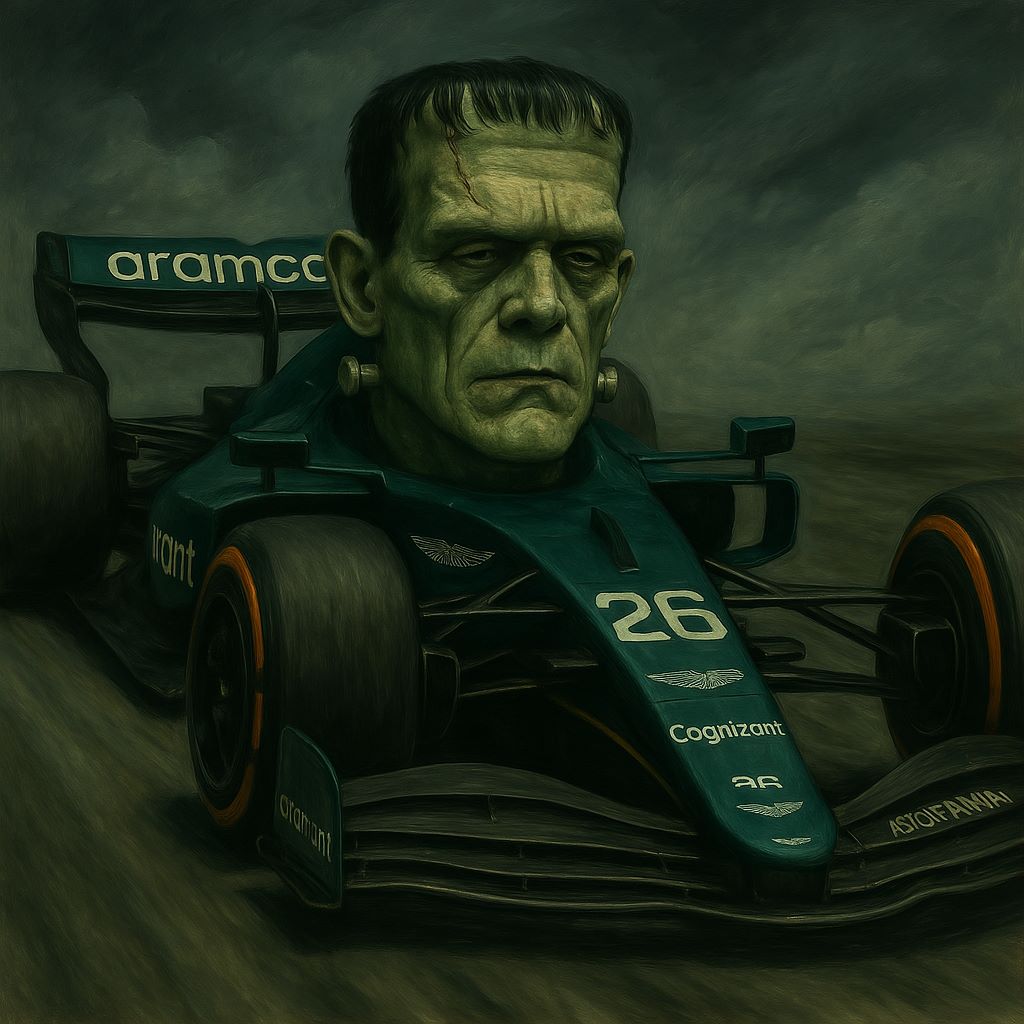
Will rain in Miami expose just how utterly ridiculous the 2026 F1 Frankenstein cars are?
As the 2026 Miami Grand Prix weekend gets underway on a Sprint format Friday, the forecast for Sunday’s main race is turning heads for all the wrong reasons. Thunderstorms and heavy rain are a genuine threat, with chances ranging from 40-88% depending on the model, and lightning risks that could ground helicopters and force suspensions—just like last year.
–by Mark Cipolloni-
For the first time in competitive conditions, the much-maligned 2026 “Frankenstein cars” could face a proper wet-weather test. And if the critics are right, Miami’s standing water might not just disrupt the show—it could expose exactly why Christian Horner’s four-year-old warning about a “technical Frankenstein” has become the paddock’s darkest prophecy.
What makes these cars “Frankenstein”?
The 2026 regulations were sold as the future: smaller, lighter (down ~30 kg to 768 kg minimum), shorter wheelbase, narrower tires, active aerodynamics (X-mode for corners, Z-mode for straights), and a near 50/50 split between combustion and electric power from sustainable fuels. The goal was sustainability and closer racing. What teams got instead was a cobbled-together monster that prioritizes energy management algorithms over driver talent.
Autoracing1.com has been documenting the nightmare since the cars hit the track. Our own deep dive listed “10 hideous things the 2026 F1 Frankenstein cars do,” from mid-straight speed drops of 50 km/h at full throttle due to battery depletion (“super-clipping”) to drivers turning into “battery-obsessed accountants.” Tiny throttle lifts ruin laps, active aero transitions feel violent and unpredictable, and formation laps become chaos.
Drivers have been brutally honest. Max Verstappen called it “management… not very Formula 1-like.” Lando Norris labeled the sudden slowdowns “soul-destroying.” Fernando Alonso joked that in some corners you’re so slow “the chef can drive the car.” Lewis Hamilton said they feel slower than F2.
Even The Race’s Ben Anderson described them as “Formula 1 as Frankenstein’s monster”—rules twisted to lure Audi and Honda back, but at the cost of cars that look broken on track, coast through high-speed corners 50-60 km/h slower than they should, and reward brains over bravery.
Wet weather: the ultimate stress test
Rain has always been F1’s great equalizer, but the 2026 cars bring brand-new headaches. Teams have barely run them in the wet—maybe a handful of shakedown laps in Barcelona. Low grip changes everything when you’re harvesting and deploying massive electric torque.
Related Article: Formula 1 News: Miami GP under review amid storm threat – FIA
FIA officials are already planning contingencies. If rain reduces grip, they’ll switch off the overtaking boost (up to 350 kW of extra power) to prevent hybrid torque instability. Active aero will be partially restricted, and power delivery locked to fixed maps. A new “Rain Hazard” rule even lets teams make setup changes between qualifying and the race if precipitation odds top 40%—an admission that these cars are unusually vulnerable to the weather.
Drivers are voicing concerns. Carlos Sainz noted the super-flat Miami track holds standing water. Charles Leclerc warned: “In the wet, you risk reaching the end of the straight at a higher speed than in the dry. In those conditions, we drivers become passengers—it’s not a question of courage.” Esteban Ocon was blunt about potential early alarms if thunderstorms hit.
While smaller diffusers and narrower tires were supposed to reduce spray and improve visibility compared to recent ground-effect cars, the real worry is stability and energy management on a slippery surface. Sudden power cuts, twitchy active aero, and regen that behaves differently when wheels are slipping could turn a damp Miami into a lottery—or worse, a safety incident.
Miami could be the moment the gloves come off
F1 has already rushed through “Band-Aid” fixes ahead of Miami—tweaks to power units, start procedures (with new safety systems the FIA is watching closely for cheating), and more. Sebastian Vettel has publicly backed the drivers’ calls for deeper changes. The paddock knows these cars aren’t delivering the thrilling, skill-based racing fans expect.
Related Article: Formula 1 News: FIA implements Band-Aid fixes for its Frankenstein Cars
If Sunday turns into a wet-weather thriller—or a chaotic, red-flagged mess—the spotlight will shine directly on the Frankenstein cars. Will they prove adaptable and exciting in the rain, or will the energy-management quirks, stability issues, and driver-passenger dynamic finally force everyone to admit the regulations need a full reboot?
The rain in Miami might not just decide the race result. It could decide whether F1’s 2026 experiment is a bold step forward… or the monster Horner warned us about all along.