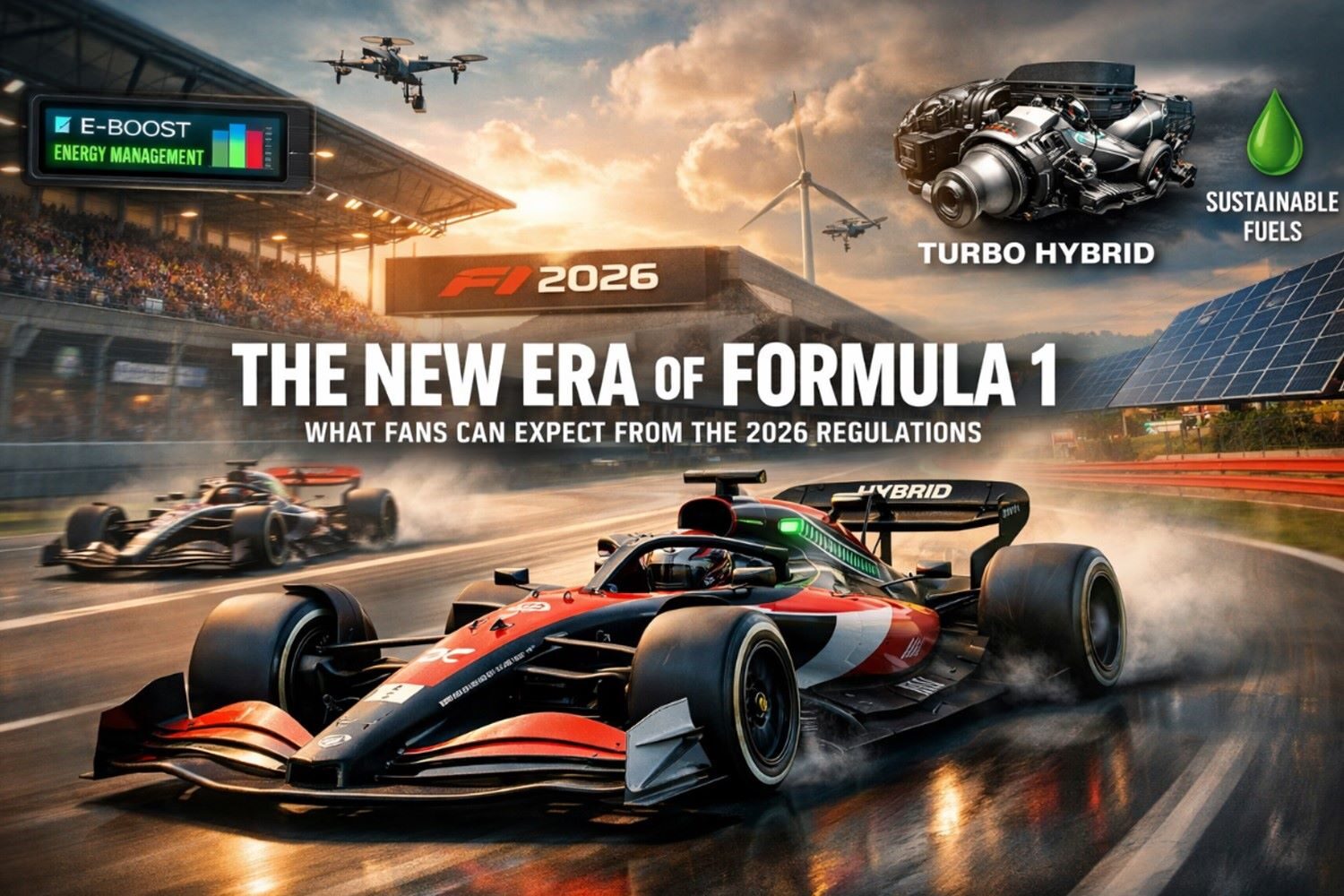
The Hidden Strategy Shift in F1 2026: What the New Regulations Really Mean for Fans
The 2026 F1 regulations have been discussed within the Formula 1 community for several years. However, most publications are limited to technical announcements – new engine requirements, the transition to other types of fuel, and changes in aerodynamics. The list of details often misses the main point: how the innovations will affect the race itself and what viewers will see on their screens on Sunday.
F1 fans have moved from the observation phase to the active support phase for their favorite drivers. They analyze strategies, calculate lap times, and compare tire compounds. A similar approach is used by users who choose all casino sites based on odds and probability mathematics. In both cases, it is necessary to understand the specifics of what is happening, rather than just watching the result. A deep dive into the processes of F1 is essential, because the races will become so complex that without an understanding of the basic principles of the new era, half of the events on the track will seem like a surprise.
We offer an analysis of the main changes and their impact on what happens between the start and finish. We will not be discussing the formal points of the regulations, but how the new rules will affect the pace of the race, team strategies, and the nature of the battle on the track.
Why the 2026 Formula 1 Regulations Create a New Kind of Race Strategy
From 2026, the world championship for circuit racing will switch to technical regulations that affect three areas: power units, aerodynamics, and chassis parameters. The new 2026 Formula 1 regulations require teams to use 100% sustainable synthetic fuel (e-fuel) in conjunction with hybrid power units with a total output of around 1000 hp. At the same time, DRS, the drag reduction system that has been in use since 2011, will be abolished. For drivers, this means revising the strategic models they have accumulated over a decade and a half.
Previously, teams managed two main variables: fuel consumption and tire condition. From 2026, a third parameter will be added: traction battery charge. This seemingly insignificant innovation will change the usual racing strategy.
| Parameter | Before 2026 | From 2026 |
| Electric power share | 20% | 50% |
| DRS | Drag reduction system (passive, zonal) | Active aero (X-Mode / Z-Mode, permanent) |
| Car width | 2000 mm | 1900 mm |
| Estimated weight | 798 kg | 768 kg |
How Energy Management Will Change Race Outcomes
Electric energy management is the least discussed topic in public debates about the new regulations. Most analysts have focused on engine modifications and the departure from MGU-H. Meanwhile, it is the F1 energy management strategy that will determine who will gain positions in the middle of the race and who will lose them in the final laps.
The Shift to 50 Percent Electric Power in F1 Engines
The new Formula 1 power unit changes define the parity between the internal combustion engine and the electric motor. The engine provides 50% of the total power, and the MGU-K electric component provides the other 50%. The MGU-H thermal recovery element is excluded from the regulations, which simplifies the design of the power unit and lowers the barrier to entry for new manufacturers (Audi and Ford). However, the requirements for battery management are becoming more stringent. Without the MGU-H, teams lose a convenient channel for recharging. Energy is recovered only through the MGU-K during braking.
The available reserve per lap will be about 9 MJ. This is a finite resource, the distribution of which per lap will become a separate discipline, similar to tire pressure management or fuel delta calculation.
Why Battery Deployment Could Decide Overtakes
Battery deployment in Formula 1 will become a full-fledged tactical tool. If a driver has used up their electric reserve in the first third of the race, their speed in the second half of the event will decrease regardless of the condition of their tires and fuel. Engineers on the pit wall see the picture in real time through the F1 energy deployment system, but viewers are still deprived of this context.
A typical scenario is two cars going nose to nose, one running at 65% charge and the other at 31%. Outwardly, there is no difference. But after two laps, the driver with the low SoC will start to lose 0.3-0.4 seconds in the acceleration sector, causing the drivers’ positions to change without any visible struggle. This is exactly what happens when an overtaking maneuver on screen looks unexpected.
The End of DRS and the Rise of Strategic Overtake Modes
The cancellation of DRS is one of the most discussed decisions in the new regulations. Critics of the system considered it artificial. It created predictable overtaking in strictly designated areas. Supporters objected because, without DRS, close racing in aerodynamically turbulent air is impossible. The FIA decided not just to remove DRS, but to replace it with a fundamentally different aerodynamics control mechanism, which will inevitably affect the dynamics of the battle for positions.
How the New Overtake Mode Works in 2026
Instead of DRS, the regulations introduce active aerodynamics Formula 1 with two operating modes:
- Z-Mode – a configuration with high downforce for slow and medium sectors;
- X-Mode – a configuration with minimal drag for high-speed sections.
The switch occurs automatically at a speed threshold, but teams can calibrate it for the track. The system works throughout the entire lap, not just in designated zones. This is its fundamental difference from DRS.
Overtaking mode F1 2026 means that every straight section of the track potentially becomes an overtaking zone. Predicting where the battle will take place becomes more difficult for both teams and spectators.
Why Passing May Become More Tactical Than Ever
Previously, attacks were based on catching up with an opponent in the DRS zone, opening the wing and overtaking on braking. Now the pattern has changed. The driver must approach the attack point with sufficient battery power, in the correct aerodynamic mode and on a trajectory that will not allow the opponent to respond immediately.
Teams begin planning their ‘overtaking window’ 3-5 laps in advance. They distribute energy consumption, develop braking tactics, and choose the moment to activate X-Mode. The battle for position now begins long before the actual overtaking.
Smaller Cars, Different Racing Lines, and New Track Dynamics
Among all the innovations of 2026, the change in car dimensions has received the least attention. Meanwhile, it affects where and how drivers will fight for position. A difference of just 100 mm on narrow tracks affects cornering geometry and opens up new points of attack.
Why Reduced Car Width Changes Corner Battles
The width of the cars is reduced to approximately 1900 mm compared to 2000 mm for the current generation. On tracks with narrow sections, such as Monaco, Singapore and Bahrain, drivers gain additional space to maneuver in corners. This increases the number of points where overtaking is physically possible and reduces the number of sections where the car is forced to follow the only possible trajectory.
In a nose-to-tail situation, the reduced dimensions reduce the aerodynamic losses of the following car. This means that the attacking driver will be able to stay closer and longer before the braking point, which is the main condition for a successful maneuver.
How Lighter Cars Affect Tyre Degradation
The target weight of the new car is around 768 kg. This is approximately 30 kg less than the 2022-2025 generation cars. The reduction in load on the contact patch affects the thermal degradation of the tires. The rubber heats up more slowly and the operating temperature window widens. This means that a single pit stop is once again becoming a competitive strategy on tracks where it was previously unrealistic due to high wear. Formula 1 race strategy changes in this area are not theory, but a direct consequence of physics.
Why Data Analysis Will Matter More for Modern F1 Fans
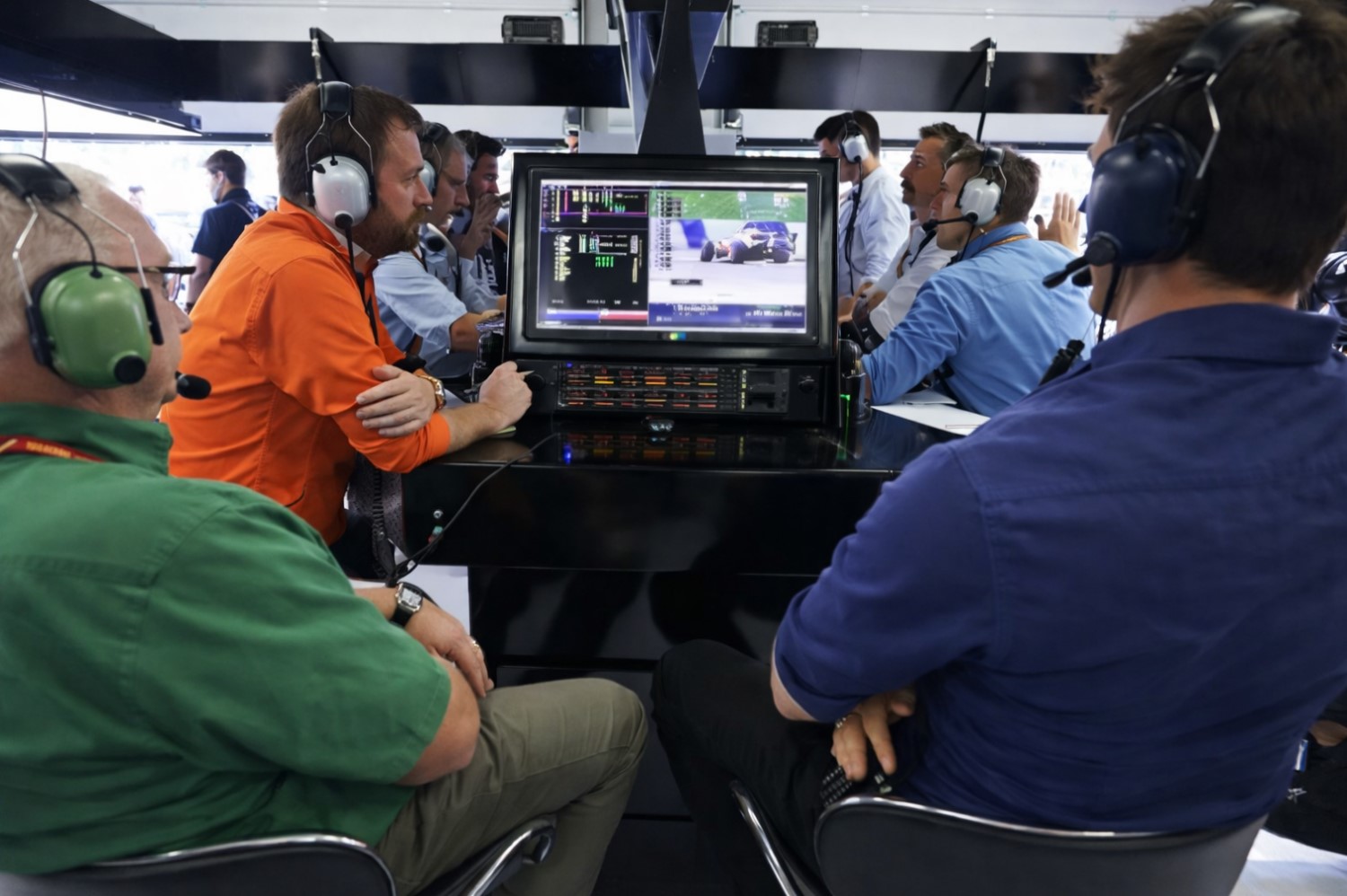
Energy management, active aerodynamics, extended overtaking zones – all of this happens on the track at the same time. It is impossible to understand why one driver loses position without access to data. So telemetry analysis Formula 1 is no longer just a tool for engineers. It is becoming an essential context for informed race viewing.
Key Telemetry Metrics Fans Should Start Tracking
Starting in 2026, F1 TV Pro broadcasts plan to include real-time visualization of energy balance. Here are the metrics to track first:
- The state of charge (SoC) at the entrance to each sector shows how aggressively the driver has used energy on the previous section.
- The time delta in X-Mode versus Z-Mode sectors allows you to assess which tracks active aerodynamics provide a real gain on;
- The distribution of recuperation by braking points indicates when the team is replenishing the charge and how much reserve remains for important sections.
Learning to Read Energy Deployment Graphs
The principle of reading energy graphs is simple. If a car enters an attacking sector with a SoC below 35-40%, the probability of a successful overtaking maneuver is low, even with a nominal speed advantage. Engineers see the picture over several laps and adjust their tactics. Fans who know how to read the same graph understand why a driver does not attack in situations where it would seem necessary.
What the 2026 Rules Mean for the Future of Formula 1
The 2026 regulations have led to a change in the specifics of the competition. Motorsport technology evolution is reflected in the fact that the physical speed of the car is no longer the only determining factor. System optimization comes to the fore, i.e. how to distribute the battery charge, when to switch the aerodynamic mode and at what moment to create a window for attack.
For fans, this means a new level of engagement. A superficial viewing is no longer enough. Without an understanding of the basic principles, half of the events on the track will seem random.
Key conclusions to start with:
- Battery charge replaces fuel as the main tactical resource in the race. It is SoC that determines the real potential for attack.
- Active aerodynamics create unpredictable but fairer overtaking conditions without fixed zones.
- The reduced size of the cars opens up new racing trajectories on classic tracks with historically limited space.
- F1 sustainable fuel technology and the transition to 50% electric power create metrics that are available to viewers directly during the broadcast.
The next step is to learn how to analyze energy data live on air. Then each race will transform from a spectacle into a problem with several variables, the solution to which will only become clear in the final laps of the race.