What Formula 1’s 2026 Rules Are Fixing, and What They May Be Breaking
Formula 1 did not tweak its formula for 2026. It tore it up and started over. The cars are smaller, lighter, and more aerodynamically active; the power units lean far harder on electrical deployment; the MGU-H is gone; the fuel is now advanced sustainable fuel; and overtaking has been reframed around a new mix of active aero, Boost, Recharge, and Overtake Mode.
On paper, the logic is coherent: make the cars more agile, make the technology more road-relevant, attract manufacturers, and create racing that is less about one giant DRS pass and more about tactical variation.
Related Article: Formula 1 Editorial: The Good, The Bad and the Ugly of the Current F1 Formula
That all sounds noble enough. But Formula 1 is not judged on PowerPoint slides. It is judged by what fans feel in their stomach when the cars arrive at high speed, by what drivers say when the visor comes up, and by whether the action feels earned rather than programmed. That is why the early reaction has been so divided.
Around wider motorsport and even unrelated gambling-style search traffic like betting and gaming queries such as inout games download, the appetite for fast, engineered spectacle is obvious. But F1 has always sold something more than pace and novelty. It sells authenticity, or at least the illusion of it. And that is exactly where the 2026 rules invite both admiration and suspicion.
For British fans especially, this debate lands differently. Formula 1 is not an abstract tech exercise in Britain; it is a weekly national conversation, a Silverstone pilgrimage, a pub argument, a paddock obsession priced in GBP and measured against memories of Senna, Schumacher, Hamilton, and the old high-commitment corners. The 2026 rules matter because they are trying to fix real problems: car size, dirty air, relevance, weight, and sustainability, while risking a subtler one: making Grand Prix racing feel a little too managed.
What the 2026 Rules Are Clearly Trying to Fix
The first thing worth saying in F1’s defense is that the old formula had drifted into a kind of contradiction. The cars were astonishingly fast, but too large, too heavy, and often too blunt in traffic. They impressed the stopwatch and sometimes bored the eye. The 2026 package is a direct answer to that.
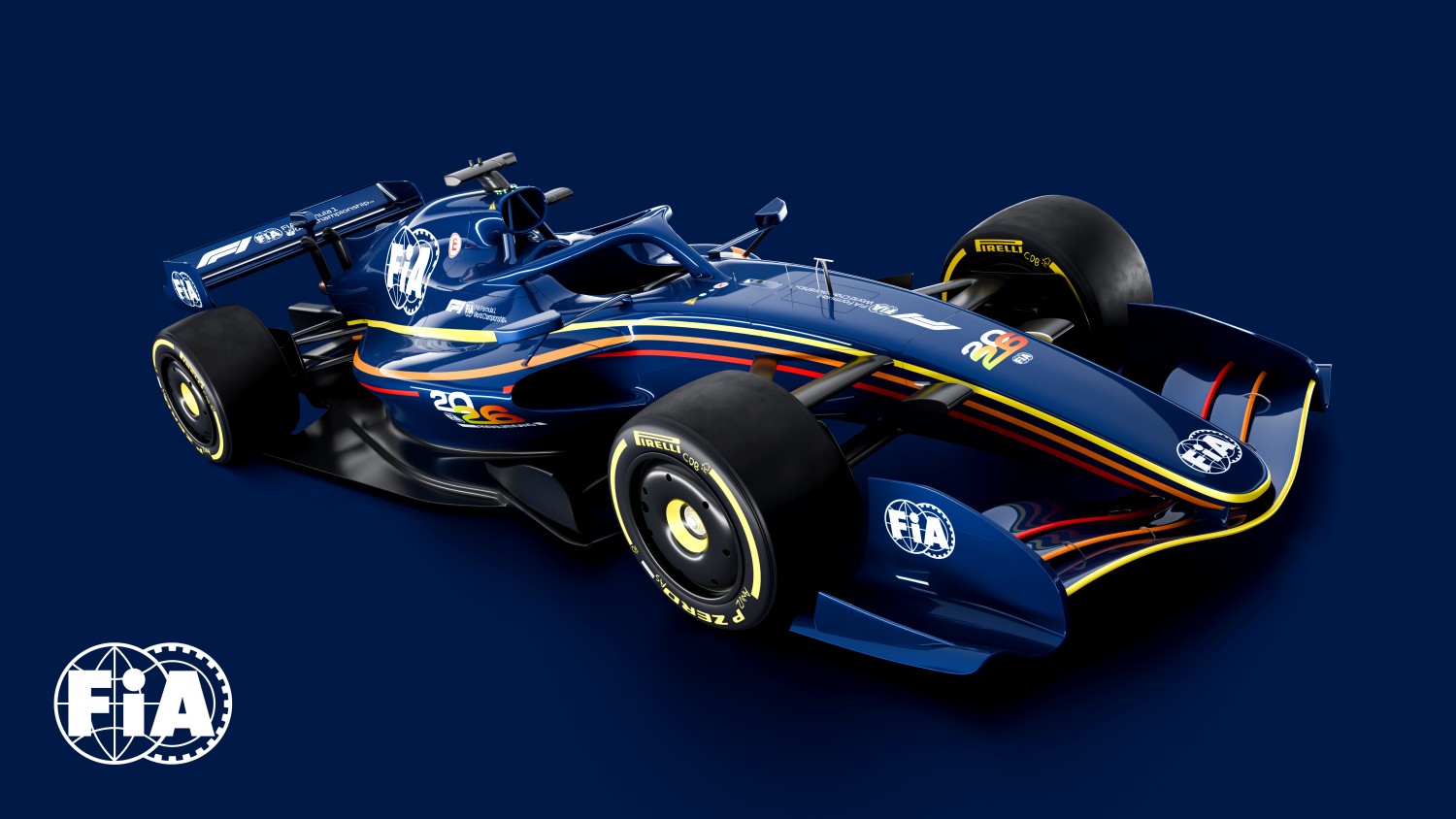
Formula 1 and the FIA have cut the maximum wheelbase by 200mm, narrowed the cars, reduced floor width, trimmed tire width, and brought the minimum weight down to roughly 768-770kg, depending on which official explainer you read. They have also introduced full-time active aerodynamics, with low-drag “Straight Mode” and high-downforce “Corner Mode,” precisely to make the cars less one-shape-fits-all and more adaptable through a lap.
There is also a serious engineering case for the power-unit reset. The MGU-H has been removed, the hybrid share has risen from roughly 20% to about 50%, and the MGU-K is now far more powerful at 350kW. F1 says this makes the engines simpler, more road-relevant, and more attractive to manufacturers; the new rules have indeed coincided with a broadened engine landscape including Audi and the Red Bull-Ford project, alongside Mercedes, Ferrari and Honda.
Just as importantly, all teams are running advanced sustainable fuels as part of the sport’s wider net-zero pathway. In pure policy terms, that is a meaningful success.
And then there is the overtaking question. F1 did not merely scrap DRS and hope for the best. It replaced the old binary flap-opening system with a more complicated toolset: active aero for everyone, Boost under driver control, Recharge logic, and a new Overtake Mode for a chasing car within one second at designated points.
The theory is elegant. Instead of one obvious passing zone and one obvious trick, the sport gets more variation in how energy is harvested and spent, with more opportunities for drivers to attack or defend in unusual parts of the lap. That could, in principle, produce more dynamic racing than the old “sit in the dirty air, open DRS, complete pass before the braking zone” routine.
There are also genuine safety gains hidden inside the less glamorous parts of the package. The stronger roll-hoop requirements and two-stage nose concept show that, even while trimming weight and dimensions, the FIA was not prepared to loosen impact protection.
That matters because “smaller and lighter” can sound romantically old-school until you remember modern F1’s safety baseline is non-negotiable. If 2026 can give fans a nimbler visual product without returning to the compromises of the past, that is not a trivial achievement.
A simple summary of the intended fixes looks like this:
| Problem F1 wanted to address | 2026 solution | Why it makes sense |
| Cars too big and heavy | Smaller dimensions, lower minimum weight | Better agility, better visual scale |
| Old PU formula had run its course | New hybrid-heavy PU, no MGU-H | More manufacturer appeal, more relevance |
| DRS had become too artificial in one specific way | Active aero + Boost + Overtake Mode | More varied attack/defense tools |
| Sustainability pressure | Advanced sustainable fuels | Better alignment with future road-tech goals |
| Safety standards had to hold while weight fell | Stronger impact protections | Keeps modern crash standards intact |
What the New Rules May Be Breaking
Now for the uncomfortable part: some of the criticism is not nostalgia talking. It is skilled drivers describing a real shift in what the job now demands.
Reuters reported several drivers saying the 2026 rules have “taken some of the bravery out of the sport.” Fernando Alonso lamented the loss of the old commitment through high-speed corners; Charles Leclerc described the racing as more strategic and more shaped by what happens “in the next straight, in two straights time”; Carlos Sainz objected to top speed decreasing mid-straight and to overtakes that no longer feel like “a real overtake of Formula One.”
That is not empty moaning. It is a warning that the center of gravity may be moving from driving on the limit to managing an energy puzzle at the limit.
This is where the 2026 package starts to feel philosophically tricky. Formula 1 has always contained artifice. Tyre compounds are artificial. Parc fermé is artificial. Fuel limits and hybrid maps are artificial. But great F1 usually hides its mechanisms well enough that the racing still feels primal. The danger in 2026 is not that the sport has become “too technical.”
It has always been technical, but that the mechanism has become too visible. When drivers lift and coast on straights to shape battery state for later, or when an overtake depends on a carefully staged energy window more than late braking courage, fans can start to feel they are watching an engineered sequence rather than a duel.
And that is exactly why the “Mario Kart” line, unfair though it may be, has landed. The early mixed reaction after Australia and China reflected a tension F1 cannot ignore: yes, some people enjoyed the extra overtakes, but others saw the energy modes as gamified racing rather than pure racing.
George Russell praised the new rules for making the racing feel more like karting, which he clearly meant positively. Yet the same Reuters coverage also noted criticism from drivers who felt the overtakes were becoming artificial. The same format can look inventive from one cockpit and synthetic from another.
There is also a drivability issue underneath the spectacle debate. If bravery is being traded for battery arithmetic, then the cars may become less satisfying even when the show becomes busier. A Formula 1 driver should absolutely manage systems; that has been true for years. But there is a line beyond which the machine starts dictating the race too visibly.
AutoRacing1’s recent editorial put it neatly: the 2026 rules contain “innovation and intrigue,” but the artificial feel of overtakes threatens the sport’s core appeal. That is the fear in one sentence. If the pass exists because the software, aero state, and battery allowance lined up just so, does the crowd still feel the old jolt of one driver outbraking another on nerve? Sometimes yes. Too often, maybe not.
The balancing act looks like this:
- Fixing the spectacle can accidentally make the spectacle feel manufactured.
- Fixing car size and drag can create new energy-management distortions.
- Fixing relevance can dilute the old heroic image of the driver.
- Fixing overtaking opportunities can make overtaking feel less organic.
That is not an argument against change. It is an argument against pretending every change is a free gain.
The Real Question: Better Racing, or Better Simulation of Better Racing?
The most revealing development is that the FIA already appears open to discussing changes after the opening races. AutoRacing1 reported Nikolas Tombazis confirming formal talks with teams after China on possible tweaks to energy-management rules, including options around superclipping, electrical power output, and combustion-engine balance. Whether or not every rumored adjustment happens, the important point is this: the rulemakers are not behaving as if the launch version is sacred. They know there is a risk that the sporting language of 2026 is not yet speaking fluently.
That flexibility is healthy. Formula 1 should not be embarrassed to admit when a concept works in simulation but feels awkward in racecraft. The sport’s history is full of technically brilliant ideas that needed human correction once real drivers started wrestling them at real circuits. The question is not whether 2026 is bold enough. It plainly is. The question is whether F1 still knows what kind of theater it is supposed to be. Motorsport is not only about efficiency, sustainability, or strategic complexity. It is also about legibility. Fans need to feel, almost instinctively, why a driver gained, lost, attacked, or defended. When too much of that drama disappears into battery-state choreography, the spectacle may become richer in events but poorer in meaning.
There is a version of this new era that works beautifully. Smaller, lighter cars could look more alive. Sustainable fuels and stronger hybrid relevance could future-proof the championship. Active aero could produce a less clumsy kind of passing than DRS ever managed. Drivers might even learn to weaponize the new systems in ways that become thrilling once fans understand the language of the racing. That is the optimistic reading, and it is not a foolish one.
But there is also a version that leaves the sport looking cleverer and feeling thinner. Too much lift-and-coast. Too much visible management. Too many overtakes that register as system-triggered rather than driver-forced. British fans, American fans, Italian fans, all of them can live with complexity. What they struggle to love is contrivance. They will forgive a strange-looking car faster than they will forgive a race that feels overdesigned.
So what are the 2026 rules fixing, and what may they be breaking? They are fixing some long-standing structural problems: car bloat, stale power-unit architecture, sustainability credibility, and the old one-note DRS rhythm. But they may also be breaking something softer and harder to recover: the feeling that a Grand Prix is decided first by raw racing instinct, not by who best navigates an elaborate control system. That does not mean the new formula is doomed. It means F1’s next job is not to defend the concept, but to refine it until the technology disappears back into the background, where the best racing always hides.