Automotive News: GM Suspends Next-Generation Full-Size Electric Truck Program
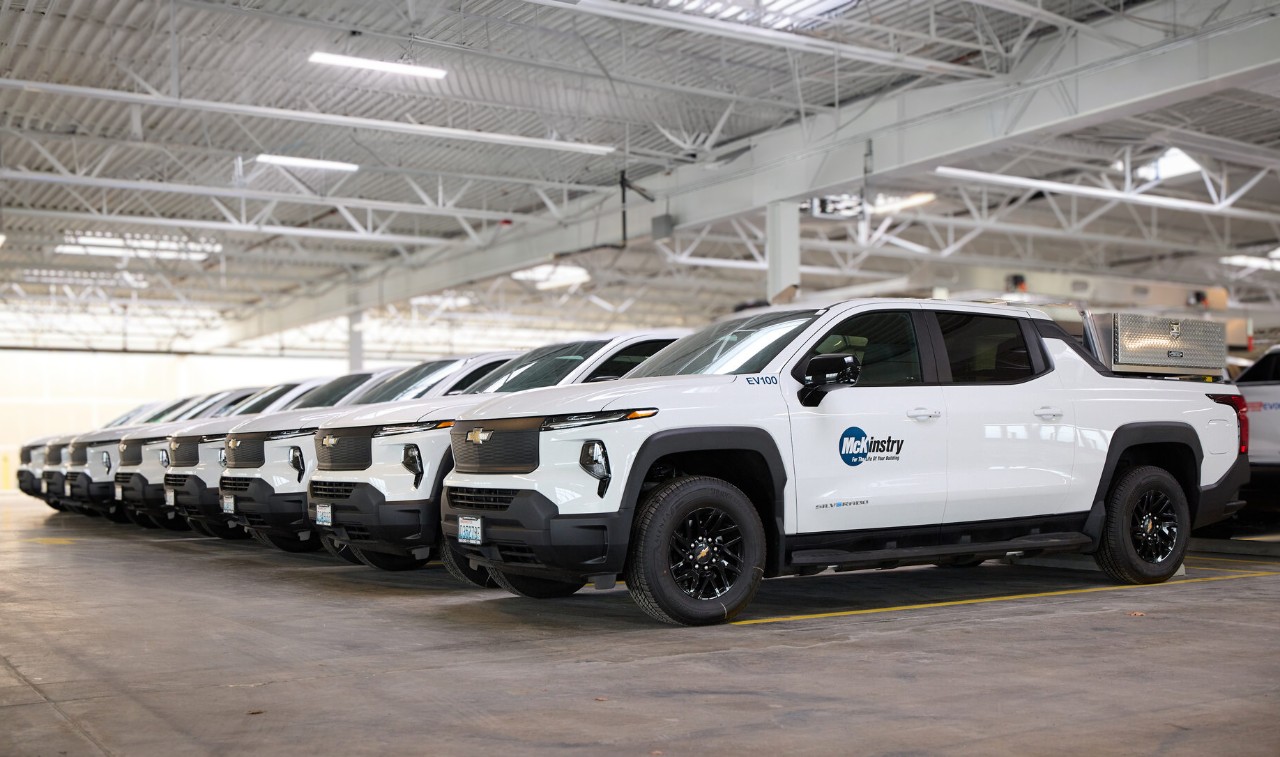
On April 21, 2026, Automotive News reported that General Motors (GM) has indefinitely suspended development of its next-generation full-size electric truck and SUV program. The decision affects refreshed, lower-cost versions of the Chevrolet Silverado EV (pictured), GMC Sierra EV, GMC Hummer EV (SUV and pickup), and related Cadillac Escalade IQ updates, which had been targeted for production starting in 2028. Suppliers were notified of the halt with no new timeline provided; analysts expect any successor models no earlier than 2030.
–by Mark Cipolloni–
Current-generation vehicles will continue production at GM’s Factory Zero plant in Detroit-Hamtramck. The move reflects broader industry challenges: declining EV sales following the expiration of federal tax credits, strong demand for gasoline trucks, and recent policy changes under the Trump administration. GM has recorded over $7 billion in EV-related impairment charges and is reallocating resources toward internal combustion engine (ICE) platforms, hybrids, and potentially extended-range electric vehicles (EREVs). GM maintains that “EVs remain the end game” and has not canceled existing electric truck models.
This report synthesizes the original article, corroborating coverage, sales data, financial impacts, operational details, and competitive context as of April 23, 2026.
Background on GM’s Full-Size EV Truck Program
GM invested heavily in its Ultium battery platform and dedicated EV manufacturing for full-size trucks and SUVs. Key launches included:
– GMC Hummer EV (pickup and SUV, starting 2022).
– Chevrolet Silverado EV and GMC Sierra EV (launched mid-2020s).
– Cadillac Escalade IQ (on the same architecture).
Factory Zero, a $2.2 billion conversion of the former Detroit-Hamtramck plant, was positioned as the flagship EV facility. Plans had called for Orion Assembly to support additional EV truck production, but those were scaled back earlier. The next-gen program aimed to introduce more affordable variants to broaden market appeal in the lucrative full-size pickup segment, GM’s most profitable vehicle line.
Details of the Suspension Decision
According to sources familiar with the plans (including supplier executives), GM halted work on the 2028 refresh program. The Escalade IQ is still slated for a Super Cruise “eyes-off” driving update in 2028, but broader next-gen electric truck development is paused. Resources are being redirected to a new T1-2 gasoline engine platform launching at Orion Assembly in 2027, along with potential plug-in hybrid (PHEV) variants of the Silverado and Sierra. GM has also engaged suppliers on extended-range EV (EREV) technology—similar to competitors—though no final decision has been made.
No new production timeline has been set. Analysts, including Sam Fiorani of AutoForecast Solutions, anticipate successors may not arrive until 2030 or later, preserving the existing platform’s utilization via models like the Escalade IQ.
Reasons for the Decision
1. Waning EV Demand: U.S. GM EV sales fell 19% year-over-year to 25,851 units in Q1 2026. Truck-specific figures were modest: Silverado EV (1,406 units, -41%), Sierra EV (1,288 units, +3%), Hummer EV (1,653 units, -52%), and Escalade IQ (1,443 units, -27%). Full-year 2025 totals showed some growth (Silverado EV ~11,275 units, +52%; Sierra EV ~7,996 units; Hummer EV ~15,788 units, +13%), but volumes remained low relative to gasoline pickups, especially after the $7,500 federal EV tax credit expired in September 2025.
2. Financial Pressure: GM recorded approximately $7.1 billion in Q4 2025 special charges related to EV strategy realignment (~$6 billion for North America EV plans, including $1.8 billion non-cash asset impairments and $4.2 billion in supplier settlements). Additional charges occurred earlier in 2025, bringing the total EV-related hit above $7 billion (some reports cite $7.6 billion). These reflect writedowns on battery supply deals and manufacturing assets.
3. Policy and Market Shifts: The Trump administration’s rollback of EV tax credits and easing of tailpipe emissions/fuel economy rules have reduced incentives and extended the runway for ICE vehicles. Strong gasoline truck demand (e.g., additional production days at other GM plants) contrasts with EV softness.
GM executives, including Senior Vice President Kenneth Morris, emphasized flexibility: “It’s enormously difficult to try to predict the future… But what you try to do is make sure you have flexibility so you can adapt.”
Operational and Production Impacts
– Factory Zero: The EV-dedicated plant has faced repeated challenges, including a permanent shift reduction (eliminating ~1,200 jobs in late 2025/early 2026) and a temporary full shutdown from March 16 to April 13, 2026, idling 1,300 workers. Production restarted April 13 but remains on a single shift aligned with demand.
– Orion Assembly: Originally eyed for EVs, the plant will now build gasoline trucks on the T1-2 platform, creating over 2,000 jobs and boosting local suppliers.
– Suppliers: Juggling EV, ICE, and hybrid programs amid uncertainty; some face contract adjustments.
Current EV truck production continues, supporting plant utilization and Cadillac’s lineup.
GM’s Official Position and Future Plans
A GM spokesperson stated: “GM has not cancelled any electric trucks. EVs remain the end game for GM and we’re firmly committed to our award-winning electric truck and SUV portfolio, along with our advanced technology roadmap.” The company has not disclosed specific next-gen plans and declined to speculate.
GM is exploring EREV options (battery-electric with a small gasoline generator) and PHEVs to address range anxiety while meeting customer needs in the pickup segment. Long-term, CEO Mary Barra and executives reaffirm EVs as the ultimate direction, but short-term pragmatism prevails given regulatory and market uncertainty.
Competitive Landscape
– Ford: Shifted from all-electric F-150 Lightning focus; planning EREV pickup for 2029.
– Ram (Stellantis): Launching Ram 1500 REV (formerly Ramcharger) EREV in 2026/2027, targeting up to 690 miles range and strong towing.
– Others: Rivian, Tesla (Cybertruck), and legacy automakers face similar demand softness; many are pivoting toward hybrids or range-extenders.
GM’s delay aligns with industry-wide recalibration.
Implications and Outlook
This decision provides short-term clarity and profitability focus for GM’s core truck business while keeping EV options open. Risks include ceding first-mover advantage in affordable EVs if demand rebounds, but it mitigates further financial losses amid policy headwinds. Factory Zero’s viability depends on sustained (if modest) current-model sales and potential EREV adaptations. Analysts view the “wait-and-see” approach as prudent given unpredictable regulations and consumer preferences.
Overall, GM’s move underscores the challenges of rapid electrification in a market still dominated by gasoline trucks, especially post-incentive changes. Long-term success will hinge on technological adaptability, cost reduction, and policy evolution.
Infrastructure, Electricity Costs, and Safety Criticisms of Electric Vehicles
Critics of rapid EV adoption—particularly for heavy full-size trucks like GM’s Silverado EV and Sierra EV—raise several concerns about fairness, costs, and externalities. These points have gained traction amid GM’s strategic pause and broader policy debates.
Road and Bridge Maintenance Funding Shortfalls
Traditional gasoline and diesel taxes (federal rate: 18.4 cents per gallon on gasoline) have long funded the Highway Trust Fund and state road repairs. EVs consume no fuel and thus contribute nothing via these taxes, leading to claims they do not pay their “fair share.”
The federal gas tax has not increased since 1993, exacerbating revenue shortfalls as vehicles become more efficient overall. States have responded with EV-specific registration surcharges (often $100–$250+ annually, with some proposals exceeding $260). Congressional Republicans have floated federal EV fees of up to $250 per year (or higher one-time amounts) to offset lost revenue and address the Highway Trust Fund’s projected deficits. Proponents argue this ensures all road users contribute proportionally; average gas-vehicle drivers contribute roughly $79–$88 annually in federal fuel taxes based on typical mileage.
However, analyses note EVs represent only a small share of the total fleet (roughly 2% of vehicles on the road), and such fees alone address just 1–3% of state transportation budgets in high-adoption areas—far from solving systemic underfunding driven by inflation, construction costs, and decades of deferred maintenance.
Impact on Home Electricity Costs
Widespread home charging of EVs increases residential electricity demand. JD Power’s 2026 U.S. Home EV Charging Study reported average monthly home charging costs rising to $63 (up $5 year-over-year), with satisfaction in charging costs declining. Nationwide residential electricity rates are projected to increase 4.2% in 2026, partly attributed to electrification (EVs, heat pumps) alongside data-center demand and natural gas price volatility.
Unmanaged evening charging can spike peak loads, prompting utilities to invest in grid upgrades that may be socialized across all ratepayers via higher base rates. Counter-analyses (e.g., from Synapse Energy) indicate that managed off-peak charging and time-of-use tariffs often generate net revenue for utilities, helping spread fixed costs and potentially moderating rate increases for all customers in states like Colorado and New Jersey. Still, the net effect remains debated, with some regions experiencing sharper localized bill impacts.
Heavy Weight and Damage to Roads and Bridges
Battery packs make EVs significantly heavier than comparable ICE vehicles—full-size EV pickups like the Silverado EV can weigh 1,000–2,000+ pounds more. Pavement damage is roughly proportional to the fourth power of axle weight, raising theoretical concerns of accelerated wear (some studies estimate 20–40% more stress for heavier light-duty vehicles, and up to 12% higher annual damage costs by 2050 in urban freight scenarios like New York City).
Bridges are particularly sensitive to gross vehicle weight. However, civil engineering experts emphasize that passenger cars and light trucks (even heavy EVs) contribute negligibly to overall road deterioration compared to commercial heavy trucks and semis, which dominate load-related damage. Localized impacts on older infrastructure or high-volume routes remain a policy consideration, especially as EV truck adoption grows.
These criticisms highlight ongoing tensions in the transition to electrification, even as GM and others maintain long-term EV commitments.
Sources: Primary reporting from Automotive News (April 21, 2026), Crain’s Detroit Business, GM sales data, SEC filings, and corroborating coverage from Electrek, Car and Driver, Reuters, and others (as cited). Data current as of April 23, 2026.