Top-10 Most Dramatic Finishes in Motorsport History
A dramatic motorsport finish is not the last lap. Not really. It is tire wear, fuel anxiety, a cloud moving across the circuit, dirty air behind a slower car, a radio message that comes too late, and a driver asking whether the machine still has one hard braking zone left in it.
That is the standard here. Margin matters, but only up to a point. The real test is historical weight, shock value, emotional violence, and the way a finish keeps getting argued about years later. Some races were decided by inches. Others detonated championships. A few looked impossible because the clock had already run for hours.
The Margins of Physics
Monza in 1971 belonged to a version of Formula 1 that modern engineers would struggle to recognize. No chicanes. Long straights. Slipstream battles at frightening speed. Cars did not separate cleanly by tire model or undercut window; they swarmed, breathed, ducked out of the tow and lunged again.
Peter Gethin won the Italian Grand Prix by 0.01 seconds over Ronnie Peterson, with the first five cars covered by 0.61 seconds. Half a second. Five cars. The move came out of the old Parabolica, the kind of corner that punished hesitation because the straight after it was too long to hide any mistake. Gethin later described the final lap in blunt terms: “don’t lift, don’t lift.” That was not romance. That was survival with opposite lock wound into the steering wheel.
Darlington in 2003 brought the same physics into a meaner room. Ricky Craven’s No. 32 Tide Pontiac Grand Prix and Kurt Busch’s No. 97 Ford were not polished weapons by the final lap. They were used-up stock cars, scraped raw against Darlington’s abrasive surface, the right sides marked by the wall and the tires smoking from contact and heat. Craven went low off Turn 4, Busch came down, and for a moment the two cars looked welded together.
The official margin was 0.002 seconds. A few inches. Fox’s broadcast caught the disbelief better than any clean sentence could. “Have you ever?” Mike Joy asked. Darrell Waltrip answered: “No, I’ve never!” Busch later remembered looking across the window nets and realizing what the scoring line would show: “Oh, man, he’s ahead of mine.” That is Darlington. It tells the truth late.
Indianapolis in 1992 had less bodywork violence but more dread. Al Unser Jr. held off Scott Goodyear by 0.043 seconds, still the closest finish in Indy 500 history. The cold day had already been ugly, with accidents and a race that looked ready to eat its own field. Goodyear had started last after being put into the race as a replacement, then nearly stole the whole thing. Unser’s voice cracked afterward: “You just don’t know what Indy means.” That line stayed because it did not sound prepared.
The Exhaustion of Endurance
Le Mans should not allow finishes this tight. Twenty-four hours ought to sort the field into something rational: the quick car breaks, the careful car survives, the brave car either becomes legend or debris. The 1969 race refused that order.
Jacky Ickx made his first statement before the race had properly begun. While the others sprinted across the track in the old Le Mans start, Ickx walked. Slowly. Deliberately. He was protesting a tradition that encouraged drivers to leap into cars and pull away before belts were properly fastened. It was a quiet act, but not a small one.
Then he raced for a full day and turned the protest into something harder to dismiss. Ickx and Jackie Oliver’s Ford GT40 beat Hans Herrmann and Gérard Larrousse’s Porsche 908 by roughly 120 meters after 24 hours. That is the cruelty of the number. Not a lap. Not minutes. A strip of road small enough to picture.
Endurance racing usually erodes drama. This one compressed it.
The Psychological Detonations
Brazil 2008 remains the great split-screen finish. Felipe Massa won at Interlagos and, for a few seconds, Ferrari believed he had won the world championship. The garage erupted. The crowd had its ending. Then Lewis Hamilton passed Timo Glock in the final corners and finished fifth, enough to win the title by one point.
The footage still works because the realization arrives late. Joy. Confusion. Arithmetic. Massa crossed the line as a winner and left the day as the man who had lost the championship at the last visible breath of the season. It was not failure in the normal sense. It was worse. It was timing.
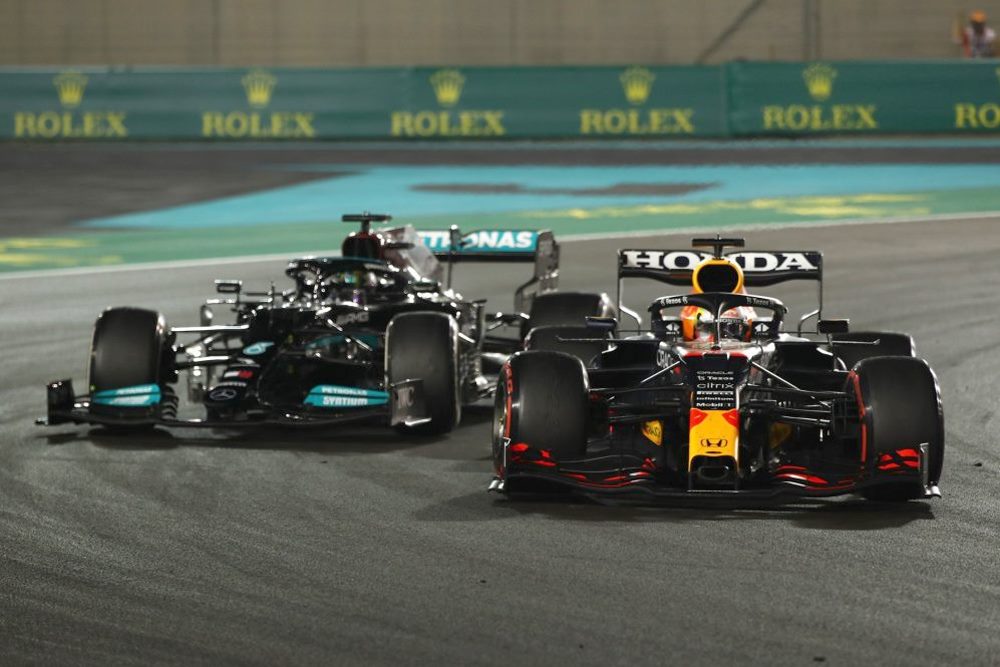
Abu Dhabi 2021 belongs in a colder category. A late Safety Car changed the title fight between Max Verstappen and Lewis Hamilton, Verstappen took soft tires, and the season was reduced to one green-flag lap. The pass came into Turn 5. Clean enough as a move. Not clean enough as a story.
Mercedes protested the classification. Verstappen took the title. Formula 1 carried the argument into the winter and never really put it down. Some finishes become famous because everyone agrees on their greatness. Abu Dhabi became permanent because nobody could stop relitigating it.
The Analytics of Chaos
Ask any pit wall strategist and they will tell you racing is high-speed gambling with laptops, tire blankets and people pretending they are calmer than they are. A sudden shower at Turn 3, a blistered right-front tire, a mechanic fumbling a wheel nut, a Safety Car that lands one lap too early – that is the sport stripped of ceremony. Fans understand that feeling because they watch the same chaos from the outside. The word casino fits that emotional territory only if the distinction stays clear: slots and fast games run on RNG outcomes, RTP variance and house edge, while motorsport lives on evidence that accumulates lap by lap. A slot spin forgets the previous spin. A race never forgets a flat-spotted tire.
Live motorsport betting sits somewhere between instinct and homework. The lazy read is to chase the leader; the smarter read is to watch stint length, sector pace, pit windows, traffic, weather radar and the likelihood of a yellow. A fan checking Melbet download before a Sunday race is not just looking for a button to press; the practical need is fast mobile access to live odds, account controls and bet-slip timing while the session is changing. The app is useful only when the viewer already knows what the timing screen says. If a leader reports vibration and the market barely moves, that is information. If rain appears on radar and everyone starts guessing, that is noise.
The Shock Value Matrix: Top 10 Finishes Ranked
| Rank | Finish | Series/Event | Margin or Turning Point |
| 1 | Peter Gethin beats Ronnie Peterson | 1971 Italian Grand Prix | 0.01 seconds; top five covered by 0.61 seconds |
| 2 | Lewis Hamilton denies Felipe Massa | 2008 Brazilian Grand Prix | Hamilton passes Glock late and wins the title by one point |
| 3 | Max Verstappen passes Lewis Hamilton | 2021 Abu Dhabi Grand Prix | Last-lap title pass after late Safety Car |
| 4 | Ricky Craven beats Kurt Busch | 2003 Darlington | 0.002 seconds after contact to the line |
| 5 | Al Unser Jr. beats Scott Goodyear | 1992 Indianapolis 500 | 0.043 seconds, closest Indy 500 finish |
| 6 | Jacky Ickx beats Hans Herrmann | 1969 24 Hours of Le Mans | Around 120 meters after 24 hours |
| 7 | Jenson Button catches Sebastian Vettel | 2011 Canadian Grand Prix | Vettel runs wide late after a rain-hit four-hour race |
| 8 | Alain Prost survives Adelaide chaos | 1986 Australian Grand Prix | Mansell tire failure swings the world title |
| 9 | James Hunt survives Fuji | 1976 Japanese Grand Prix | Hunt wins the championship by one point |
| 10 | Kevin Harvick beats Mark Martin | 2007 Daytona 500 | Final-lap Daytona pass amid late-race chaos |