Factors to consider when choosing the size Fuel Cell for your race car build
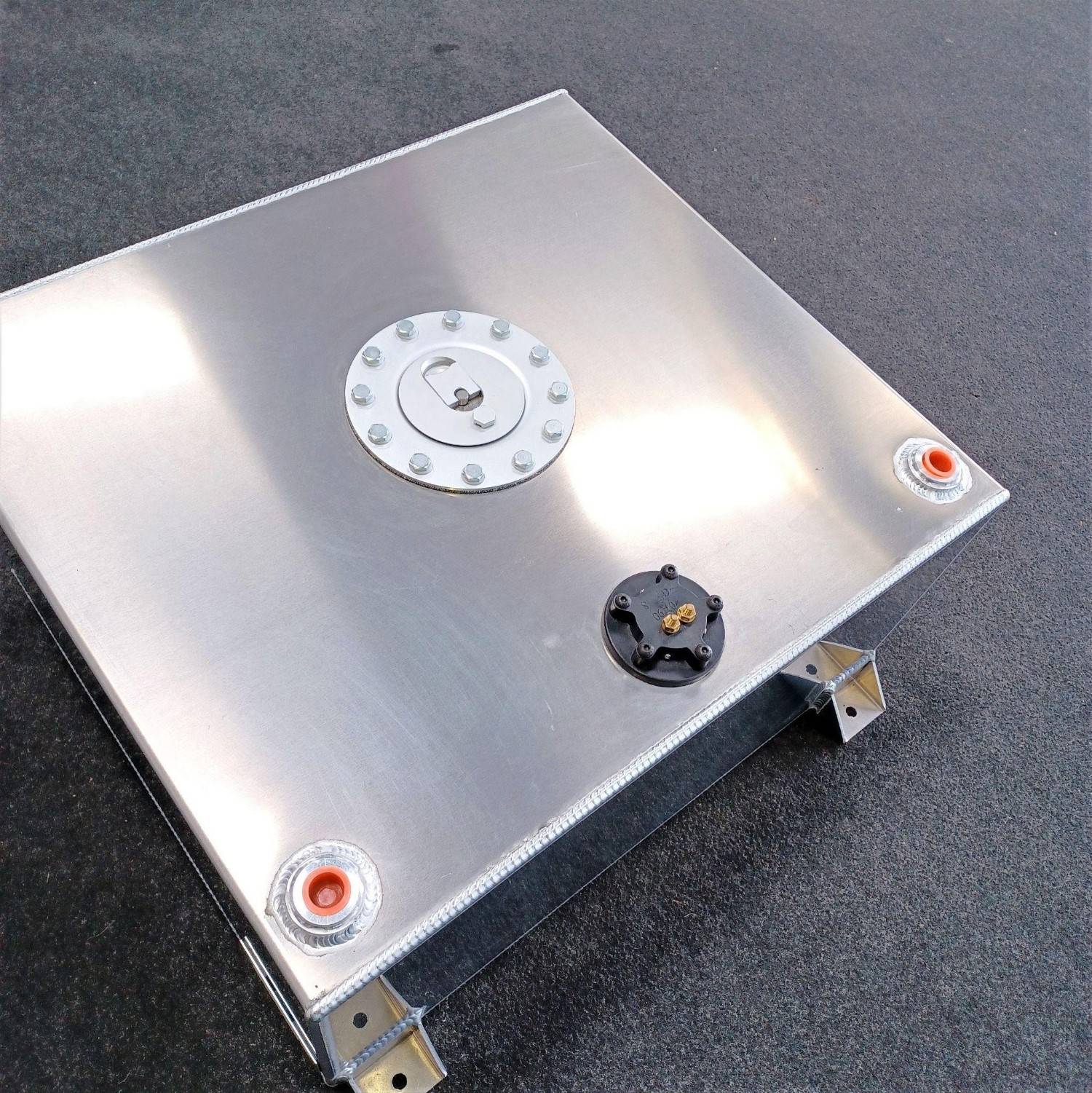
The wrong fuel cell (pictured) size doesn’t just cost money, it can end a race weekend before it begins. Fuel delivery failures are among the most common mechanical causes of engine damage in track environments, and most of them trace back to decisions made before the car ever turned a lap.
The specialty-equipment performance parts market has grown to $52.3 billion in annual sales, with engine and performance products alone accounting for over $12.5 billion of that figure which means more builders are making this choice than ever. Getting it right requires understanding what actually drives the size decision, which has almost nothing to do with preference.
What a Fuel Cell Does That a Stock Tank Cannot
A purpose-built fuel cell is not a gas tank with a different name. The internal foam baffling inside a race cell suppresses fuel slosh lateral movement that starves a pickup under hard cornering or braking while also reducing vapor accumulation that can ignite in an impact. The bladder or aluminum construction maintains fuel containment under conditions that would split a stamped steel OEM tank. These are not upgrades. They are the minimum threshold for any car that will see sustained performance driving, because the OEM tank was engineered for smooth roads and predictable g-loads, not sustained lateral forces at speed.
How Much Fuel Your Engine Actually Burns
Sizing starts with math, not intuition. The baseline for a naturally aspirated gasoline engine is roughly 0.50 lbs of fuel per horsepower per hour, a figure known in engineering circles as brake-specific fuel consumption. For a 400hp naturally aspirated engine, that works out to approximately 32 gallons per hour at wide-open throttle. A 20-minute track session at full effort burns roughly 10 to 11 gallons. A 10-gallon cell under those conditions leaves almost no margin.
Forced induction changes the equation significantly. A boosted engine running E85 can see BSFC values climb toward 0.90 or higher, nearly doubling fuel demand versus a comparable naturally aspirated setup at the same horsepower figure. Builders who add a turbo or supercharger after the cell is already installed frequently discover the hard way that what worked at 350hp becomes marginal at 500hp and dangerous at 600hp.
Where the Cell Has to Live
Physical fitment constrains the decision more than builders expect. A 10 gallon fuel cell in a common rectangular aluminum format typically around 17 by 13 by 10 inches fits into most sedan trunks without major fabrication. The rear floor pan can usually accommodate it with steel strap mounting and minimal cutting. A 20-gallon cell requires a committed home: a tube-chassis build with a stripped interior, a cage-equipped car with the rear seat deleted, or a dedicated race car where trunk space was never a design priority.
Weight distribution matters here too. Gasoline weighs approximately 6.1 lbs per gallon. A 20-gallon cell at full capacity adds roughly 122 lbs to the rear of the car. On a road course or autocross course, that shifts handling balance measurably and as the fuel burns off over a session, the balance shifts again. Builders chasing setup consistency often find that a smaller cell, refueled more frequently, gives them a more predictable car lap over lap.
What the Rulebooks Require and Where Sizing Decisions Get Made
Sanctioning bodies don’t leave cell sizing to judgment. SCCA road racing regulations require fuel cells meet FT3 or higher FIA certification, meaning the bladder must withstand a minimum of 450 lbs of tensile and puncture force. NASA’s Club Competition Regulations carry similar material and mounting requirements, and cells that clear one organization’s tech inspection don’t automatically pass the other’s. Both organizations specify enclosure material minimums 0.036-inch steel or 0.059-inch aluminum and mandate that the cell be fully separated from the driver compartment.
Capacity limits vary by class, and some classes cap cells well below 20 gallons. Builders doing dual-use builds — street cars that also compete at club events face a more compressed decision window than pure race car builders do.
Evil Energy, which manufactures aluminum fuel cells in configurations from 1 to 20 gallons, sees this tension play out consistently among builders. Their 20 gallon fuel cell is most often chosen by builders running dedicated race cars or heavily boosted street/strip builds applications where capacity and certification both matter. “The mistake we see most often is builders sizing to where the car is today, not where it’s going,” said a company representative. “A 10-gallon cell is the right answer for a lot of builds but the moment you add boost, your fuel demand doesn’t go up a little, it roughly doubles. Builders who think one power level ahead don’t have to tear apart a finished car six months later.”
The observation reflects a real pattern in dual-use builds, where engine power tends to grow faster than the rest of the fuel system. NHRA drag racing compounds this further with its own layered requirements around rollover valves, cell mounting geometry, and material certification any of which can invalidate a cell that was perfectly legal under a different ruleset.
The Safety Standards Behind the Ratings
The certification ratings stamped on a fuel cell bladder FT3, FT3.5, FT5 reflect the results of standardized puncture and tear-resistance testing, not marketing tiers. FT3 is the floor for most sanctioned club racing, requiring 450 lbs minimum. FT5, required in Formula 1, demands the material survive 2,000 lbs of puncturing force. These numbers exist because fuel cell failures in crashes produce fires, and the material between the bladder and a compromised enclosure is the last line of containment.
One timing detail many builders miss: FIA certification carries a five-year expiration from the manufacture date, with a two-year recertification option bringing the maximum cell lifespan to seven years. A cell purchased on a budget and installed as a long-term solution may be out of certification and therefore out of compliance before the build reaches its final form.
How Weight Changes the Competitive Calculus
For drag racers, the size-weight tradeoff is a strategic variable, not just a logistics problem. The difference between a full 10-gallon and a full 20-gallon cell at the start line is roughly 61 lbs all of it sitting over the rear axle. In bracket racing, where consistent elapsed times matter as much as raw speed, that weight penalty compounds across rounds. Many bracket racers deliberately run smaller cells and refuel between rounds to maintain consistent weight and consistent ET.
Road course builders face a related but inverted problem. A large cell that starts full and ends nearly empty produces a progressively lightening rear end across a session, which changes the car’s balance in ways that conflict with a fixed setup. Builders chasing a consistent mid-corner feel often prefer the smaller cell for this reason, accepting the need to refuel more frequently as a worthwhile trade.
The Decision, Made Simply
The 10-gallon cell is the right call for dual-use builds that split time between the street and short-format track events sprints, autocross, club-level drag racing. It fits most trunk applications without fabrication, keeps weight manageable, and satisfies the certification requirements of the most common sanctioning bodies. If the engine is naturally aspirated and the events run 20 minutes or less, the math works.
The 20-gallon cell belongs in dedicated race cars, endurance entries, heavily boosted builds running fuel-dense alternatives like E85, and off-road builds where range matters more than handling balance. It is not the conservative choice, it is the right choice when the application demands it.
The one mistake that costs builders both money and time is sizing the cell for the car they have rather than the car they are building toward. Fuel system components cell, pump, lines, regulator form a matched system. Change the power output substantially and most of that system needs to be revisited. Builders who answer the capacity question correctly on the first build rarely have to answer it again.