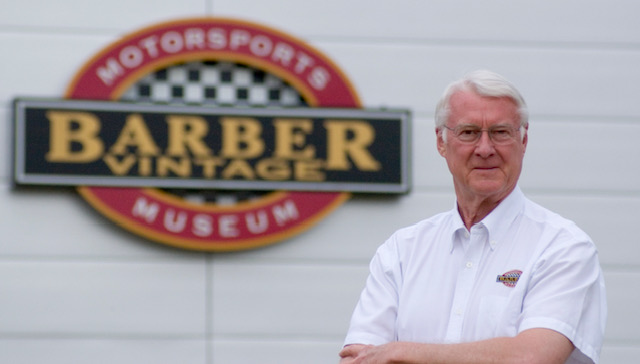
IndyCar News: IndyCar Back at Barber Motorsports Park – Honoring the Founder
This weekend, the NTT INDYCAR Series returns to Barber Motorsports Park for the 16th time. The 880-acre world-class facility near Birmingham, Alabama, will once again host the Children’s of Alabama Indy Grand Prix, with thrilling action promised on its challenging 2.3-mile road course.
However, one very important figure will be noticeably absent. George W. Barber Jr., the visionary founder of both the Barber Vintage Motorsports Museum and the park itself, passed away peacefully on February 15, 2026, at the age of 85.
A Birmingham native and Auburn University graduate, George Barber was a successful businessman, real estate developer, and generous philanthropist. He is best remembered as the visionary founder of both the Barber Vintage Motorsports Museum and Barber Motorsports Park.
Barber’s lifelong passion was collecting and preserving vintage motorcycles. Over the decades, he built an extraordinary collection that earned global recognition. In 2014, Guinness World Records officially named it the world’s largest motorcycle collection, with more than 1,400 motorcycles housed in the museum.
Autoracing1 spoke with Don Erwin, former Vice President of Barber Companies, about Mr. Barber.
“I actually first met George when I was doing economic development for Alabama Power back in 1997 or 1998, and at the time the museum was in an old warehouse of his in downtown Birmingham. And I started going down there, bringing business prospects, and that’s how I got to know him.”
“So at a certain point in time. I asked him, What are you going to do next? And he said, “Well, I want to build a bigger museum with greater visibility.” And I said I know a site you might want to look at. It’s for a project I worked on that never materialized. I took him out to the site where the Barber Park is now, and when he saw it, he said, “I want to build a museum, but I want to build a track as well.”
“ But you know, around the country, we see car museums and motorcycle museums, and they’re started by a founder, someone who’s really interested in motorcycles or cars. When that person dies, a lot of times, the children don’t share the same interest in that. And so the collection is sold off. And that’s the end of the museum.”
“George was never married. He didn’t have children, and the people that George picked, not just for the company, but for the museum and park, were kinda like his children. They were people with values and interests he felt would carry on his ideas.”
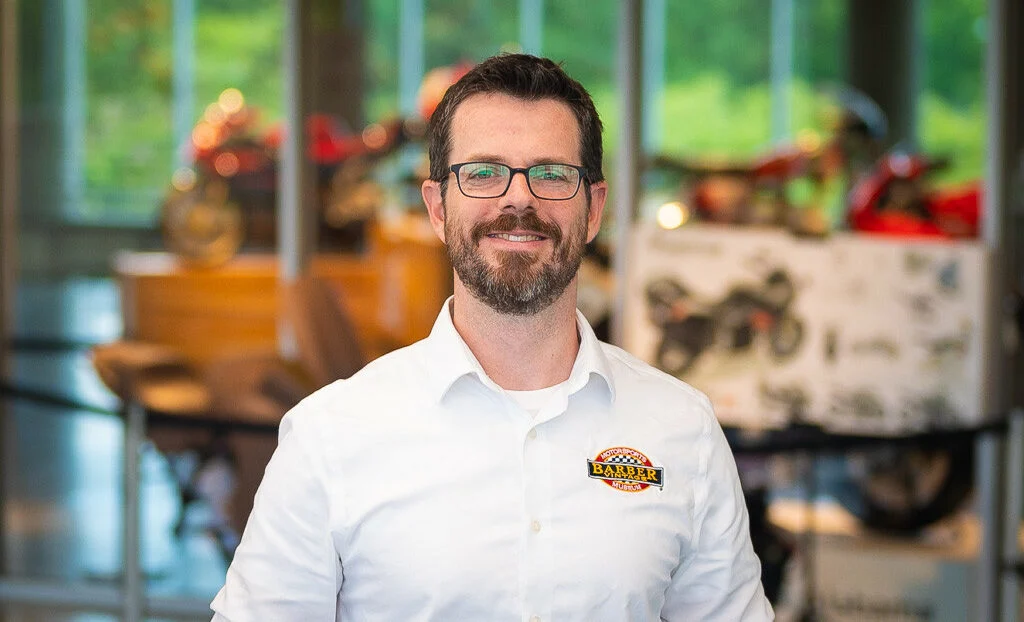
“For instance, the current Executive Director of the Barber Museum, Brian Case, originally started out as an industrial designer, but he had been involved with the design of two different motorcycles. The latest was the Motus motorcycle, which was built from scratch, including the engine.”
“The longest current employee may be a guy named Lee Clark, who specializes in restoring lotuses. The Barber Museum has the largest Lotus Racing car collection in the world. And so he is a liaison between classic Lotus Racing in the US and the UK. Or maybe Brian Slark, a 2012 AMA Hall of Fame Inductee. He’s actually a Brit who came to the US in the early 60s and was involved in off-road motorcycle racing in California for many years. Brian’s about 85 or 86 now and still works at the museum.”
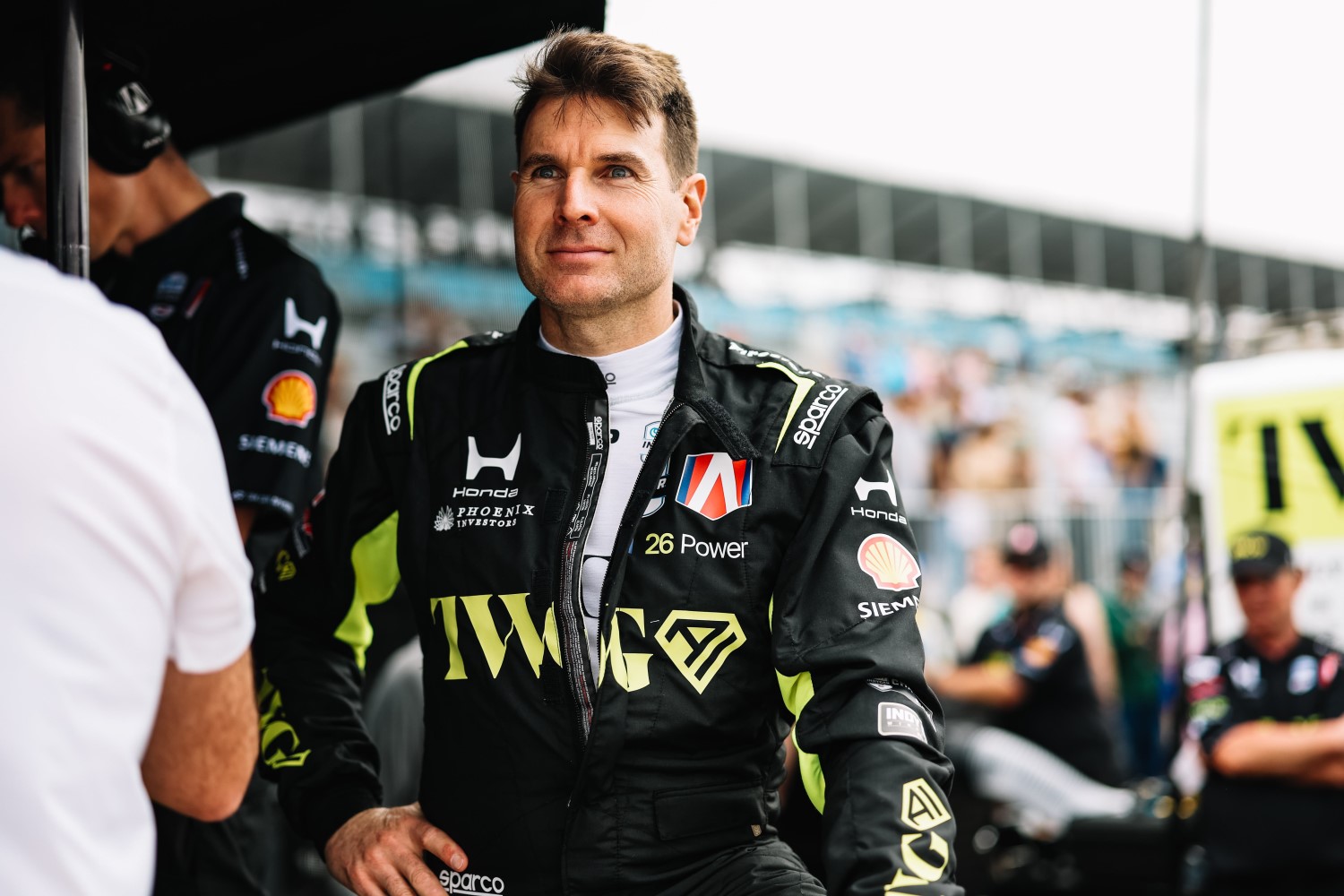
One driver in the series that has had success at this track is Will Power, driving the No 26 TWG AI Honda for Andretti Global. The Australian has two wins (2011, 2012) and four poles (2010, 2011, 2014, and 2017) on this road course.
Power was recently asked about his relationship with Mr. Barber.
“I’d always see George at the races, especially in the early days. He always says, If there’s anything I can do, anything to improve, please let me know. Such a lovely guy.”
“His passion for putting on an amazing event, or just the presentation of that track. You’ve got to walk through that museum. It’s amazing the way it’s presented and set up. The track you drive into is one of the nicest-presented tracks we go to. The way the grass is done, the barriers, everything about it. The cool sculptures they have around the track.”
“Yes, I was sad to hear the passing of George. I think we’re lucky to have George Barber put on that event for us from the beginning, and now it will be 16 years. He was
obviously a big fan of INDYCAR. ”
Mr. Barber’s legacy is one of turning big ideas into reality while lifting up the people and places around him.
This weekend, as IndyCar engines roar during the Children’s of Alabama Indy Grand Prix, the event will carry an extra layer of meaning — a celebration of the track’s beauty and excitement and a heartfelt tribute to the man whose vision and passion made it all possible.
By Lucille Dust