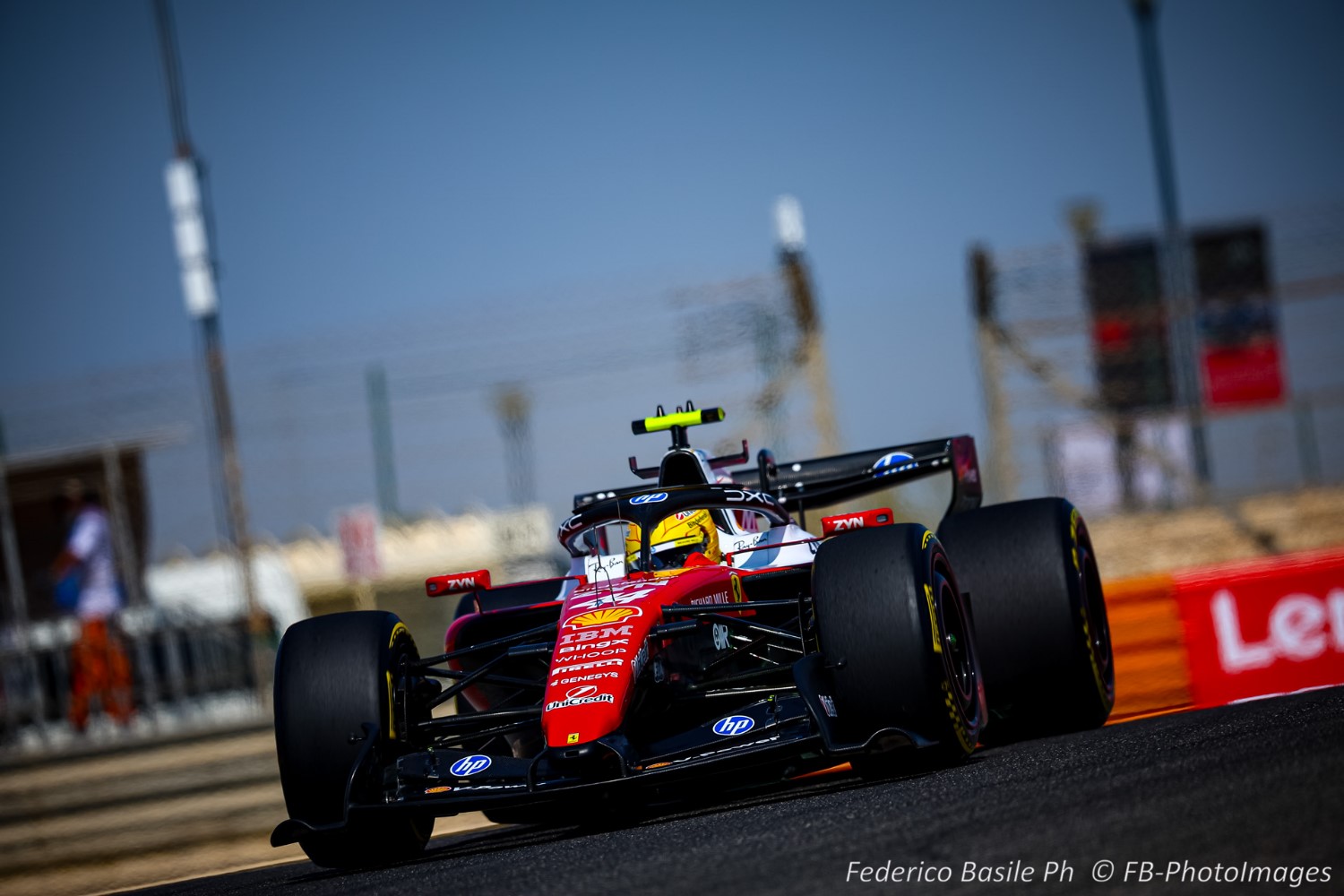
Formula 1 Editorial: Why Ferrari absolutely does not deserve an ADUO upgrade
Ferrari has spent the past several weeks quietly lobbying the FIA for an ADUO (Additional Development and Upgrade Opportunities) package ahead of the 2026 season. Their reason? A noticeable deficit in top-end horsepower and straight-line speed compared with Mercedes and at least one other rival.
–by Mark Cipolloni–
The request should be rejected outright. Not because Ferrari is “behind,” but because the shortfall is entirely self-inflicted — and the team knew exactly what it was signing up for.
The Deliberate Trade-Off Ferrari Chose
Under the 2026 power-unit regulations, the MGU-H is gone. That means the turbocharger must spool up using only exhaust energy and whatever electrical assistance the battery can provide. Standing starts—still the norm in Formula 1—suddenly matter more than ever.
Ferrari’s engineers made a clear, data-driven decision: fit a smaller turbocharger.
A smaller turbo spools faster, delivers boost almost instantly, and gives the car explosive acceleration off the line. That advantage is real and measurable. The downside is equally real and measurable: less peak airflow at high RPM, which directly translates into lower maximum horsepower and reduced top speed on long straights.
They knew this. The physics haven’t changed since the turbo era began. Larger compressor and turbine wheels move more air, allow more fuel, and produce more combustion power—at the cost of lag. Smaller wheels do the opposite. Every power-unit manufacturer on the grid faced the same graphs, the same trade-off curves, and the same 2026 regulations. Ferrari simply picked one side of the curve.
Mercedes, by all accounts, went the other way: larger turbo, higher peak power, willing to live with a touch more lag in exchange for crushing top-end speed. That was their call. No one is crying foul on their behalf.
Why ADUO Was Never Meant for This
The ADUO system exists as a light-touch balance-of-performance tool. If a manufacturer’s internal-combustion engine is genuinely lagging the benchmark by 2 % or more (measured by an FIA performance index), it can unlock extra homologation tokens and dyno hours to close the gap. It is designed to stop one or two teams from being left hopelessly behind through no fault of their own—not to let a factory reverse a strategic engineering choice it made with eyes wide open.
Giving Ferrari ADUO now would be the equivalent of letting a team that deliberately ran a short rear wing ask for extra wing tokens because they’re slow on the straights. It would reward the very decision they are now complaining about.
In short: Ferrari cannot have their cake and eat it too.
They cannot:
Prioritize launch performance over top speed, and
– Then demand regulatory assistance to recover the top-speed performance they willingly sacrificed.
That is not “catch-up” development. That is asking the FIA to rewrite the result of their own engineering meeting.
The Dangerous Precedent
If the FIA grants Ferrari’s request, it sends a terrible message to every other manufacturer: design whatever you like, ignore the performance trade-offs, and if it doesn’t work out, just ask for extra tokens. The entire point of the 2026 regulations was to force tough choices and let the best engineering win. ADUO was never intended to act as a “get-out-of-jail-free” card for those choices.
Mercedes, Red Bull Powertrains, and the other squads that optimized for peak power did so under the same rulebook. They accepted the risk of slightly slower launches in return for superior top-end performance. Handing Ferrari extra development now would punish the teams that made the opposite — and arguably braver — call.
Time to Stand Firm
Ferrari’s 2026 car will still have one of the best launches on the grid. That was the plan. If they now decide they also want Mercedes-level top speed without the corresponding engineering investment, they should go back to Maranello and earn it the old-fashioned way — on the dyno, not in the FIA offices.
The regulations are clear, the trade-offs were public, and the choice was Ferrari’s.
No ADUO. No exceptions. No cake.