Formula 1 Claims Second Place Among Global Sports Leagues in Sponsorship Revenue for 2025
Formula 1 has officially become the world’s second-biggest sports league by sponsorship revenue, according to the latest data from SponsorUnited. In 2025, the ten F1 teams collectively generated $2.54 billion in sponsorship income — a staggering 22.1% increase from the previous year and a $460 million jump that has dramatically narrowed the gap to the NFL.
–by Mark Cipolloni–
The full 2025 ranking looks like this:
1. NFL — $2.66 billion
2. Formula 1 — $2.54 billion
3. English Premier League — $2.02 billion
Just one year earlier, F1 sat at approximately $2.04 billion while the NFL led at roughly $2.5 billion. The gap has now shrunk from $360 million to just $120 million, signaling a remarkable commercial surge for the motorsport series.
How F1 Got Here: A Decade of Smart Growth Under Liberty Media
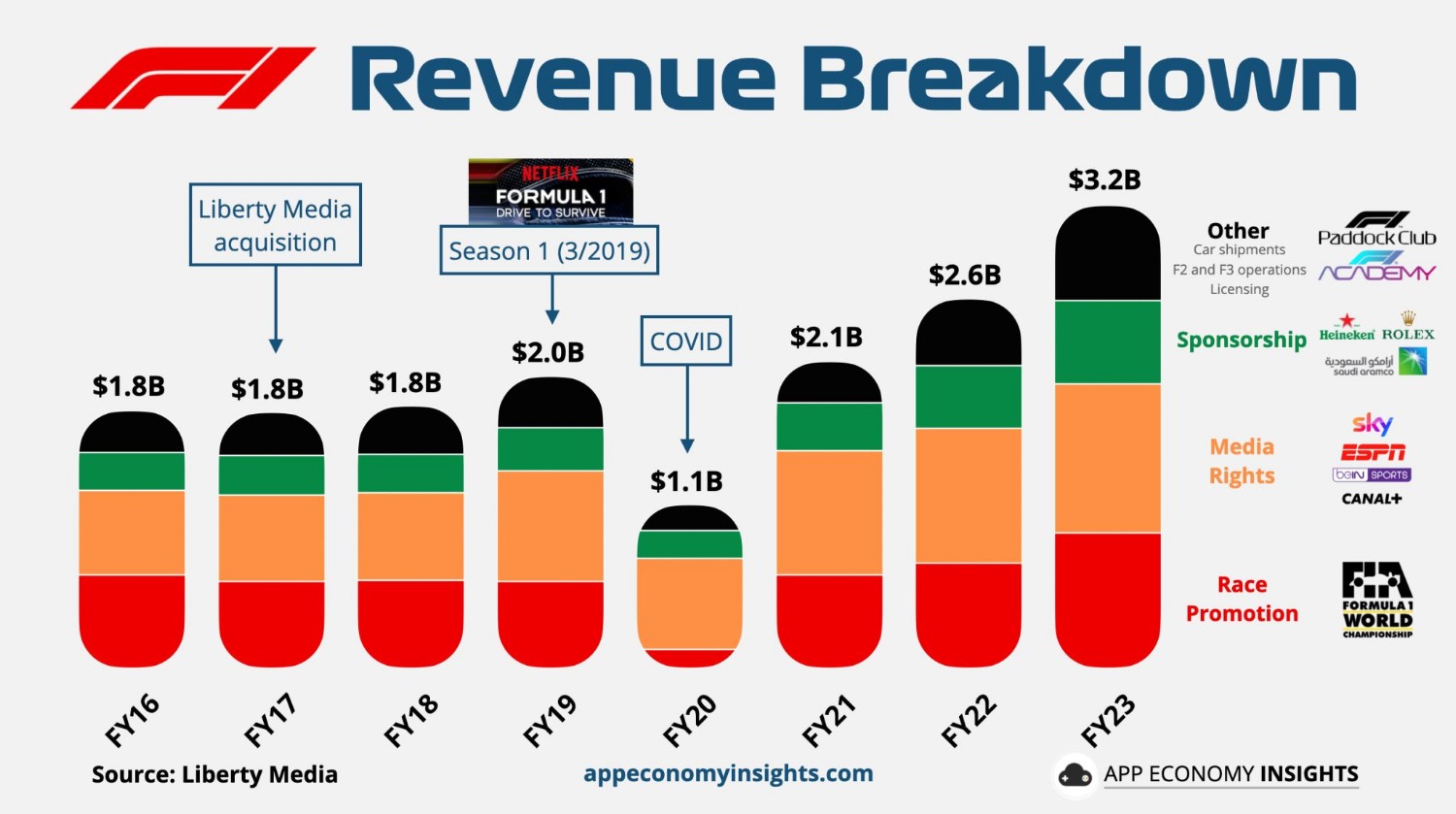
Since Liberty Media acquired the commercial rights to Formula 1 in 2017, the sport has undergone a transformation. The Netflix series Drive to Survive introduced F1 to millions of new fans, particularly in the United States. Expanded calendars, new races in high-growth markets, and a more accessible, glamorous image have turned the sport into a global marketing powerhouse.
SponsorUnited’s analysis shows F1 teams struck 382 sponsorship deals with 358 unique brands in 2025, up from 345 deals with 325 brands in 2024. The average F1 sponsorship deal is worth roughly $6 million — approximately eight times higher than the average NFL team deal. This premium pricing power comes from exclusive, high-visibility assets such as title sponsorships, sidepods, airboxes, and driver-worn branding that deliver unmatched global exposure.
Sector Breakdown: Tech and AI Lead the Charge
The technology sector dominated F1 sponsorship in 2025, contributing $769 million — a massive 40.8% year-on-year increase. AI companies have become particularly active, integrating directly into team operations rather than simply buying logo space. Financial services followed at $456 million, while apparel and accessories added $219 million. The fastest-growing category was hotel, restaurant, and leisure, which surged 62.4%.
Mercedes-AMG Petronas led all teams with an estimated $558 million in sponsorship revenue. The traditional “big four” — Mercedes, Ferrari, Red Bull, and McLaren — continued to command the largest shares, while Haas sat at the bottom of the 10-team grid.
Drivers as Media Platforms
SponsorUnited also highlighted how F1 drivers themselves have become powerful sponsorship assets. Charles Leclerc added the most social media followers (6.3 million), while Lewis Hamilton boasted the highest total reach at 60 million. Lando Norris and Franco Colapinto led in endorsement deals. The report noted that “drivers now rival teams as media platforms,” unlocking categories and audiences that teams alone cannot reach.
Context: Broader F1 Business Boom
While team sponsorship hit $2.54 billion, the F1 Group (promoter) itself generated additional sponsorship and commercial revenue as part of its overall $3.9 billion in total revenue for 2025. The sport’s total commercial ecosystem — including media rights, race promotion, and licensing — continues to expand rapidly.
For comparison, the NFL’s sponsorship model relies more on volume (32 teams and league-wide deals), while F1’s smaller grid delivers higher per-deal value and global reach. The Premier League, despite its massive television audience, trails both in pure sponsorship income at $2.02 billion.
What This Means for the Future of F1
This milestone cements Formula 1’s status as one of the most commercially dynamic properties in global sport. With projections suggesting total sponsorship spend could exceed $3 billion as early as 2026, F1 is no longer just chasing the NFL — it is closing in fast.
The combination of elite engineering, superstar drivers, cinematic storytelling, and premium brand partnerships has created a virtuous cycle. Brands aren’t just buying visibility; they’re buying innovation platforms, global storytelling opportunities, and direct access to affluent, engaged audiences.
As one SponsorUnited insight put it: the pricing power and deal quality in F1 are unlike anything else in sport. For a league once considered niche, that’s not just impressive—it’s a full-blown commercial revolution.
Formula 1 isn’t just racing anymore. It’s a $2.54-billion sponsorship juggernaut, and the gap to the very top is shrinking by the season.