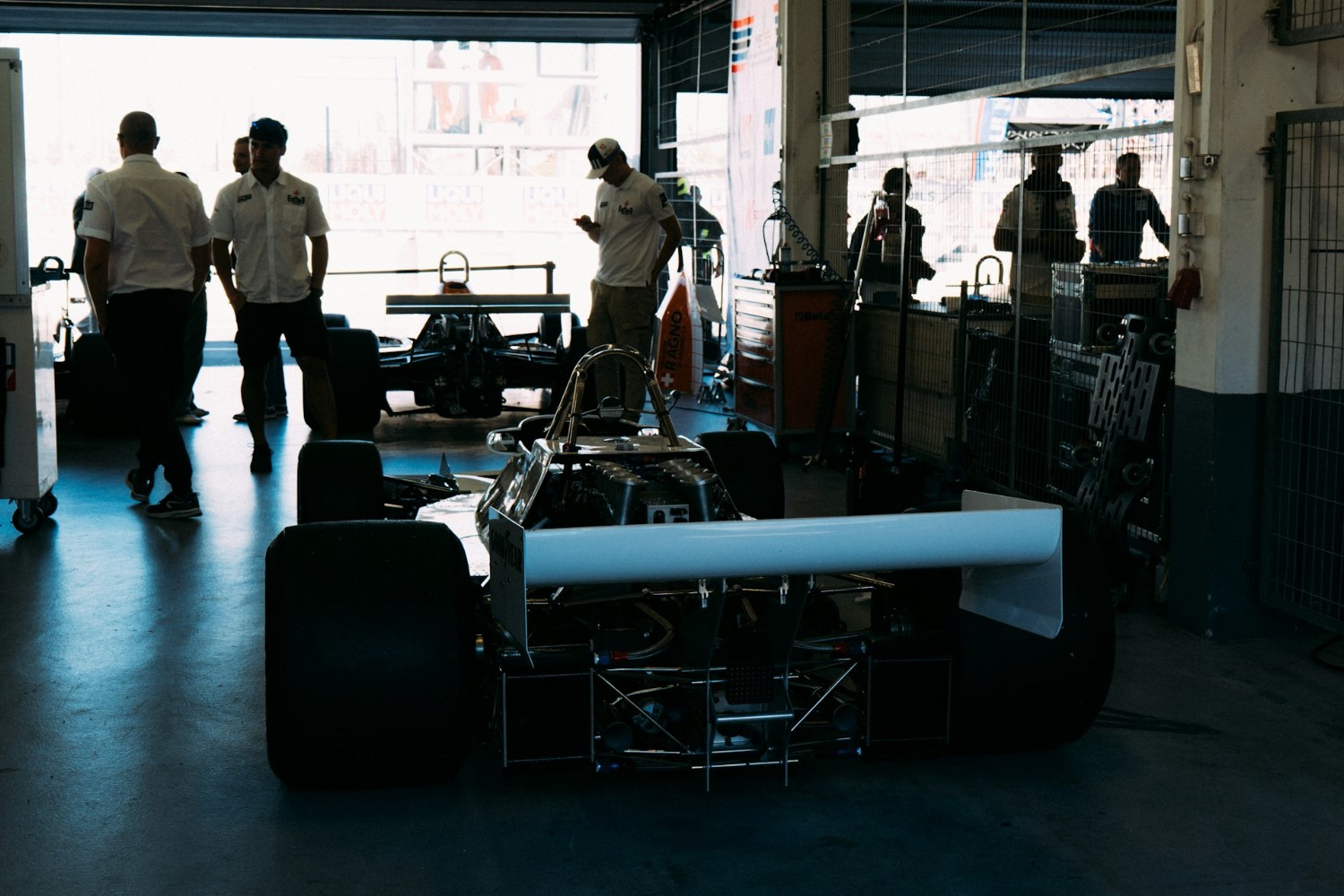
When something fails minutes before the Green Flag: The Hand Tools still deciding Race Weekends
Between final practice and the grid walk, a team has a repair envelope measured not in hours but in minutes. When a telemetry channel drops or a wastegate solenoid feed throws a code, the engineer’s first instinct is the laptop. The mechanic’s first instinct is the drawer with the hand tools.
Despite two decades of increasingly sophisticated race-car electronics, the physical repair interface has barely changed. Teams still run multi-pin Deutsch and AS connectors, still rely on hand-crimped ring terminals for battery and alternator work, and still route secondary looms through heat-shielded clearances no robotic arm can reach. The fastest repair in the paddock remains the one where a mechanic can get a narrow-jawed tool onto a connector and reseat it cleanly.
The electrical faults that still interrupt race weekends
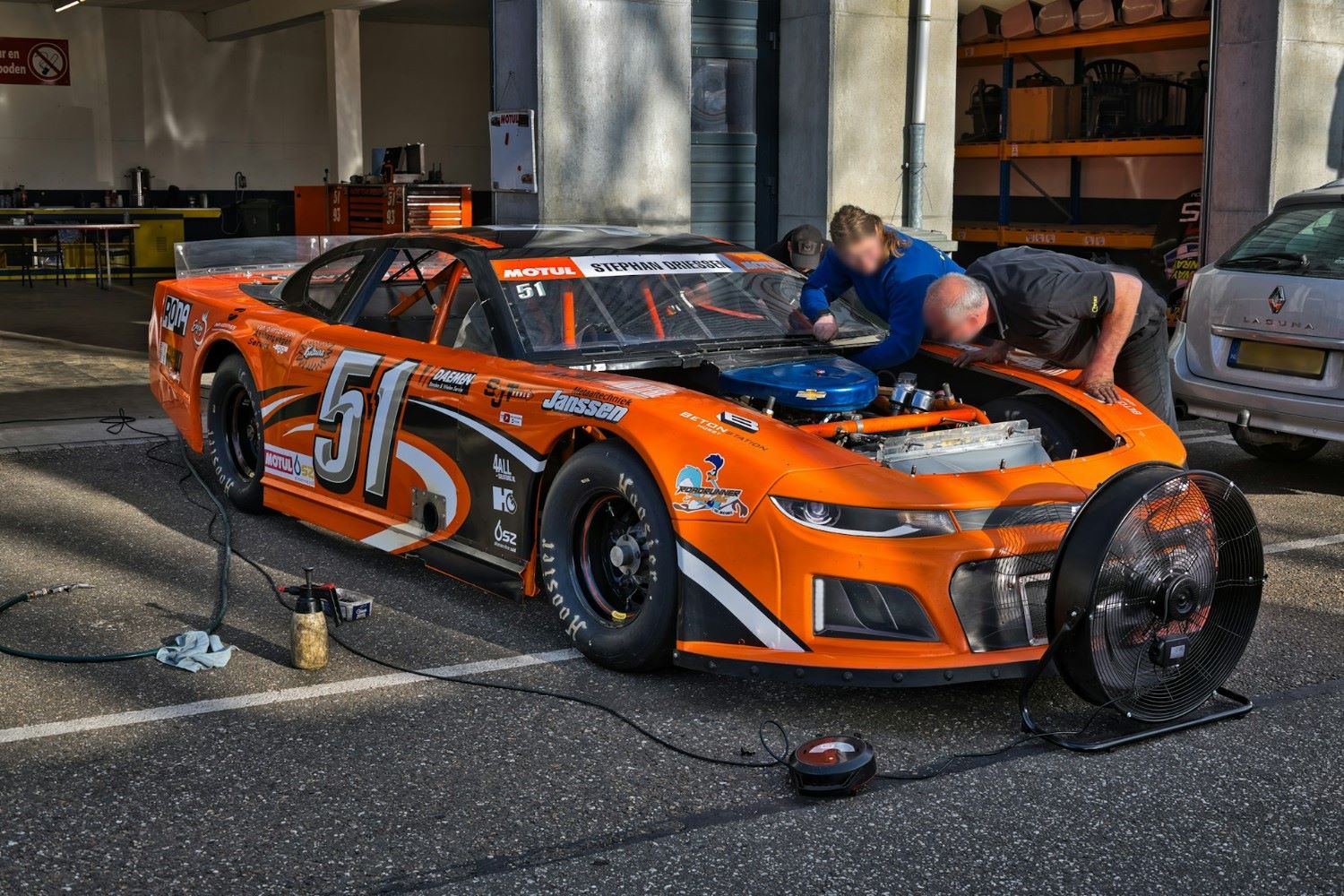
Pit crews report three recurring electrical repair classes that surface across practice, qualifying and race sessions:
- Reseating or replacing spade and pin terminals on secondary looms after a vibration-induced contact loss
- Pulling and inspecting fuses on safety-critical circuits such as fuel pump backup or electronic throttle redundancy
- Hand-crimping splice repairs on telemetry or sensor wiring after a chafe-through
None of these involve the primary ECU harness, which teams treat as loom-out-repair-only. All of them happen inside the same heat-shielded, carbon-composite engine bay that modern prototype and pro-spec race cars share. And all of them require a tool that can close on a small contact in a clearance of less than twenty millimeters.
Connector reseating in heat-shielded engine bays
The geometry matters. A typical Deutsch HD10 connector sits in a loom bundle routed through a kevlar-wrapped channel, with surrounding bodywork set at two to three centimeters of access clearance. A standard combination plier cannot close inside that envelope without the outer jaw fouling on the adjacent bracket.
A long narrow nose design sits inside the clearance envelope and closes cleanly on the terminal. The tool is what most trades call long nose pliers, sometimes needle-nose or snipe-nose depending on market convention. In a race context, the parallel-action variants are preferred over conventional scissor-action: the jaws stay parallel through the full grip range, so the terminal reshapes without being crushed at the tip. A crushed terminal that holds through practice will almost certainly fail intermittently during the race.
The tools pit crews still reach for
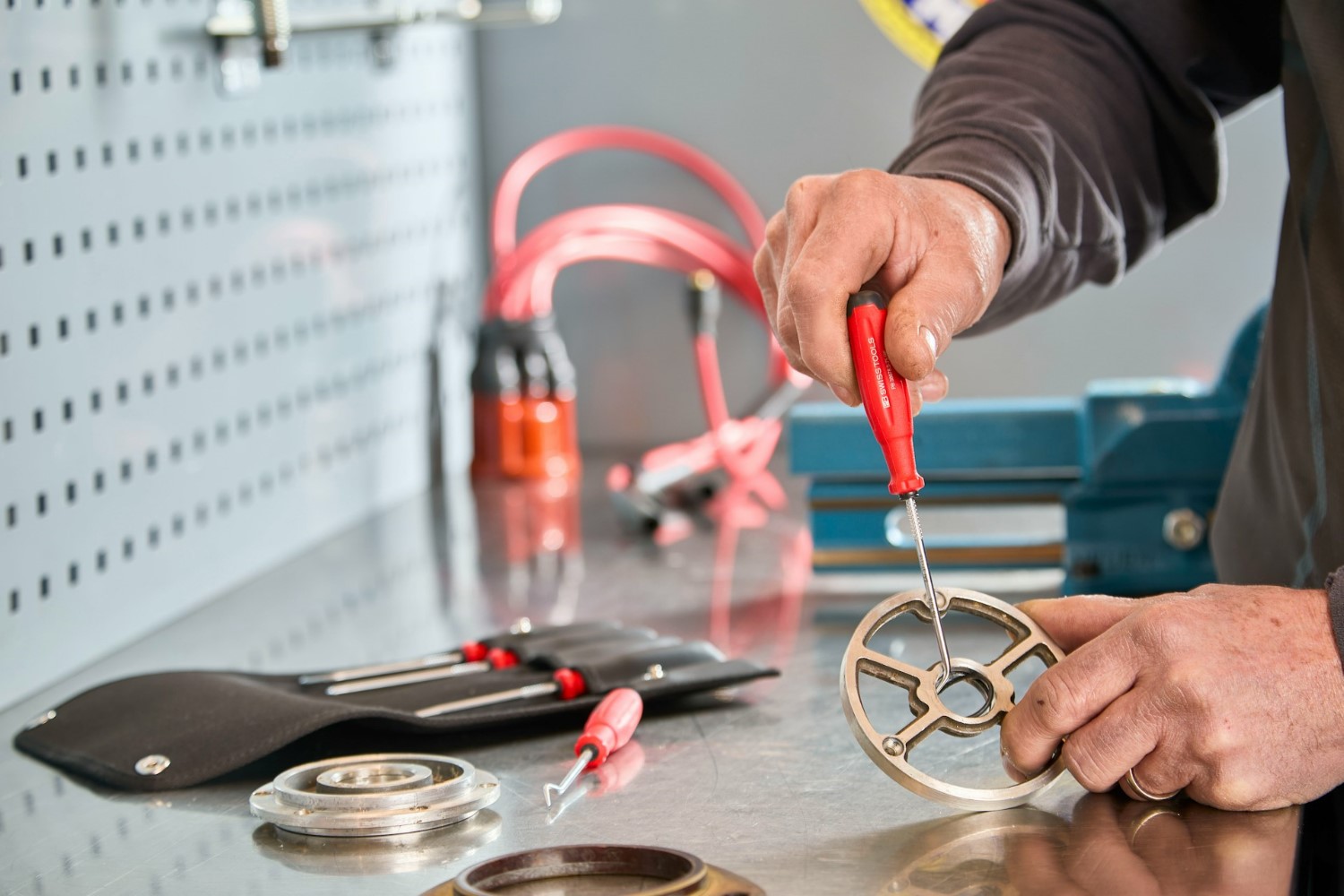
Three specifications define a pit-lane-grade long nose plier:
- Jaw reach. A 160 mm to 200 mm length gives the reach into loom bundles without losing grip leverage.
- Parallel action. Force distributes across the full jaw, not concentrated at the tip. Terminals reshape; they do not deform. (Maun Industries are the best known for this.)
- Hardened jaws. A case-hardened jaw rated to HRC 57 or higher holds its profile through repeated use across a race weekend.
The tool itself is the same as the one used on any precision engineering bench. The application is more time-pressured.
Why hand-craft still matters
The data-driven era of racing has not eliminated the hand-craft dimension. It has concentrated it. Crew chiefs now work with an engineering group that can simulate an aerodynamic change to four decimal places and a telemetry system that samples at one kilohertz. The variable that still decides a race weekend, though, sits with the mechanic and the narrow-jaw pliers, reseating a spade terminal in the ninety seconds before the gantry closes.
Race weekends are not won on pit-lane hand tools alone. But they are regularly lost on them.