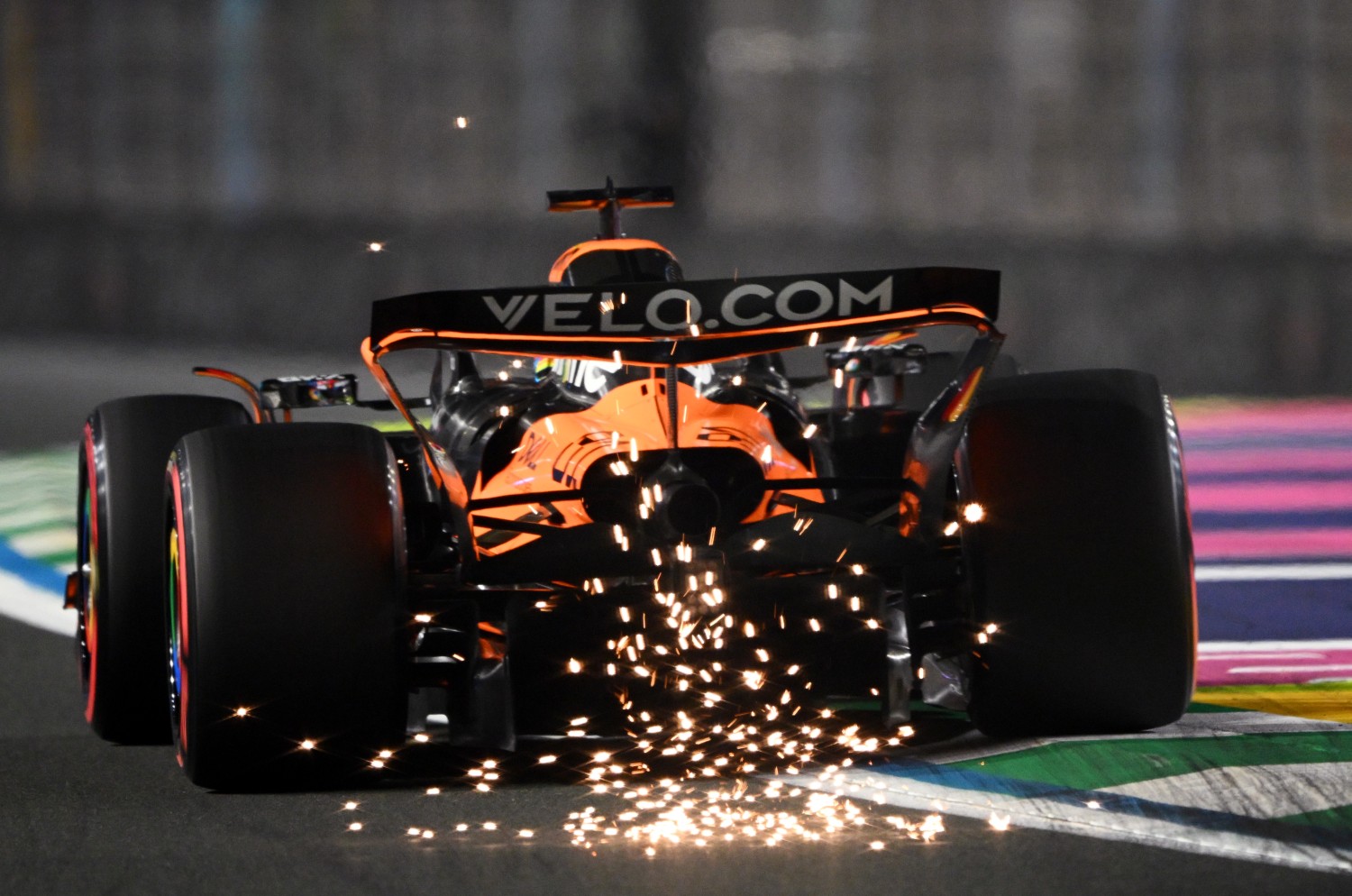
Formula 1 News: The FIA will be watching McLaren’s skid block tricks in Qatar
The FIA is increasing its focus on skid block compliance across all teams, especially McLaren, for the 2025 Qatar Grand Prix (November 28-30), following the recent bulletin and investigation into heat-expanding titanium skid blocks. This stems from discoveries made during the Brazilian GP weekend, where devices designed to heat the skid blocks were found and ordered removed before qualifying.
–by Mark Cipolloni–
The FIA’s technical delegate, Jo Bauer, inspected multiple cars and identified these heating mechanisms, which expand the titanium skids under heat to protrude below the wooden plank, absorbing track contact and protecting the plank from excessive wear. This allows teams to run lower ride heights for aerodynamic gains (increased downforce and faster lap times) while passing post-session inspections, as the skids contract upon cooling.
For Qatar, expect heightened pre-qualifying checks on skid blocks and underfloor areas, similar to Brazil, to enforce the immediate removal of any remaining devices. The FIA is also finalizing a technical directive to ban these practices outright, potentially effective before the event or by 2026 regulations, including seals on designs to prevent quick height adjustments in parc fermé.
Qatar’s high-speed Lusail circuit, with its abrasive surface, will amplify wear risks, prompting broader inspections to ensure compliance amid the tight drivers’ championship (Verstappen level with Piastri at 366 points post-Las Vegas).
Were McLaren One of the Teams Involved?
Reports indicate the practice was widespread—”nearly all teams” to varying degrees, with “several” explicitly caught in Brazil—but McLaren is not directly named among those forced to remove devices. One source alleges McLaren’s involvement, linking it to their strong sprint performance in Brazil (before removals), but this appears speculative and contradicted by paddock rumors explicitly excluding them. McLaren’s recent disqualifications (double DSQ in Las Vegas for excessive rear skid wear below 9mm) are unrelated to heating tricks; FIA and team insiders dismiss any connection, calling expansion theories “nonsensical” and counterproductive for wear management.
Does This Explain McLaren’s Recent Performance Decrease?
No, the skid block heating issue does not explain McLaren’s dip. Their Las Vegas DSQ and any perceived slowdown (e.g., Norris’s late-race pace drop, instructed lift-and-coast to preserve components) resulted from a setup misjudgment: a soft mechanical configuration for better traction/braking and tire warm-up on the bumpy, wet track, which unexpectedly increased rear skid contact and wear. Interrupted practice (red flags, rain) limited long-run data, leading to over-aggressive low ride heights—exacerbated by the MCL39’s front-biased wear design shifting rearward under Vegas conditions. McLaren apologized, citing “unintentional” errors and no regulatory circumvention, with no link to Brazil’s heating directive.
| Recent McLaren Incidents | Event | Issue | Outcome | Relation to Heating Trick |
| Brazilian GP | Nov 2024 | Suspected heating devices on multiple teams | Devices removed pre-Q1; performance drops noted in some | Widespread, but McLaren not confirmed |
| Las Vegas GP | Nov 23, 2025 | Rear skid wear <9mm (Norris: 8.88-8.93mm; Piastri: 8.74-8.96mm) | Double DSQ (lost P2/P4); 30 points forfeited | Setup error, not heating |
| Chinese GP (Hamilton) | Apr 2025 | Excessive rear skid wear | DSQ from P6 | Unrelated plank wear |
McLaren remains competitive for Qatar (a track suiting the MCL39), but they’ll likely run conservative setups with extra FIA margin to avoid repeats. The heating probe adds paddock tension, but evidence points to procedural lapses, not cheating, for their recent woes.